Connect with us

News

70 Civil Groups Ask FG To Reverse Twitter Ban, Withdraw Prosecution Threat

Published

on

Share

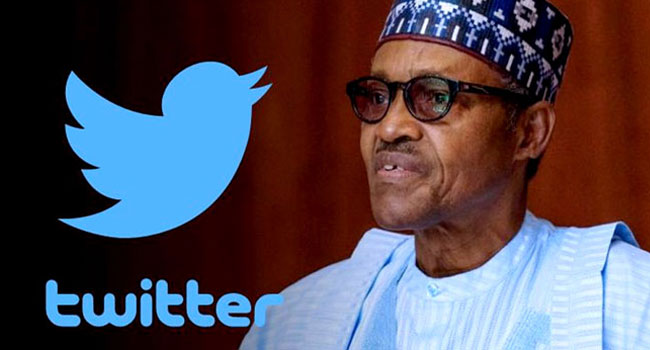
Civil society organisations numbering 70 have called on the Federal Government to reverse the ban placed on Twitter and withdraw the threat to prosecute anyone using the app in the country.

The groups in a statement jointly signed on Monday condemned the action of the Federal Government describing it as ‘unlawful.’

“We, the undersigned civil society organizations are concerned about the repression and escalating crackdown on human rights by the Nigerian government, particularly the rights to freedom of expression, access to information and media freedom.

“We strongly condemn the arbitrary and unlawful suspension of Twitter in Nigeria, by the authorities, and the resulting restrictions on the human rights of people, as well as the threat to prosecute anyone using Twitter in Nigeria.

“We, therefore, call on the Nigerian authorities to immediately rescind the unlawful suspension of Twitter in Nigeria and withdraw the threat to prosecute anyone using Twitter in the country,” the statement read in part.

The groups also condemn the “directive” issued by the Nigerian Broadcasting Commission (NBC) for all broadcast stations to deactivate their Twitter accounts.

They asked that the Federal Government, “Immediately withdraw the directive to broadcast stations to deactivate their Twitter accounts.”

The groups asked that the Federal Government end the widespread impunity for human rights violations, in particular the rights to freedom of expression including online, access to information and media freedom.

They called on the international community, including the UN and the African Union to publicly condemn the suspension of Twitter in Nigeria and to put pressure on the Nigerian authorities to reverse the decision.

According to the groups, Social media platforms have helped Nigerians to receive information, impart the same, hold useful conversations, and hold the Nigerian authorities to account. A clear example is how social media was used to drive police accountability in the #EndSARs protests last year.

They lamented that the Nigerian authorities have also set plans in motion to force social media platforms to register in Nigeria and comply with local regulations before they are licensed to operate.

“The Nigerian authorities have continued to propose laws to regulate the social media, and restrict the rights to freedom of expression, access to information, and media freedom, including through legislative bills popularly known as the ‘Hate Speech Bill’ and ‘The Social Media Bill’ which both provide severe punitive sanctions such as the death penalty in some cases, for social media users convicted of “crimes” provided under them,” they added.

The civil groups said the suspension of Twitter in Nigeria is inconsistent and incompatible with the Nigerian Constitution of 1999 (as amended) and the country’s international human rights obligations including under the International Covenant on Civil and Political Rights and the African Charter on Human and Peoples’ Rights.

The statement was jointly signed by Amnesty International Nigeria; CISLAC (Civil Society Legislative Advocacy Centre); Global Rights; Nigeria Mourns; Business and Human Rights Roundtable; Tap Initiative for citizens development; Civil society consortium on civic space; Centre for Democracy and Development (CDD); Alliances for Africa; WILPF Nigeria; Echoes of Women in Africa Initiatives; Akubeze Okocha; B.E.E Initiative; Access to Justice; Sterling Centre for Law & Development; Concerned Nigerians; JENNON-PIUS &Co initiative; Education as a Vaccine; Invictus Africa; Dinidari Foundation; Raising New Voices Initiative; Centre for Impact Advocacy (CIA); Stand To End Rape Initiative (STER); BudgIT; The Interactive Initiative for Social Impact; Enough is Enough (EiE); Yiaga Africa; among others.

Continue Reading
Click to comment

Leave a Reply

Your email address will not be published. Required fields are marked *

News

How Tracking Helped ICPC Recover N2.06bn From Kaduna Projects

Published

on

Share

The tracking of 31 constituency and executive projects across the three senatorial districts of Kaduna State, has enabled the Independent Corrupt Practices and Other Related Offences Commission (ICPC) to recover N2.056 billion.

The projects, valued at about N2 billion, were monitored under the commission’s Constituency and Executive Project Tracking Initiative, which aims to ensure that public funds allocated to development projects are properly utilised and that projects are executed in line with approved specifications.

The exercise was coordinated by Chief Superintendent Haruna Aminu, who was among the commission’s officers monitoring the selected projects across the Kaduna South, Kaduna North, and Kaduna Central Senatorial Districts.

The officers visited selected project sites to assess their level of execution, determine whether they represented value for money and verify compliance with approved project specifications.

The commission also examined the utilisation of funds allocated to the projects as part of efforts to promote transparency and accountability in the implementation of government-funded projects.

The recovery of N2,056,467,766.86, representing Two Billion, Fifty-Six Million, Four Hundred and Sixty-Seven Thousand, Seven Hundred and Sixty-Six Naira, Eighty-Six Kobo, according to the ICPC, was facilitated by the monitoring exercise.

This feat, the commission maintained, gives highlights the importance of sustained monitoring of constituency and executive projects to protect public resources and ensure that government interventions deliver the intended benefits to citizens.

The ICPC’s project tracking initiative is designed to promote transparency, accountability and value for money in the implementation of government-funded projects, while deterring the diversion and misuse of public resources.

The recovery of the funds is therefore considered a significant outcome of the Kaduna State exercise, demonstrating the role of effective oversight in safeguarding government funds and ensuring proper implementation of public projects.

Continue Reading

News

New Zealand Moves to Ban Social Media for Under-16s

Published

on

Share

New Zealand’s government has introduced legislation to ban children under 16 from using social media, joining a growing international push to shield young people from harmful online content and the risks associated with excessive social media use.

Prime Minister Christopher Luxon said the proposed law was necessary to protect a generation of children from what he described as the growing harms of social media, including addictive technology, harmful content and online pressures.
“We simply cannot accept the harm being done to a generation of New Zealand children,” Luxon said.

The prime minister said one in three New Zealand children aged between 13 and 17 now spends at least five hours a day on social media. He said excessive use was affecting young people’s family life, mental health, sleep and education.

Under the proposed legislation, major platforms including Instagram, TikTok, Snapchat and Facebook would be required to take “reasonable steps” to ensure their users are at least 16 years old.

Platforms could use existing account information, facial age-estimation technology, digital identity services and formal identification documents to verify users’ ages.
Companies would also be required to assess the risks their platforms pose to children and report on measures taken to reduce those risks.

Firms that fail to comply could face penalties of up to 10 per cent of their global revenue.

Education Minister Erica Stanford said the bill would place clear legal obligations on social media companies, while children and their parents or caregivers would not face penalties.
However, the legislation faces significant political hurdles. The government’s coalition partners, the libertarian ACT Party and populist NZ First, have expressed opposition to the proposal.

NZ First criticised Australia’s experience with a similar ban, describing the legislation there as a “colossal failure.” ACT has also argued that the proposed restrictions would not work and that teenagers could easily find ways around them.

The main opposition Labour Party has yet to decide whether to support the bill. It has submitted dozens of questions concerning issues including how age verification would operate and which platforms would be covered.
“We take this legislation very seriously,” Labour spokesman Reuben Davidson said, warning that the safety of young people in Aotearoa New Zealand was at stake as they faced increasingly complex online risks.

New Zealand’s proposal follows Australia’s landmark social media restrictions, which came into effect in December 2025 and barred under-16s from platforms including Facebook, Instagram and TikTok. The Australian measures were introduced to tackle problems such as online bullying and exposure to “predatory algorithms.”
However, a peer-reviewed study by Australia-based researchers published in June found little evidence that teenagers had significantly reduced their use of social media following the ban.

New Zealand’s proposed legislation will therefore face close scrutiny over whether age restrictions can be effectively enforced and whether they can deliver the intended protections for young people without simply driving teenagers toward alternative ways of accessing social media.

Continue Reading

News

The Medical Doctor Who Sold Sand, Owns 6 Aircrafts and is Building a Billion-dollar Refinery in Bayelsa State

Published

on

Share

The Medical Doctor Who Sold Sand, Owns 6 Aircrafts and is Building a Billion-dollar Refinery in Bayelsa State

The story of Dr Eruani Azibapu Godbless, a trained medical doctor- turned businessman, a graduate of the University of Port-Harcourt, is both interesting and inspiring.

After graduating from the medical school, he worked in the private and public sectors.

In the course of his medical practice, he demonstrated a high degree of commitment to his work which helped him to get multiple promotions before he was called upon to serve as the Honorable Commissioner for Health in Bayelsa State.

In the course of this political appointment, he also got appointed as a Special Adviser to President Goodluck Jonathan, then the governor of Bayelsa State.

While growing up, Dame Patience Jonathan (Former First Lady) connected Dr Eruani to Alhaji Aliko Dangote and The Dantatas.

Even though the entrepreneurial spirit was always there, connecting with like minds helped to fan that flame the more.

The entrepreneur in him triggered his looking around the whole of Bayelsa without seeing any sand supplier.

Consequently, Dr Eruani chose selling sand in the State to fill the gap. He did so at a commercial scale by introducing the mechanized approach.

He pulled his resources together and launched a dredging company, Azikel Dredging.

It was from this dredging company (selling of sand) that he made his first ₦1 billion ever.

That ₦1 billion revenue from sand business proved that the concept was right.

Using the proceeds from selling sand, he bought his first helicopter and private jet, and expanded to other businesses.

Today, he has diversified into aviation, power generation and recently, petroleum.

Today, work is on top gear at his $1 billion Azikel Refinery investment and it will be commissioned soon. When in full operation, it will be delivering 25,000 barrels per day.

There are some lessons to learn from Dr Eruani Azibapu Godbless, .

First of all is that, no business is really too small or beneath your standard if you are a big thinker.

Ordinarily, many would expect that a medical doctor at his level going into business will start by building a hospital.

That may have been the disappointment of his former colleagues. Many probably expected when they heard that he left active medical practice that he had started a big hospital instead of selling sand in Bayelsa State. Others would expect he had rather joined them to japa, get a better job or build a new hospital.

But he understood alone “why” creating jobs and wealth for other people is so that they can live healthier lives.

Every business is as big as the mindset and the vision of the person who’s operating it.

Using the revenue made selling sand, he bought his first helicopter and private jet. Today, he has 3 helicopters and 3 private jets (short and ultra-long ranges).

Secondly, associating with people who can inspire you is important. Who you associate with can influence your life in more ways than you can imagine.

It is better to be alone than to be in the wrong company. Being alone doesn’t mean you are lonely.

Mrs Patience Jonathan’s facilitating Dr Eruani to connect with Alhaji Aliko Dangote and The Dantatas many years ago, while they were much younger, became vital in his entrepreneurial quests.

According to the Former First Lady, Dr Eruani was the youngest among them in their clique. She asked him to follow Alhaji Aliko Dangote closely and he did.

Even though contestable, it’s important to note that entrepreneurial excellence is a culture-based thing. You can pick up a lot about why someone is wealthy or poor by looking at their way of life (which is culture).

In addition, it’s necessary to venture into any business only when you believe in it or understand it in and out.

That explains why even though Dr Eruani, Alhaji Aliko Dangote and many others have not come from petroleum engineering background but because of strong conviction, they are doing well in it.

Continue Reading