Connect with us

News

3,000 WOMEN, YOUTHS BENEFIT IN SANWO-OLU’S AGRIC INVESTMENT TO BOOST FOOD SECURITY

Published

on

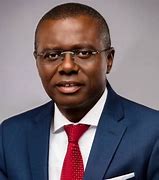
Lagos State Governor Babajide Sanwo-Olu
Share

•Governor Rolls Out Empowerment Scheme for Lagos Farmers, Assists 300 Trainees with N245 Million Machinery Support

The food sufficiency programme of Lagos State Governor Babajide Sanwo-Olu has been taken a notch higher. The Governor, on Thursday, rolled out massive agricultural investment that empowers 3,000 urban and rural farmers in key sectoral value chains.

Women, youths and peasant farmers were the main beneficiaries of the 2021 Agricultural Value Chains Enterprise Activation Programme through which the State Government is supporting agripreneurs with modern equipment and inputs that would help them make significant difference and scale up their agricultural practices.

Various groups of farmers, in their numbers, thronged the parade ground of the Police College, Ikeja to personally receive the material support from the Governor, accompanied by the Deputy Governor, Dr. Obafemi Hamzat, and members of the State Executive Council.

The scheme is also a component of the Sanwo-Olu administration’s five-year Agricultural and Food System Development Roadmap recently launched to chart a coordinated path for the desired development of the sector and boost food security.

The beneficiaries were selected for the scheme through a merit-based system anchored by independent associations of farmers across the State. The support was majorly for agripreneurs in poultry, piggery and artisanal fishery – the three sub-sectors largely affected by the disruption occasioned by Coronavirus (COVID-19) pandemic.

Sanwo-Olu noted that the intervention was necessitated by the need to raise food production, processing and marketing, while also creating jobs and sustaining the livelihood of the farmers through value creation.

Through the scheme, the Governor said the Government would be easing the burden of the beneficiary farmers and agriculture workers, describing the programme as “another milestone” in fulfilling his administration’s electoral promises to the people.

He said: “This Agricultural Value Chains Enterprise Activation Programme is a clear demonstration of the commitment of our administration to the development and expansion of the agricultural sector, which is driven by a farm-to-table model that aligns with our goal of making Lagos a truly 21st century economy.

“We are determined to increase food production in the State from the current 20 per cent to at least 50 per cent by 2025 and this effort has been emboldened, given the observed disruption in the supply chain of food across the country as a result of the COVID-19 pandemic and the outbreak of zoonotic diseases.

“We have emerged wiser and more determined to succeed in creating and nurturing a viable agribusiness sector in Lagos. The State Government has put in place a strategy for the proper utilisation and continuous maintenance of the assets being donated to derive maximum value from them. We are also working with a financial institution regarding appropriate financing structures for the guaranteed sustainability of the programme.”

Sanwo-Olu stressed that the deficiency of agricultural land in Lagos would not deter the State Government from deploying innovative and entrepreneurial ideas to create opportunities that would make the State sufficient in food production and engender economic growth through agriculture.

Lagos, the Governor said, will continue to maximize the value for resources invested in the agricultural sector, urging the beneficiaries to reciprocate the gesture by working hard to nurture their businesses to maturity.

Sanwo-Olu said the intervention would only be sustainable if the beneficiaries succeeded in activating new businesses and created positive impacts for agro-processors in the value chains.

“By putting in your best and judiciously utilising the assets entrusted to you, you are opening doors for more people to benefit tomorrow. Since your selection was based on merit, we believe you can deliver excellent results with these equipment and supplies you are receiving today,” Governor said.

He disclosed that his administration was set to establish Wholesale Agricultural Produce Hubs in strategic locations across the State to promote food safety and ensure access to direct markets for fresh-from-farm products, thereby reducing post-harvest losses for farmers.

Commissioner for Agriculture, Ms. Abisola Olusanya, said the State Government had not only restructured the projects for greater impacts, but also changed the name to transform the mindsets of beneficiaries not to see the initiative as entitlement and largesse from the Government.

She said the programme would help committed farmers to nurture their businesses into viable agricultural enterprises, pointing out that the Government had created a monitoring mechanism to keep track of the beneficiaries’ activities.

She said:“The Enterprise Activation programme will contribute to inclusive agricultural growth in Lagos, as it will be creating access for beneficiaries to exit the poverty trap and reduce economic inequality. Aside creating new marketing opportunities in the value chains, the programme will also provide a social safety net for youth, women and the vulnerable.”

Oniru of Iru Kingdom and immediate past Commissioner for Agriculture, Oba Gbolahan Lawal, praised the Sanwo-Olu administration for raising the investment for the scheme, which the monarch described as “inclusive empowerment”, as the intervention was extended to farmers in urban areas.

The traditional ruler urged beneficiaries not to betray the Government’s trust, asking them to utilise the support for the improvement of their businesses and turn in good testimonies at the end of the scheme’s tenure.

President of Ogbonge Women, a farmers’ group, Mrs. Chinasa Asonye, praised the Governor for the opportunity and for the priority accorded to women in agricultural business. She promised, on behalf of the beneficiaries, to judiciously deploy the tools for improved food production and return on investment.

In the scheme, 300 youths trained in Aquaculture and Poultry Production at the Lagos Agripreneurship Programme (LAP) were empowered with agricultural inputs valued at N245 million, which represented 46.7 per cent of the total investment in the programme.

Other beneficiaries include 400 pig farmers that participated in Agricultural Youth Empowerment Scheme (Agric-YES), 680 fishermen, 190 fish cage culture artisans, 360 egg marketers, 500 fish processors, 200 rice farmers and 370 crop farmers.

They received variety of modern tools, such as tractors, ploughs, fishing boats and gear, harvesters, threshers, destoning machines, defeathering machines, herbicides, fish juveniles, pig growers, smoking kilns, crates of eggs, and inputs, which are to be utilised in farming communities across Lagos agricultural zones of Badagry, Epe and Ikorodu

Continue Reading
Click to comment

Leave a Reply

Your email address will not be published. Required fields are marked *

News

43 Feared Dead as Illegal Fuel Siphoning Turns Fatal in Rivers Community

Published

on

Rivers State Map
Share

OKRIKA, Rivers — What began as an overnight attempt by hundreds of youths to siphon petroleum products from an illegal pipeline connection has ended in tragedy, with at least 43 people feared dead in Okrika Local Government Area of Rivers State.

The incident occurred around midnight on Thursday at Okari Jetty in Okrika Mainland, leaving families searching for loved ones and the community grappling with the scale of the disaster.

Community sources said more than 200 youths from neighbouring communities arrived at the jetty in wooden boats and attempted to collect petroleum products from an illegally connected tapping point on a pipeline linked to the facility.

The operation reportedly turned deadly after the youths were exposed to concentrated fumes while loading the product into waiting boats.

Several people reportedly lost consciousness. Some fell into the river and drowned, while others managed to escape and are receiving treatment for respiratory complications.

Of the 43 people reportedly dead, 37 have been identified as indigenes of Okrika, while six others remain unidentified. Several people are also still unaccounted for.

The incident has left relatives and community members facing the painful task of searching for missing family members and identifying those who died.

Blessing Agabe, spokesperson for the Rivers State Police Command, confirmed the incident and said investigations were underway to determine the circumstances surrounding the deaths and establish the actual number of casualties.

Fyneface Fyneface, Executive Director of the Youths and Environmental Advocacy Centre (YEAC-Nigeria), said the victims were allegedly involved in an illegal operation at a tapping point on a pipeline transporting petroleum products from the Indorama Eleme Petrochemicals area through the Port Harcourt refinery corridor to export vessels.

According to him, the victims were loading the product into waiting boats while a vessel was receiving supplies from the pipeline.

Fyneface described the incident as a major warning about the dangers associated with tampering with oil and gas infrastructure and illegal bunkering activities in the Niger Delta.

YEAC-Nigeria has called on the National Oil Spill Detection and Response Agency (NOSDRA) to conduct a joint investigation into the incident and determine what led to the deaths.

The organisation also urged operators of oil and gas facilities to strengthen security around critical infrastructure to prevent vandalism and unauthorised access.

Beyond the immediate investigation, Fyneface called for stronger measures to reduce the economic pressures that drive young people into dangerous activities, including the creation of alternative livelihood opportunities, industrial development programmes and other sustainable economic initiatives across the Niger Delta.

For families in Okrika, however, the immediate concern is more personal: finding missing relatives, identifying the dead and coming to terms with a tragedy that has claimed dozens of lives in a single night.


Continue Reading

News

Uber Exits Nigeria After 12 Years, Cites Changing Business Priorities

Published

on

Share

Global ride-hailing giant Uber has ended its ride-hailing operations in Nigeria, bringing its 12-year presence in the country to a close.

Uber announced the decision on Wednesday, September 2, 2026, saying it would wind down its operations in Nigeria following a review of its business priorities and investment focus across Africa.

The company, which launched its service in Lagos in 2014, said the decision takes effect immediately.

“After a thorough review, we have taken the difficult decision to wind down operations in Nigeria and Uganda, effective September 2, 2026,” Uber said in a statement.

Uber stressed that the decision is limited to Nigeria and Uganda and does not represent a withdrawal from the wider African market.

The company said it remains committed to Sub-Saharan Africa, which it described as a region with strong growth prospects and long-term opportunities.

Why Uber is leaving Nigeria

Uber attributed its Nigerian exit to its “evolving business priorities and investment focus across the continent.”

The company said it was concentrating investments on markets where it could create the greatest value for drivers by providing earning opportunities at scale while allowing passengers to move around seamlessly.

Uber did not cite regulatory difficulties in Nigeria as the reason for its withdrawal.

The company also specifically denied that its decision was linked to a recent directive by the Federal Airports Authority of Nigeria (FAAN) concerning e-hailing operations at Nigerian airports.

“No,” Uber said when asked whether the FAAN directive was responsible for its decision.

FAAN had recently clarified that it had not imposed a blanket ban on e-hailing services at Nigerian airports, explaining that discussions with operators were focused on establishing an appropriate framework for their operations within airport premises.

Drivers, riders affected

Uber said its immediate priority is supporting drivers, riders and employees affected by the shutdown.

The company said it is communicating directly with affected stakeholders about the implications of the decision and arrangements for the transition.

Uber has operated in Nigeria for more than a decade, expanding beyond Lagos to several cities, including Abuja, Port Harcourt, Ibadan, Enugu, Kano and other major urban centres.

Its departure is expected to reshape Nigeria’s increasingly competitive ride-hailing market, where operators compete for passengers and drivers amid rising operating costs and evolving regulatory requirements.

End of an era

Uber’s exit marks the end of a significant chapter in Nigeria’s digital transport industry.

The company helped popularise app-based ride-hailing in the country after launching in Lagos in 2014, offering passengers an alternative to conventional taxi services and creating new earning opportunities for thousands of drivers.

Its withdrawal also comes at a time when ride-hailing companies across Africa are reassessing their operations and investment strategies.

Uber previously withdrew from Côte d’Ivoire in 2025 and ended operations in Tanzania in January 2026, reflecting the challenges global mobility platforms can face in adapting their business models to individual African markets.

For Nigerian passengers and drivers, however, the immediate question is what Uber’s departure will mean for competition, fares, driver earnings and service availability.

While Uber is leaving Nigeria, the company maintains that its broader commitment to Sub-Saharan Africa remains intact.

The exit therefore represents a strategic withdrawal from the Nigerian market rather than a retreat from Africa, according to the company.

Continue Reading

News

Kogi Information Perm Sec Pledges Support for NUJ Chapel, Urges Journalists to Uphold Trust

Published

on

Share

The newly appointed Permanent Secretary, Kogi State Ministry of Information and Communications, Mr. Awulu Tijani David, has pledged his full support to information officers in the state, stressing that effective information management remains critical to the success of government and its policies.

Awulu Tijani made the commitment on Wednesday, September 2, 2026, when the leadership of the Nigerian Union of Journalists (NUJ), State Information Chapel, led by its Chairman, Mr. Solomon Musa, paid him a courtesy visit at his office in Lokoja to formally introduce the newly elected executives of the chapel.

The Permanent Secretary, who described the position of leadership as a privilege and a responsibility entrusted to individuals by the people, urged the new NUJ Information Chapel leadership to justify the confidence reposed in them by members.

He advised the executives to remain accountable, trustworthy and committed to the welfare and professional advancement of members, noting that records of every person entrusted with responsibility would eventually speak for them.

“People trusted and elected you. It is my prayer that you succeed better than those who have been there before you,” he said, while assuring the chapel of his willingness to work with the new leadership for the advancement of the information profession in Kogi State.

Awulu particularly emphasised the strategic importance of information officers to government, describing them as the “eyes” of the Ministry of Information and Communications and key players in communicating government policies, programmes and achievements to the public.

According to him, the success of the ministry is closely tied to the effectiveness of its information officers, stressing that the leadership of the ministry must provide the necessary support and working environment for them to perform optimally.

“If the Ministry of Information does not do whatever it will take to make the information officers work well, then what are we here for? You are the eyes of the Ministry of Information. Without you, the ministry cannot do anything,” he stated.

The Permanent Secretary also encouraged the chapel leadership to always communicate its needs and challenges to his office, assuring them that issues within his capacity would receive prompt attention, while matters requiring higher-level intervention would be referred appropriately.

He said his door would remain open to members of the chapel, describing the ministry as their own home and urging them not to hesitate to approach him whenever they required his intervention.

“This is your office; it is your home. Whenever you need the office to intervene, call on me. I don’t know everything that you do, and I am not a journalist; I am an administrator. That is why I need people to advise me,” he said.

Awulu further noted that his appointment as Permanent Secretary should be seen as a privilege rather than a position that places him above others, stressing that any member of the service could attain similar responsibility in the future.

He also commended the Chairman of the NUJ Information Chapel, Mr. Solomon Musa, whom he described as a humble and experienced professional who understands the demands of the information business.

He assured the chapel that he would support programmes that would contribute to the professional development and welfare of information officers, urging the leadership to formally present its proposals for consideration.

Earlier, the Chairman of the NUJ State Information Chapel, Mr. Solomon Musa, said the visit was aimed at formally introducing the newly elected executives to the Permanent Secretary as the Chief Accounting Officer of the Ministry and to seek his support and that of the ministry for the chapel’s activities.

Musa introduced the new executives, including the Vice Chairman, Mrs. Olajumoke Ajani, a State Information Officer with the Ministry of Local Government and Chieftaincy Affairs; Secretary, Miss Gloria Amodu, State Information Officer with the Ministry of Works; Treasurer, Mr. Salau Ibrahim of SEMA; Financial Secretary, Mrs. Mariam Tenimu, State Information Officer with the Ministry of Environment; and Auditor, Mr. Abah Benjamin Eneojoh Treasure, State Information Officer at Government House.

He said the new leadership had come into office with a commitment to strengthen unity, professional development and collaboration among information officers across ministries, departments and agencies.

Musa also appealed for the ministry’s continued support for the chapel’s annual professional and social programme, which brings together serving and retired information officers, including former Permanent Secretaries and Directors who had served in the information sector.

He recalled that the inaugural edition of the programme held last year provided an opportunity for retired senior officers to share their experiences with younger information officers, describing the engagement as an avenue for knowledge transfer and mentorship.

According to him, the chapel intends to make this year’s edition bigger and more impactful, with plans to incorporate activities including a visit to an orphanage, sporting activities and professional lectures designed to strengthen the capacity of members.

He also sought the support of the ministry for the enrolment of chapel members into the Nigerian Institute of Public Relations (NIPR), noting that the proposal had previously been discussed with the relevant authorities.

The chapel’s Auditor, Mr. Abah Benjamin Eneojoh, further appealed to the Permanent Secretary to accept the role of a fatherly figure and strategic partner to the chapel, stressing that the support of the ministry’s leadership would be critical to the success of its programmes.

Eneojoh emphasised the need for government to continue strengthening State Public Relations Officers and other information professionals, noting that adequately supported information officers would be better positioned to effectively communicate government policies and achievements to the people.

He commended the Commissioner for Information and Communications, Hon. Kingsley Femi Fanwo, for what he described as his consistent support for the activities of the chapel and his commitment to the rebranding and repositioning of Kogi State through effective communication.

Continue Reading