Connect with us

Defence and Security

Tinubu Pushes UK Alliance to Counter Sahel-Linked Terror Threats

Published

on

President Bola Tinubu with King Charles
Share


President Bola Ahmed Tinubu has called for deeper security cooperation with the United Kingdom to combat rising terrorism threats and strengthen regional stability across West Africa.

Speaking at a state banquet at Windsor Castle, Tinubu warned that the growing influence of extremist groups operating from the Sahel poses significant risks to Nigeria and neighbouring countries.

He stressed that Nigeria bears a “major responsibility” in maintaining stability in the region and requires sustained international partnerships to address evolving security challenges, including cross-border insurgency and terrorism financing.

The President noted that intelligence sharing, counterterrorism coordination, and capacity building would be key areas of collaboration in his upcoming talks with UK Prime Minister Keir Starmer.

Tinubu also highlighted the longstanding strategic ties between Nigeria and the UK, particularly in governance, institutional development, and defense cooperation. He said the partnership remains critical in addressing modern security threats that transcend national borders.

While acknowledging historical links through the Commonwealth of Nations, Tinubu emphasized that current realities demand a stronger, security-focused alliance to counter instability emanating from the Sahel region.

Despite ongoing threats, the President expressed confidence in Nigeria’s resilience, reaffirming the country’s commitment to working with global partners to ensure peace, security, and sustainable development in West Africa.

Defence and Security

Nigeria Climbs to 4th in 2025 Global Terrorism Index as Attacks Surge by 43%

Published

on

Islamic State West Africa Province
Share

Nigeria has risen to fourth place in the 2025 Global Terrorism Index (GTI), following a sharp escalation in terrorist activities across the country, according to a new report by the Institute for Economics & Peace.

The report indicates that terrorist attacks in Nigeria increased by 43 percent in 2025, with 171 incidents recorded compared to 120 in 2024. This surge has pushed the country up two places from its previous sixth position.

Nigeria now ranks behind Pakistan, Burkina Faso, and Niger Republic, which occupy the top three positions on the index.

According to the findings, the majority of attacks were carried out by Islamic State West Africa Province and Boko Haram, with both groups accounting for 80 percent of terrorism-related deaths in the country.

The report further highlights a growing human toll, with fatalities rising by 46 percent to 750 deaths in 2025—the highest level recorded since 2020. In addition, 243 people were injured in the attacks, bringing the total number of terrorism-related deaths in Nigeria since 2007 to 12,581.

Geographically, violence remained heavily concentrated in Borno State, which accounted for 67 percent of all attacks and 72 percent of total deaths recorded during the year.

Civilians continued to bear the brunt of the violence, representing 67 percent of those killed, while military personnel accounted for 19 percent. The report notes a sustained shift toward increased targeting of civilians over the past five years.

The GTI attributes the worsening security situation to ongoing internal instability and intensified clashes between ISWAP and Boko Haram, underscoring persistent challenges in counterterrorism efforts across Nigeria.

Continue Reading

Defence and Security

Nigeria Must Move Beyond Kinetic Approach to Defeat Terrorism – Senate Leader, Bamidele
Published

on

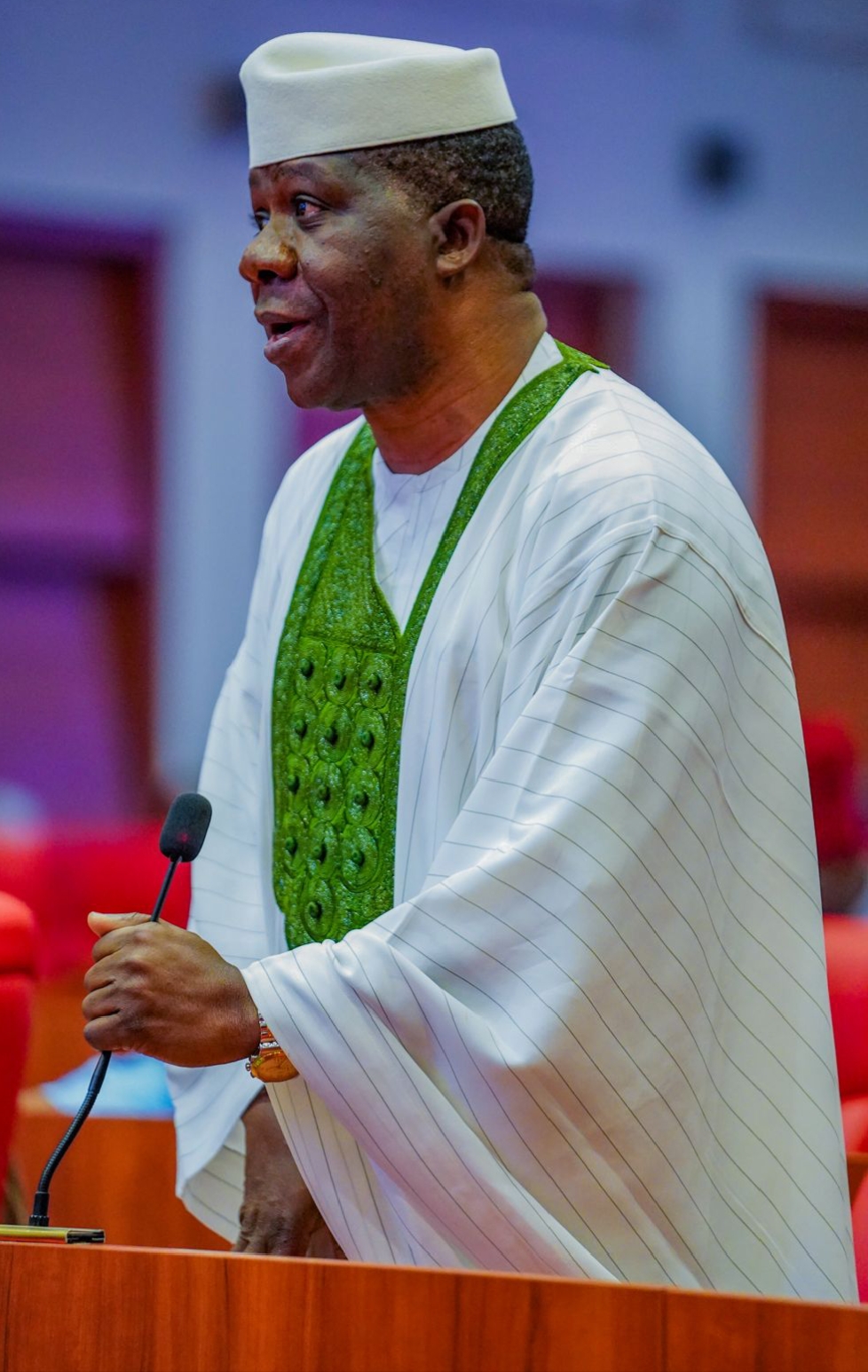
Senate Leader, Senator Michael Opeyemi Bamidele
Share


The Senate Leader, Opeyemi Bamidele, has called for a strategic shift in Nigeria’s fight against insecurity, urging authorities to complement military operations with sustained investments in human capital development and social cohesion.

In his Eid al-Fitr message to Muslims across the country, Bamidele congratulated Nigerians on the successful completion of Ramadan, describing the holy month as a period marked by sacrifice, reflection, charity, and devotion to God.

He noted that the lessons of Ramadan—tolerance, compassion, and self-discipline—should guide both individual conduct and government policies, particularly at a time of global uncertainty and domestic security challenges.

The Senate Leader referenced recent security incidents, including bomb explosions in Maiduguri, which resulted in loss of lives and injuries, stressing that such tragedies underscore the urgent need for a more comprehensive approach to national security.

While commending Nigeria’s defence, intelligence, and security agencies for their resilience, Bamidele emphasised that reliance on military force alone—often described as a kinetic approach—cannot guarantee lasting peace.

“Time and experience have shown that kinetic operations alone cannot guarantee the peace and stability of our nation,” he stated.

He therefore advocated a broader, multi-dimensional strategy that addresses the root causes of violent extremism.

According to him, religious leaders must promote tolerance and desist from teachings that could incite radicalisation, while socio-cultural leaders should prioritise dialogue in resolving inter-ethnic conflicts rather than resorting to violence.

Bamidele also highlighted the role of subnational governments, noting that the fight against insecurity is not solely the responsibility of the federal government. He urged state governments to prioritise human capital development by investing in education, healthcare, nutrition, and social protection systems.

He added that creating opportunities for innovation and creativity among young people would help reduce vulnerability to extremist ideologies.

At the legislative level, the Senate Leader disclosed that the National Assembly is pursuing a multi-pronged approach to strengthen national security and development.

He revealed that the Senate has constituted an ad-hoc committee on a National Security Summit aimed at identifying the root causes of insecurity across the country. He also pointed to the ongoing review of the 1999 Constitution, which he said would include amendments to grant subnational governments greater authority in managing security within their jurisdictions.

Bamidele reaffirmed the commitment of the National Assembly to enacting laws that support the fight against terrorism and violent extremism.

He concluded by extending warm Eid al-Fitr wishes to Muslims nationwide, urging Nigerians to embody the values of peace, unity, and mutual respect beyond the Ramadan season.

Continue Reading

Defence and Security

80 Insurgents, Three Commanders Killed as Troops Repel Night Attack in Borno

Published

on

Troops
Scene of Troops
Share

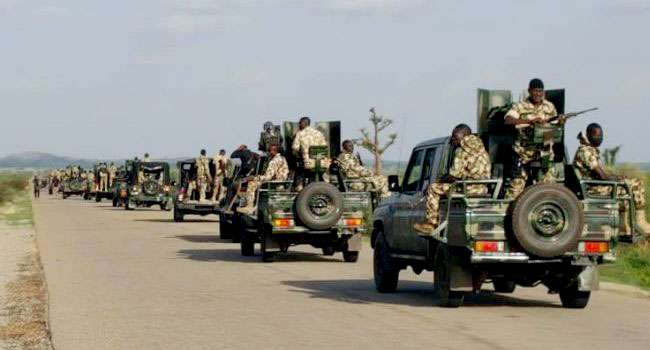
Troops of Operation Hadin Kai, backed by the Nigerian Air Force (NAF), have neutralised no fewer than 80 insurgents in a coordinated night operation in Borno State.

The engagement occurred in Mallam Fatori, Abadam Local Government Area, where terrorists reportedly attempted to infiltrate the 68 Battalion’s defensive position in the early hours of the day.

According to the operation’s spokesman, Lt. Col. Sani Uba, the attackers advanced on foot with drone support from the Duguri axis but were met with a well-coordinated “offensive-defensive” response by troops at about 12:50 a.m.

Among those killed were three senior commanders identified as Abdulrahman Gobara, Mallam Ba Yuram and Abou Ayyuba, alongside several other fighters.

Uba said the troops, supported by precision close air support from the NAF and allied Nigerien air assets, successfully disrupted and routed the insurgents.

He noted that the operation led to the recovery of a significant cache of weapons and equipment, including 52 AK-47 rifles, eight PKT machine guns, seven RPG launchers, five general-purpose machine guns, over 3,000 rounds of ammunition, improvised explosive devices, communication radios and drone components.

Despite the scale of the attack, only four soldiers were reported wounded, as the military maintained minimal casualties.

Military authorities described the operation as a major blow to insurgent command structures and operational capacity in the region, adding that further battle damage assessments are ongoing.

In a related development, NAF airstrikes conducted earlier targeted terrorist hideouts in Abirma and the southern Lake Chad axis. According to Air Commodore Ehimen Ejodame, surveillance identified concealed insurgent positions under dense vegetation, which were subsequently destroyed using precision-guided munitions.

The strikes are said to have significantly degraded the terrorists’ ability to use the area as a staging ground for attacks across the Lake Chad Basin.

Continue Reading