
Business & Economy
NIPC in search of N298.3trn to make up N348.7trn to fund NDP

By Imaikop Raphael
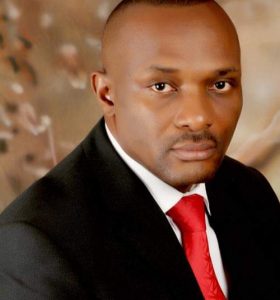 Abuja – The Acting Executive Secretary of the Nigerian Investment Promotion Commission (NIPC), Emeka Offor, has said that the Commission has put in place a mechanism that would mobilise over N298.3 trillion capital from the private sector to make up the N348.7 trillion needed fund for the National Development Plan (NDP).
Offor stated that the NIPC’s Strategic Plan from 2022 – 2026, validation of the records will give the Commission direction towards a global drive on investment in Nigeria.
The Acting NIPC Boss disclosed this at a media parley on Wednesday in Abuja on the strategic plan of the Commission.
He said: “The work for NIPC in the next five years has been appropriately defined by the National Development Plan 2021 – 2022 (NDP).
“The Plan has projected a capital requirement of N348.7 trillion with 86 per cent (N298.3 trillion) expected to be provided by the private sector.
“Mobilisation of this capital has become the focus of the Commission. It is in this respect that the Commission has begun the process of validating the records of the investment announcements.
“We expect the report from this exercise to give us a further understanding of investors’ readiness to invest in Nigeria”.
Speaking further, the Acting Executive Secretary of the NIPC, said the Commission tracked about 23.30 billion dollars worth of potential investments in the country in 2021, which he said represent 39 per cent more than the value tracked in 2020 (16.74 billion dollars) with Lagos, Bayelsa and Delta states attracting the largest share.
Offor said: “The 2021 Investments Announcement Report indicated that US$23.30 billion was tracked during the year, representing about 39 per cent more than the value tracked in 2020 (US$16.74 billion).
“The increase in value is indicative of the growing adaptation to the global ‘new normal’ after the economic disruption occasioned by the restrictions imposed to check the spread of COVID-19 pandemic. It also indicates the growing confidence of investors in the efforts to improve the national investment landscape.
“The top 5 states, by the value of investments, are Lagos State (US$8.7 billion), Bayelsa State (US$3.6 billion), Delta State (US$2.9 billion), Akwa Ibom State (US$2 billion), and Adamawa State (US$1 billion).
“The manufacturing sector had the highest number of projects (20) as well as the highest value, US$10.5 billion (45%). Construction (16 per cent), electricity, gas, steam and air conditioning supply (13 per cent), information and communication (12%), and mining and quarrying (9 per cent) made up the top 5 sectors for the year.”
Offor also said that the Federal Government is considering the review of the Pioneer Status Incentive (PDI) under the Industrial Development (Income Tax Relief) Act in order to attract more investors to the country.
Pioneer Status Incentive (PSI) is an incentive from the Federal Government which exempts companies from basic income tax.
The incentive is also known as tax holiday and it is generally regarded as an industrial measure aimed at stimulating investments into the economy.
This means the companies with pioneer status do not have to pay tax for a certain period of time allowing the company to get established. This tax exemption can be full or partial.
Business & Economy
Tinubu Welcomes Nigeria’s Removal from FATF Grey List, Pledges Continued Financial Reforms

TINUBU SWEARS IN GEN. CHRISTOPHER MUSA AS DEFENCE MINISTER
SharePresident Asiwaju Bola Ahmed Tinubu on Thursday swore in retired General Christopher Gwabin Musa as Nigeria’s Minister of Defence at...

Senate Moves to Reshape Legal Profession, Proposes Two-Year Mandatory Pupillage for New Lawyers
ShareThe Nigerian Senate on Wednesday considered sweeping reforms to the legal profession, passing into second reading a bill seeking to...


Senate Confirms Former Defence Chief Christopher Musa as Minister
ShareThe Senate has confirmed General Christopher Musa (rtd), the immediate past Chief of Defence Staff, as Nigeria’s new Minister of...

Senate Backs Death Penalty for Kidnapping, Moves to Redefine Crime as Terrorism
ShareIn a decisive move to stem rising insecurity, the Senate has approved key amendments to the 2022 Terrorism (Prevention and...


Senate to Screen Defence Minister Nominee Today
ShareThe Senate will on Wednesday screen the immediate past Chief of Defence Staff, General Christopher Gwabin Musa, as the new...