Connect with us

Business & Economy

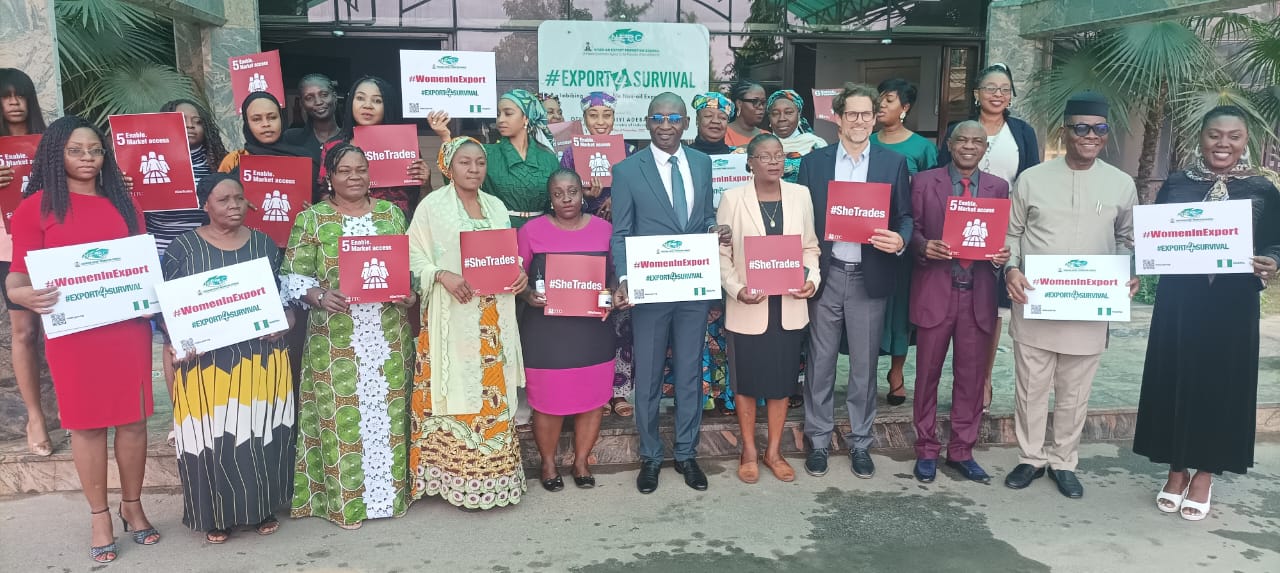
NEPC Trains 35 Women Entrepreneurs On Packaging, Labeling Of Shea Products

Published

on

NEPC trains 35 women entrepreneurs on packaging, labeling of shea products
Share

The Nigerian Export Promotion Council (NEPC) on Monday in Abuja, empowered 35 women entrepreneurs on packaging and labeling of shea products.

The News Agency of Nigeria (NAN) reports that NEPC organised the two-day training in collaboration with the International Trade Centre (ITC).

Dr Ezra Yakusak, the Executive Director and CEO of NEPC, said that the training was essential in equipping the women with the knowledge to develop appropriate packaging and labelling solution.

According to Yakusak, in today’s global marketplace, packaging and labelling play pivotal roles in determining the success of non-oil exportable products.

“They are the first impressions products make on our customers, the stories we tell through our branding are the crucial elements that enable us to stand out and compete globally.

“However, we acknowledge the challenges that many businesses face in this regard.

“It is not merely about understanding the importance of good packaging and labelling but building a sustainable packaging system.

“When you are starting something for the first time, you need to figure out how to begin and understand the complicated steps.

“You also need to make choices that align with your customers’ needs and specific market requirements for the market,’’ he said.

The NEPC boss further said that the workshop would provide valuable guidance to shea product processors, distributors, cooperatives, traders packing shea products in bulk, semi-bulk for hotels and restaurants, retails, and e-commerce.

“In doing this, we aspire to enhance the efficiency, profitability and sustainability of your businesses.

“Our approach is like a roadmap to prevent mistakes when improving your packaging.

“It saves time and money by doing things correctly from the start, instead of trying different things and learning from errors,’’ he said.

Yakusak urged the participants to utilise the opportunity to improve their businesses.

“The knowledge you gain here will be a contributory driving force behind the success of your businesses.

“So, let us embark on this journey together, exploring the world of packaging and labelling, and charting a new course toward greater success and sustainability in the shea beauty sector,’’ he said.

Mr Frederic Couty, a packaging and continuous improvement expert at ITC, said that the programme was about supporting small and medium scale companies to improve their packaging system.

According to him, it will enable the beneficiaries to better access the market and to improve their sales, improve their profitability on the Nigerian market and also outside Nigeria.

“We look at the methodology on how to improve a packaging system and how to create a new packaging system in a cost-efficient manner doing right the first time in order to reach the targeted customer in an efficient manner.

“There are many ways to improve their packaging system.

“First is to align your strategy with the packaging system. You don’t design the packaging system for yourself but you design as an entrepreneur, you design it for your targeted customers.

“So, it is very important to understand the difference between those two components and more specifically to take your strategy and to see how this can influence your packaging system.

“This means your packaging materials is behind the graphic that you are going to develop on your products and developing good relationships with your suppliers of materials.

“Others are identifying the right type of packaging equipment to facilitate the packing of your product and then also come with the logistics and the transportation of the finished product,” he said.

One of the beneficiaries, Mr Evelyn Nduka, commended NEPC for the opportunity, saying that the knowledge acquired would enable her to align with her customers’ market requirements.


(NAN)

Continue Reading
Click to comment

Leave a Reply

Your email address will not be published. Required fields are marked *

Business & Economy

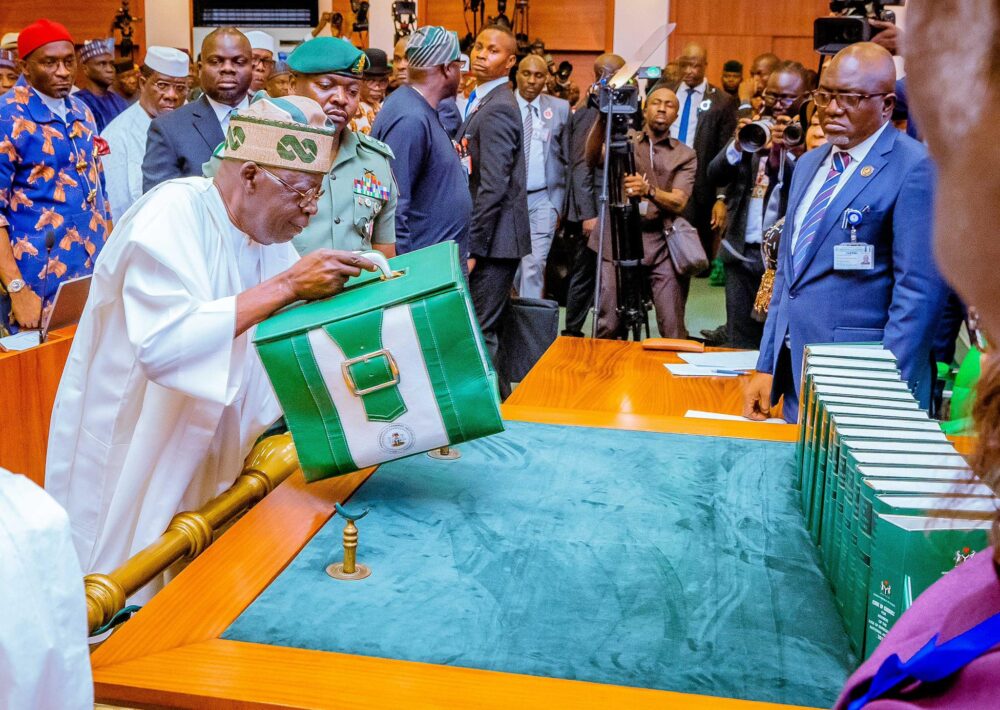
Tinubu Tables ₦58.18trn 2026 Budget, Projects Sustained Economic Stability

Published

on

President Bola Ahmed Tinubu
Share

President Bola Tinubu on Friday presented a ₦58.18 trillion 2026 Appropriation Bill to a joint session of the National Assembly of Nigeria, declaring that Nigeria’s economy is showing measurable signs of stabilisation following years of structural pressure.

Tagged “Budget of Consolidation, Renewed Resilience and Shared Prosperity,” the 2026 fiscal plan is aimed at locking in recent macroeconomic gains while translating economic recovery into improved living standards for citizens.

According to the President, Nigeria’s economy expanded by 3.98 per cent in Q3 2025, while inflation moderated significantly, falling to 14.45 per cent in November 2025 from 24.23 per cent in March 2025.

“With stabilising food and energy prices, tighter monetary conditions, and improving supply responses, we expect the disinflationary trend to persist into 2026, barring major supply shocks,” Tinubu said during the presentation on December 19, 2025.

The President highlighted additional positive indicators, including improved crude oil production, rising non-oil revenues, renewed investor confidence, and external reserves climbing to a seven-year high of approximately $47 billion.

Under the proposal, the Federal Government projects ₦34.33 trillion in revenue against planned expenditure of ₦58.18 trillion, resulting in a budget deficit of ₦23.85 trillion, equivalent to 4.28 per cent of GDP. Tinubu emphasised that the fiscal framework is built on realism, prudence, and growth-driven assumptions.

He further assured lawmakers of tighter discipline in budget implementation, stressing that fiscal spending in 2026 would be more outcome-focused.

“Every naira spent or borrowed must deliver measurable public value,” the President said.

Continue Reading

Business & Economy

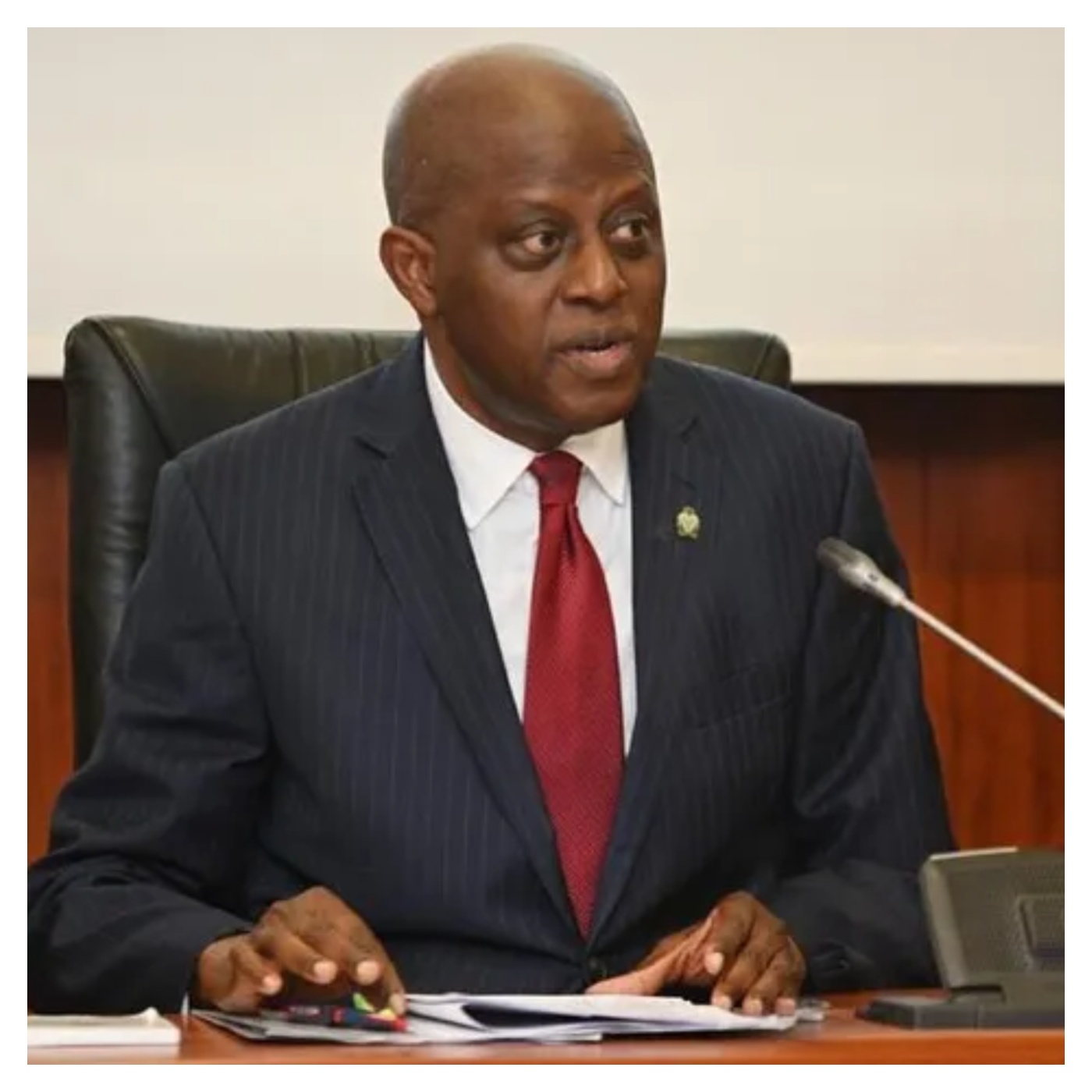
CBN Governor Reassures U.S. Investors on Nigeria’s Economic Reforms, Stability

Published

on

CBN Governor, Yemi Cardoso
Share

The Governor of the Central Bank of Nigeria (CBN), Mr. Olayemi Cardoso, has reassured United States investors of Nigeria’s commitment to macroeconomic stability and market-driven reforms, amid global economic uncertainty.

Cardoso gave the assurance during high-level engagements with U.S. business leaders and institutional investors in Washington, D.C., including the U.S.–Nigeria Executive Business Roundtable.

Speaking at the forum, the CBN governor said Nigeria remains focused on rules-based economic management, transparent markets, and predictable policy frameworks to restore investor confidence and drive sustainable economic growth.

He highlighted recent reforms in the foreign exchange market, the adoption of orthodox monetary policy measures, ongoing banking sector reforms, and the modernisation of the payments system. According to him, the reforms are aimed at stabilising the economy and supporting private-sector-led development.

The roundtable, convened by the U.S. Chamber of Commerce’s U.S.-Africa Business Center, focused on macroeconomic stabilisation, regulatory clarity, and opportunities to scale bankable projects across key sectors of the Nigerian economy. Discussions also emphasised efforts to deepen commercial and investment ties between Nigeria and the United States.

Commenting on the outcome of the engagement, President of the U.S.-Africa Business Center, Ms. Kendra Gaither, said investors are increasingly prioritising policy credibility and consistency.

She noted that clarity of rules, credible reforms, and disciplined economic management are critical factors driving investor interest, adding that Nigeria’s evolving message of discipline and opportunity is important in a global economy seeking stability and predictability.

Continue Reading

Business & Economy

Tinubu Welcomes Nigeria’s Removal from FATF Grey List, Pledges Continued Financial Reforms
Published

on

President Bola Tinubu
President Bola Ahmed Tinubu
Share

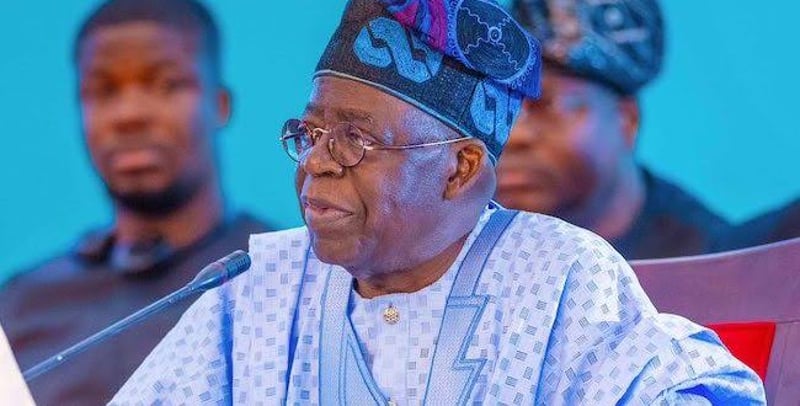
President Bola Ahmed Tinubu has welcomed the removal of Nigeria from the Financial Action Task Force (FATF) grey list, describing it as a major milestone in the nation’s economic reform and global credibility drive.

The FATF, the world’s foremost body for combating money laundering, terrorist financing, and proliferation financing, announced Nigeria’s delisting on Friday at its plenary session in Paris, France.

The decision formally removes Nigeria from the list of countries under increased monitoring, following the nation’s successful completion of its FATF Action Plan after over two years of sustained reforms and inter-agency coordination.

In a statement issued by his Special Adviser on Information and Strategy, Bayo Onanuga, President Tinubu said the development reflects Nigeria’s progress in strengthening its Anti-Money Laundering and Counter-Financing of Terrorism (AML/CFT) framework.

“Rather than treat our placement on the grey list in 2023 as a setback, we saw it as a call to action,” the President said. “This delisting is a strategic victory for our economy and a renewed vote of confidence in Nigeria’s financial governance.”

The President credited the achievement to far-reaching legal, institutional, and operational reforms implemented under his administration through the Nigerian Financial Intelligence Unit (NFIU), in collaboration with the Attorney-General of the Federation, the Minister of Finance and Coordinating Minister of the Economy, and other key ministries.

Tinubu commended the Director/CEO of the NFIU, Ms. Hafsat Abubakar Bakari, and her team for their diligence and professionalism, as well as the contributions of several ministries, agencies, and private sector representatives who participated in the National Task Force on AML/CFT.

He also acknowledged the support of international partners including France, Germany, the United Kingdom, the United States, the United Nations, and the European Commission, for their technical assistance throughout Nigeria’s reform process.

President Tinubu assured that his administration will sustain and deepen the reforms that led to the country’s delisting.

“This is not just a technical accomplishment,” he said. “It marks the beginning of a new chapter in our financial reform agenda as we continue building a system Nigerians and the world can trust.”

Continue Reading