Connect with us

Education

Kano to redeploy 5,000 civil servants to classrooms

Published

on

Share

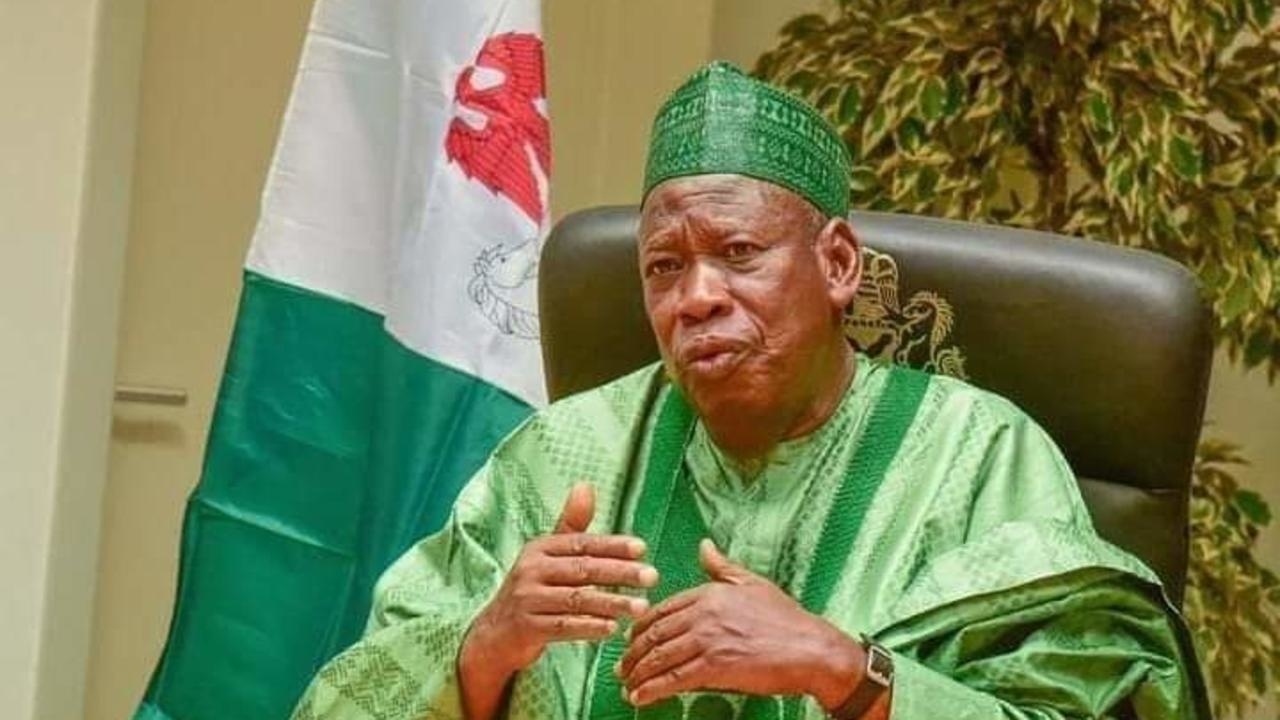
With the adoption of the recommendation of the Technical Committee set up to look into the teaching staff challenges bedeviling free education policy, Kano state Executive Council has directed the state civil service to redeploy about 5, 000 civil servants with requisite qualification in education to classrooms as part of effort to strengthen the policy.

While adopting the report of the committee established by the Office of the Secretary to the State Government to identify such categories of civil servants with NCE , B ED or diploma in Education, the council, at its weekly meeting on Wednesday, also accepted the immediate establishment of an implementation committee.

The state commissioner for Information, Malam Muhammad Garba, who addressed a press briefing in his office, said the affected staff serving in Ministries, Departments and Agencies (MDAs) as well as Local Government Areas (LGAs) with vital teaching credentials are to be dispatched to fill existing posts in schools including tertiary institutions in the state.

He said the committee discovered that there were 575 officers with teaching qualification serving in MDAs, while 3, 712 others were found in the 44 LGAs with duplicate functions.

Malam Garba stated that of this number, 19 of them have Ph ds, 55 Masters, 1,100 B Eds, 2,366 NCE and 10 Diploma in Education.

Malam Garba added that the committee’s findings also revealed that 508 officers, three of them with Ph ds/Masters, 79 B Ed, 421 with NCE and five others with Diploma in Education were found in local governments engaged in administrative duties.

The commissioner pointed out that zonal offices and local government areas have large concentration of officers.

“For instance, while there’s an LGEA with only 60 staff, others have up to 274 with a state average of 151 per LGEA. Under ideal condition, and especially with the advancement in Information and Communication Technology (ICT), 25 officers can perform the management of an LGEA,” he added.

To this end, the commissioner said, all civil servants found in MDAs with teaching qualification and with more than five years to retire are to be posted back schools to teach, NCE holders under the state Universal Basic Education (SUBEB) should remain, officers with B Ed are to be deployed to either Junior Secondary School or Senior Secondary School, while those with higher degrees are to be sent to tertiary institutions.

Malam Garba also indicated that the reintegrated civil servants are to be given two weeks induction before deployment to schools and an additional one week refresher training every term.

The commissioner further stated that the setting up of the committee was in response to the learning crisis and government’s commitment to achieving the education 2030 agenda which seeks to ensure the provision of education and promote lifelong learning opportunities for all.

He announced that a policy and strategy would also be developed to make it compulsory for all public office holders and senior civil servants to be engaged in schools within their locality at least twice every month for the purpose of information and inspection visits to encourage pupils to study.

Malam Garba said the draft Teacher Education Policy for the state would be finalized with the recently NCE approved National Physical Therapy Examination (NPTE) to promote standards in recruitment, redeployment incentives and provision of teaching and learning resources

Continue Reading
Click to comment

Leave a Reply

Your email address will not be published. Required fields are marked *

Education

UNIBEN Bans Sign-Out Celebrations, Warns of Severe Sanctions for Violators

Published

on

UNIBEN Gate
Share

The management of the University of Benin (UNIBEN), Edo State, has banned all forms of sign-out celebrations by graduating students.

The announcement was contained in a circular issued on Tuesday, October 7, 2025, by the university’s Registrar, Ademola Bobola.

According to the statement, the decision followed a management meeting held on Monday, where the institution reaffirmed an earlier Senate resolution prohibiting such activities on campus.

“The management declared that no sign-out celebration of any kind, including signing on T-shirts and playing of music, will be tolerated,” the circular read.

Bobola warned that any student found violating the directive would face severe disciplinary actions, including rustication, expulsion, or withdrawal of certificate.

He added that the university would not condone any form of disorderly conduct, unauthorised gatherings, or parading of vehicles during or after examinations.

The Registrar also announced that unauthorised vehicles would be barred from entering the campuses during the last week of the second-semester examination.

In addition, the management prohibited large gatherings around faculties, schools, or institutes after examinations and directed photographers not to set up photo stands or galleries for such purposes.

Bobola further advised parents and guardians of final-year students to stay away from campus premises, particularly on the last day of examinations, to avoid any breach of the directive.

He urged members of the university community to adhere strictly to the management’s position, warning that violations would attract “severe disciplinary sanctions, including withdrawal of certificate, rustication, and expulsion.”


Continue Reading

Education

OAU Medical Student Dies by Suicide After Failing Exam Twice

Published

on

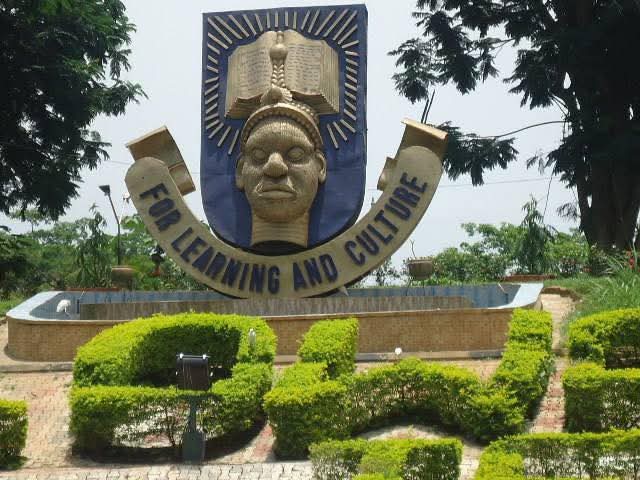
OAU logo
Share

The Obafemi Awolowo University (OAU), Ile-Ife, Osun State, has been thrown into mourning following the death of a part-two medical student, Ajibola Ibitayo, who reportedly took his own life after failing an examination for the second time.

In a statement on Thursday, the university’s Public Relations Officer, Mr. Abiodun Olarewaju, said Ibitayo, with matriculation number DEN/2021/023, was a student in the Faculty of Dentistry. The results of the last semester examinations, released on Wednesday, indicated that he would have to repeat Part Two for another academic year, having already repeated the class once.

According to the statement, the student, whose father is a medical doctor, allegedly injected himself at his parents’ home in Ejigbo, Osun State.

Saddened by the incident, the Vice-Chancellor, Prof. Simeon Bamire, appealed to parents and guardians to help young people understand that setbacks are a natural part of life and not the end of their aspirations. He urged students to see failure as a redirection toward greater achievements.

Bamire prayed for comfort for the bereaved family, the Faculty of Dentistry, the College of Health Sciences, and the entire university community over the tragic loss.


Continue Reading

Education

WAEC Releases 2025 WASSCE Results, Addresses Concerns Over Night Exams

Published

on

WAEC logo
Share

The West African Examinations Council (WAEC) has officially released the results of the 2025 West African Senior School Certificate Examination (WASSCE) for school candidates.

In a statement issued on Monday, August 4, 2025, via its official X (formerly Twitter) handle, the Council announced that all candidates who participated in this year’s examination can now access their results online.

“The West African Examinations Council is pleased to inform candidates who sat WASSCE for School Candidates, 2025 that the result has officially been released today, Monday, August 4, 2025,” the statement read.

Candidates are advised to check their results by visiting www.waecdirect.org and entering their examination number and registration PIN.

The announcement comes in the wake of public criticism over reports that some WASSCE papers were conducted at night in certain locations, including Taraba and Ogun States. Viral videos showing students sitting for exams under artificial lighting had sparked concerns over safety, logistics, and the welfare of candidates.

Responding to the backlash, the Head of the Nigeria National Office of WAEC, Mr. Amos Dangut, clarified that the late-night examinations were a strategic measure to counter a potential security threat. He explained that the Council received credible intelligence suggesting a risk of exam paper leakage, necessitating an urgent rescheduling to safeguard the integrity of the test.

“Our decision to conduct some papers at night was based on verified intelligence suggesting possible leakage. We acted swiftly to uphold the credibility of the examination process,” Mr. Dangut stated.

WAEC confirmed that similar night sessions were held in parts of Kwara, Taraba, and other northern states under strict supervision.

While the development raised questions about preparedness and candidate well-being, the Council reiterated its commitment to maintaining high standards of credibility and fairness in all examinations across the region.

WAEC also called on stakeholders—parents, schools, and candidates—to remain alert and collaborative in ensuring the continued integrity of its examination processes.


Continue Reading