Connect with us

Business & Economy

Cleaner energy: Nigeria on path to meeting global demands – Osibanjo

Published

on

Prof-Yemi-Osinbajo.j
vice President Osibanjo
Share

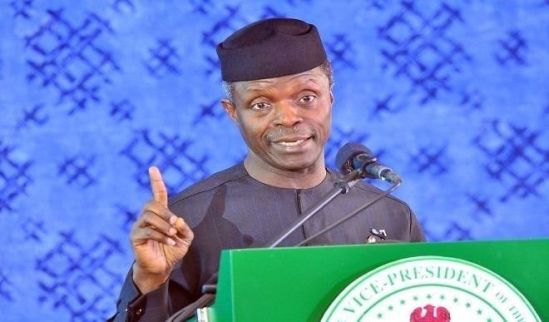
The Federal Government says it is working conscientiously to ensure that the country meets the global demands on cleaner energy.

Vice-President, Yemi Osinbajo, said this on Tuesday at the opening of the 2021 Nigeria Oil and Gas Conference holding at the International Conference Centre in Abuja.

Osinbajo represented by the Minister of State for Petroleum, Chief Timipre Sylva, noted that the country had no option than to move with the global trend being signatory to international protocols on cleaner energy.

He said the Federal Government was leaving no stone unturned at ensuring that the country moved to cleaner renewable energy but that the step must be gradual.

Osinbajo explained that government had already directed stakeholders in the oil and gas sector to focus on natural gas resources as a transition fuel that would function as a bridge between the dominant fossil fuels and the cleaner energy.

“Natural gas has the intrinsic abilities to meet the increasing global requirements for cleaner primary energy use, while at the same time enabling much needed domestic industrialisation for rapid economic growth in very few endowed countries such as Nigeria.

“We are not unmindful of the peculiar challenges confronting the gains from oil and gas operations in Nigeria.

“From infrastructural deficiency and insecurity to high cost of operations, to mention just a few, the government is working conscientiously to tackle all without lagging behind on our path to meeting the cleaner energy global demands.

“In spite of the current global challenges in the industry, government has been supporting the aggressive implementation of the nationwide gas infrastructure blueprint.

“This informed our recent declaration of year 2021-2030 as “the Decade of Gas” after the successful kickoff with the National Gas Expansion Programme in 2020,” Osinbajo said.

Also speaking at the event, Mr Bitrus Nabasu, Permanent Secretary, Ministry of Petroleum, who represented the Minister of Petroleum, said the signing of the PIB would help the country to  move faster in achieving a cleaner energy.

“The PIB cannot come at a better time than now that the COVID-19 pandemic caused uncertainty in the oil and gas sector.

“We are on the part of witnessing another investment in our oil and gas sector and it will help have a good administration and infrastructure and ensure development of the country to make life more meaningful for the citizens.

“Natural gas will help government achieve it’s aspirations and very soon we will reap the benefits of our decade of gas programme.

“These include auto gas vehicular movement, industrial application, welfare gas pipelines for electricity and domestic usages will help Nigerians even in rural areas to improve life.”

The minister said gas had a lot of role to play in the country’s quest for cleaner energy resources.

Malam Mele Kyari, the Group General Manager, Nigerian National Petroleum Corporation, (NNPC) said investment in the oil and gas industry had dwindled by 30 per cent due to the impact of the COVID-19 pandemic.

Kyari said energy transition was not just about moving from fossil fuel to renewable energy but that it was creating the right balance.

“There is this mistake that by 2050 fossil fuel will go away and we will only have renewables; that is not true.

“For us, we know for sure that oil will still be relevant for us because today we have deficit of electricity, infrastructure and so many other things and we have to deal with them.

“We must ensure we produce the quick oil; quick oil means that we have to monetise every resources that is available today, so that we help the resources that will create the future.

“And oil will provide that fulcrum for us to procreate the wealth but one thing we are also sure is that gas is everything.

“So, our focus today is to deepen gas monetisation, not necessarily consumption and that means we have to do both domestic and export, so that we can take value from both ends,” Kyari said.

He  said the focus now was to see how to accelerate development and monetisation in gas.

(NAN)

 

Continue Reading
Click to comment

Leave a Reply

Your email address will not be published. Required fields are marked *

Business & Economy

Tinubu Welcomes Nigeria’s Removal from FATF Grey List, Pledges Continued Financial Reforms

Published

on

President Bola Tinubu
President Bola Ahmed Tinubu
Share

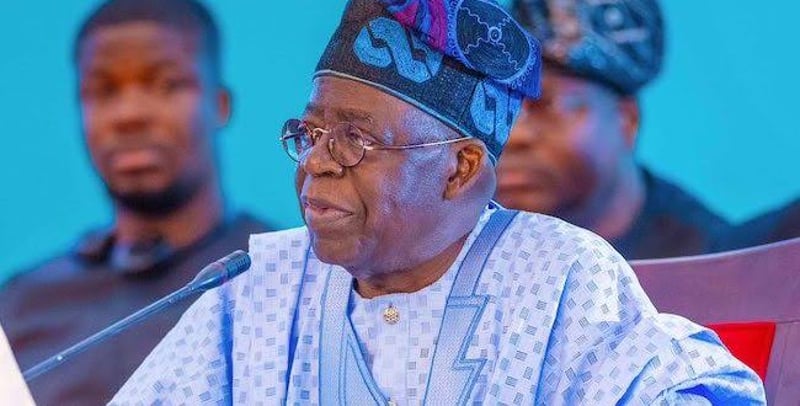
President Bola Ahmed Tinubu has welcomed the removal of Nigeria from the Financial Action Task Force (FATF) grey list, describing it as a major milestone in the nation’s economic reform and global credibility drive.

The FATF, the world’s foremost body for combating money laundering, terrorist financing, and proliferation financing, announced Nigeria’s delisting on Friday at its plenary session in Paris, France.

The decision formally removes Nigeria from the list of countries under increased monitoring, following the nation’s successful completion of its FATF Action Plan after over two years of sustained reforms and inter-agency coordination.

In a statement issued by his Special Adviser on Information and Strategy, Bayo Onanuga, President Tinubu said the development reflects Nigeria’s progress in strengthening its Anti-Money Laundering and Counter-Financing of Terrorism (AML/CFT) framework.

“Rather than treat our placement on the grey list in 2023 as a setback, we saw it as a call to action,” the President said. “This delisting is a strategic victory for our economy and a renewed vote of confidence in Nigeria’s financial governance.”

The President credited the achievement to far-reaching legal, institutional, and operational reforms implemented under his administration through the Nigerian Financial Intelligence Unit (NFIU), in collaboration with the Attorney-General of the Federation, the Minister of Finance and Coordinating Minister of the Economy, and other key ministries.

Tinubu commended the Director/CEO of the NFIU, Ms. Hafsat Abubakar Bakari, and her team for their diligence and professionalism, as well as the contributions of several ministries, agencies, and private sector representatives who participated in the National Task Force on AML/CFT.

He also acknowledged the support of international partners including France, Germany, the United Kingdom, the United States, the United Nations, and the European Commission, for their technical assistance throughout Nigeria’s reform process.

President Tinubu assured that his administration will sustain and deepen the reforms that led to the country’s delisting.

“This is not just a technical accomplishment,” he said. “It marks the beginning of a new chapter in our financial reform agenda as we continue building a system Nigerians and the world can trust.”

Continue Reading

Business & Economy

Lagos Tops 2024 State Revenue Ranking with ₦1.26 Trillion — NBS Report

Published

on

lagos state logo
Lagos State coat of Arms
Share

Lagos State has retained its position as Nigeria’s highest internally generated revenue (IGR) state in 2024, according to a new report released by the National Bureau of Statistics (NBS).

The report, published on Monday via the NBS X handle, revealed that the 36 states and the Federal Capital Territory (FCT) collectively generated ₦3.6 trillion in 2024, marking a 49.7 per cent increase from ₦2.43 trillion recorded in 2023.

Lagos led the chart with ₦1.26 trillion, followed by Rivers with ₦317.3 billion, and the FCT with ₦282.36 billion. Ogun and Enugu States completed the top five with ₦194.93 billion and ₦180.5 billion, respectively.

The bottom five states on the list were Adamawa (₦20.29 billion), Taraba (₦17.46 billion), Kebbi (₦16.97 billion), Ebonyi (₦13.18 billion), and Yobe (₦11.08 billion).

Other states that made the top 10 include Delta (₦157.79 billion), Edo (₦91.15 billion), Akwa Ibom (₦75.77 billion), Kano (₦74.77 billion), and Kaduna (₦71.57 billion).

The NBS noted that the sharp increase in overall IGR reflects growing fiscal efforts by states to boost their internal revenue base amid declining federal allocations.


Continue Reading

Business & Economy

FG Launches Free Financial Education Programme for 100,000 Youths 

Published

on

FG logo
Share

The Federal Ministry of Youth Development, in partnership with Investonaire Academy, has commenced registration for a nationwide financial education programme designed to train 100,000 Nigerian youths annually in financial literacy, entrepreneurship, global trade, and investment.

In a statement signed by Omolara Esan, Director of Information & Public Relations, the Ministry said the initiative reflects its commitment to equipping young Nigerians with the skills to navigate today’s complex financial landscape, enhance employability, and foster sustainable wealth creation.

The programme will provide participants with exposure to global asset classes, including commodities, gold, equities, and foreign exchange, as well as training in risk management, portfolio development, and wealth-building strategies.

Successful candidates will receive industry-recognised certificates to support career advancement and entrepreneurial opportunities. Training will be delivered via an interactive Learning Management System (LMS), incorporating gamified learning, simulations, quizzes, and real-life trading scenarios. Physical sessions will begin in Abuja before expanding nationwide.

The programme is open to students, NYSC members, entrepreneurs, job seekers, and young professionals across Nigeria’s 36 states and the FCT.

Registration is free and currently ongoing via www.investonaire.org.


Continue Reading