Connect with us

News

Osun Govt enrolls 30,000 youth into its Health Insurance Scheme              

Published

on

Osun State Governor Adegboyega Oyetola
Share


…Embarks on massive recruitment of O’YES cadets
As part of its avowed commitment to maintaining the status of the state as a pacesetter in the health sector through its prompt intervention that has earned the state several accolades, the Government of Osun under the leadership of Governor Adegboyega Oyetola has ordered immediate enrolment of 30,000 youth into its Health Insurance Scheme.
The initiative is aimed at ensuring that Osun youths that constitute a greater proportion of the population of the State get  quality healthcare delivery that is accessible, affordable and beneficial to the youth.
This is even as the government announced that it has also kickstarted massive recruitment into Osun Youth Employment Scheme popularly called O’YES.
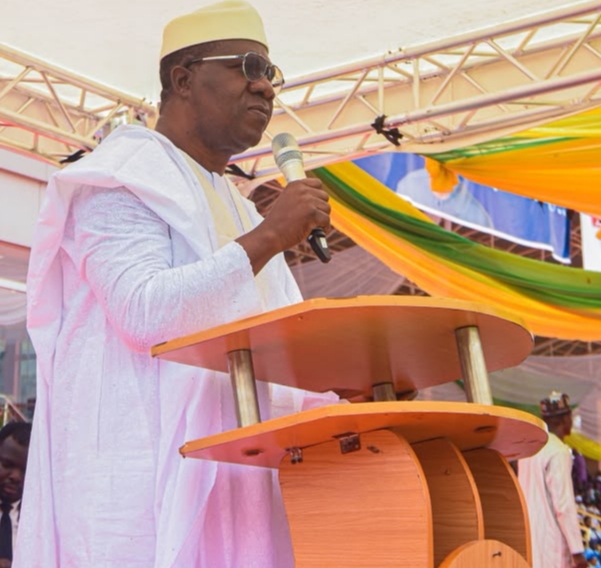
These disclosures were made on Friday by the Commissioner for Youth and Sports, Mr. Azeez Olayemi Lawal, during a press conference held at the Conference Room, Ministry of Information and Civic Orientation, State Government Secretariat, Abere.
Lawal said the initiative was to properly integrate the youth into the Scheme, especially those  who are out of school, unemployed, physically challenged or mentally challenged.
He said the beneficiaries of the Scheme would be drawn from the 30 Local Government Areas, including Ife-East Area Office of the State in line with the Osun State Youth Policy Programme and Implementation Strategies.
“The present administration’s efforts in making sure that healthcare delivery is accessible and affordable to all citizens and residents of the State led to the establishment of the Osun Health Insurance Scheme (OHIS). The benefits of the Scheme are enormous as the people of Osun are now able to access quality healthcare without tears, with evidence of improvement in their health.
“Nevertheless, the youths, who constitute a greater proportion of the population of the State, some of whom are out of school, unemployed, physically challenged or mentally challenged, are yet to be fully integrated into the scheme.
“In order to address this, Governor Adegboyega Oyetola, who is a lover of the youth, directed that 30,000 vulnerable youth drawn from all the local government areas of the State be enrolled under the Osun Health Insurance Scheme (OHIS).
“The enrollment of (30,000) thirty thousand vulnerable youth in all the Local Government in the State shall be as follows: Distribution of (OHIS) Osun Health Insurance Scheme forms to the vulnerable youth through Local Government Chairmen; Capturing and Documentation of vulnerable youth beneficiaries in each of Local Government in the State by Osun Health Insurance Scheme Team; Inauguration ceremony of (30,000) thirty thousand vulnerable youths into (OHIS) Osun State Health Insurance Scheme to be presided over by Mr. Governor, at a later date”, Lawal added.
The Commissioner revealed that the administration of Governor Oyetola has concluded plans to recruit massively into  the Osun Youth Empowerment Scheme as part of efforts to maximize the potential embedded in the youth so as to further contribute their quota to the growth and development of the State.
He said the recruitment of the prospective candidates for the Batch 5 of the O’YES Cadets would kickstart today, and that about 62,000 Cadets had gone through the Scheme that comprised 4 batches so far so good.
According to Lawal, the Scheme is a revolving 2-year Volunteers Scheme which strives to empower recruited youths across the 30 Local Governments and Area Office in the State while the volunteers are divided into different specialized cadres such as Public Sanitation, Public Works Brigade, Green Gang, Osun Sheriff Corps, Traffic Marshalls, Osun Paramedics, Sanitation Czars and Teachers Corps and the volunteers are deployed to offer productive services in the identified areas of socio-economic life in accordance with the objectives of the scheme.
“Let me make it clear that O’YES itself is not about offering employment to the youth but empowering the participating youth to become self-reliant and possibly become employers of labour. This is where the exit programme comes in. The Exit Programme empowers the Cadets by helping them become self-reliant through acquisition of relevant entrepreneurial and vocational skills. As at present, the Scheme has about 74 exit programmes for the cadets to choose from.
“We can boldly say that the Scheme has achieved success in transforming the lives of the ex-cadets through the exit programmes, to the extent that you can now find many of the ex-cadets doing fine in different areas of endeavours, be it the Civil Service, Para-Military Service, Private Sector etc. Similarly, many of our ex-cadets have established their own businesses.
“For instance, the owners of AJ Gas in Ile-Ife, and Alamar Multi-Purpose Nigeria Limited, passed through the Scheme. Some others have improved on their educational standing such as Dr. Foluke Kehinde, Ms Deronke Egbedun who is now in Canada, etc. On the political front, there are some former O’YES cadets who are now serving as Council chairmen, Secretaries to Local Government councils, Councillors, Senior Special Assistants to the Governor among others.
“In addition to these, O’YEs under the present administration has recorded more success stories which include Collaboration with the Osun Agency for Community and Social Development Project CSDA on PALM-OIL PROCESSING PROJECT for some ex-cadets of O’yes. The sum of N1,574,625.00 was approved and presented by CSDA to six Local Government Areas. For instance, OREDAPO Vulnerable Group Ifetedo in Ife South LGA among others included some O’YES Cadets who are into palm oil processing”, he added.

Continue Reading
Click to comment

Leave a Reply

Your email address will not be published. Required fields are marked *

News

Uber Exits Nigeria After 12 Years, Cites Changing Business Priorities

Published

on

Share

Global ride-hailing giant Uber has ended its ride-hailing operations in Nigeria, bringing its 12-year presence in the country to a close.

Uber announced the decision on Wednesday, September 2, 2026, saying it would wind down its operations in Nigeria following a review of its business priorities and investment focus across Africa.

The company, which launched its service in Lagos in 2014, said the decision takes effect immediately.

“After a thorough review, we have taken the difficult decision to wind down operations in Nigeria and Uganda, effective September 2, 2026,” Uber said in a statement.

Uber stressed that the decision is limited to Nigeria and Uganda and does not represent a withdrawal from the wider African market.

The company said it remains committed to Sub-Saharan Africa, which it described as a region with strong growth prospects and long-term opportunities.

Why Uber is leaving Nigeria

Uber attributed its Nigerian exit to its “evolving business priorities and investment focus across the continent.”

The company said it was concentrating investments on markets where it could create the greatest value for drivers by providing earning opportunities at scale while allowing passengers to move around seamlessly.

Uber did not cite regulatory difficulties in Nigeria as the reason for its withdrawal.

The company also specifically denied that its decision was linked to a recent directive by the Federal Airports Authority of Nigeria (FAAN) concerning e-hailing operations at Nigerian airports.

“No,” Uber said when asked whether the FAAN directive was responsible for its decision.

FAAN had recently clarified that it had not imposed a blanket ban on e-hailing services at Nigerian airports, explaining that discussions with operators were focused on establishing an appropriate framework for their operations within airport premises.

Drivers, riders affected

Uber said its immediate priority is supporting drivers, riders and employees affected by the shutdown.

The company said it is communicating directly with affected stakeholders about the implications of the decision and arrangements for the transition.

Uber has operated in Nigeria for more than a decade, expanding beyond Lagos to several cities, including Abuja, Port Harcourt, Ibadan, Enugu, Kano and other major urban centres.

Its departure is expected to reshape Nigeria’s increasingly competitive ride-hailing market, where operators compete for passengers and drivers amid rising operating costs and evolving regulatory requirements.

End of an era

Uber’s exit marks the end of a significant chapter in Nigeria’s digital transport industry.

The company helped popularise app-based ride-hailing in the country after launching in Lagos in 2014, offering passengers an alternative to conventional taxi services and creating new earning opportunities for thousands of drivers.

Its withdrawal also comes at a time when ride-hailing companies across Africa are reassessing their operations and investment strategies.

Uber previously withdrew from Côte d’Ivoire in 2025 and ended operations in Tanzania in January 2026, reflecting the challenges global mobility platforms can face in adapting their business models to individual African markets.

For Nigerian passengers and drivers, however, the immediate question is what Uber’s departure will mean for competition, fares, driver earnings and service availability.

While Uber is leaving Nigeria, the company maintains that its broader commitment to Sub-Saharan Africa remains intact.

The exit therefore represents a strategic withdrawal from the Nigerian market rather than a retreat from Africa, according to the company.

Continue Reading

News

Kogi Information Perm Sec Pledges Support for NUJ Chapel, Urges Journalists to Uphold Trust

Published

on

Share

The newly appointed Permanent Secretary, Kogi State Ministry of Information and Communications, Mr. Awulu Tijani David, has pledged his full support to information officers in the state, stressing that effective information management remains critical to the success of government and its policies.

Awulu Tijani made the commitment on Wednesday, September 2, 2026, when the leadership of the Nigerian Union of Journalists (NUJ), State Information Chapel, led by its Chairman, Mr. Solomon Musa, paid him a courtesy visit at his office in Lokoja to formally introduce the newly elected executives of the chapel.

The Permanent Secretary, who described the position of leadership as a privilege and a responsibility entrusted to individuals by the people, urged the new NUJ Information Chapel leadership to justify the confidence reposed in them by members.

He advised the executives to remain accountable, trustworthy and committed to the welfare and professional advancement of members, noting that records of every person entrusted with responsibility would eventually speak for them.

“People trusted and elected you. It is my prayer that you succeed better than those who have been there before you,” he said, while assuring the chapel of his willingness to work with the new leadership for the advancement of the information profession in Kogi State.

Awulu particularly emphasised the strategic importance of information officers to government, describing them as the “eyes” of the Ministry of Information and Communications and key players in communicating government policies, programmes and achievements to the public.

According to him, the success of the ministry is closely tied to the effectiveness of its information officers, stressing that the leadership of the ministry must provide the necessary support and working environment for them to perform optimally.

“If the Ministry of Information does not do whatever it will take to make the information officers work well, then what are we here for? You are the eyes of the Ministry of Information. Without you, the ministry cannot do anything,” he stated.

The Permanent Secretary also encouraged the chapel leadership to always communicate its needs and challenges to his office, assuring them that issues within his capacity would receive prompt attention, while matters requiring higher-level intervention would be referred appropriately.

He said his door would remain open to members of the chapel, describing the ministry as their own home and urging them not to hesitate to approach him whenever they required his intervention.

“This is your office; it is your home. Whenever you need the office to intervene, call on me. I don’t know everything that you do, and I am not a journalist; I am an administrator. That is why I need people to advise me,” he said.

Awulu further noted that his appointment as Permanent Secretary should be seen as a privilege rather than a position that places him above others, stressing that any member of the service could attain similar responsibility in the future.

He also commended the Chairman of the NUJ Information Chapel, Mr. Solomon Musa, whom he described as a humble and experienced professional who understands the demands of the information business.

He assured the chapel that he would support programmes that would contribute to the professional development and welfare of information officers, urging the leadership to formally present its proposals for consideration.

Earlier, the Chairman of the NUJ State Information Chapel, Mr. Solomon Musa, said the visit was aimed at formally introducing the newly elected executives to the Permanent Secretary as the Chief Accounting Officer of the Ministry and to seek his support and that of the ministry for the chapel’s activities.

Musa introduced the new executives, including the Vice Chairman, Mrs. Olajumoke Ajani, a State Information Officer with the Ministry of Local Government and Chieftaincy Affairs; Secretary, Miss Gloria Amodu, State Information Officer with the Ministry of Works; Treasurer, Mr. Salau Ibrahim of SEMA; Financial Secretary, Mrs. Mariam Tenimu, State Information Officer with the Ministry of Environment; and Auditor, Mr. Abah Benjamin Eneojoh Treasure, State Information Officer at Government House.

He said the new leadership had come into office with a commitment to strengthen unity, professional development and collaboration among information officers across ministries, departments and agencies.

Musa also appealed for the ministry’s continued support for the chapel’s annual professional and social programme, which brings together serving and retired information officers, including former Permanent Secretaries and Directors who had served in the information sector.

He recalled that the inaugural edition of the programme held last year provided an opportunity for retired senior officers to share their experiences with younger information officers, describing the engagement as an avenue for knowledge transfer and mentorship.

According to him, the chapel intends to make this year’s edition bigger and more impactful, with plans to incorporate activities including a visit to an orphanage, sporting activities and professional lectures designed to strengthen the capacity of members.

He also sought the support of the ministry for the enrolment of chapel members into the Nigerian Institute of Public Relations (NIPR), noting that the proposal had previously been discussed with the relevant authorities.

The chapel’s Auditor, Mr. Abah Benjamin Eneojoh, further appealed to the Permanent Secretary to accept the role of a fatherly figure and strategic partner to the chapel, stressing that the support of the ministry’s leadership would be critical to the success of its programmes.

Eneojoh emphasised the need for government to continue strengthening State Public Relations Officers and other information professionals, noting that adequately supported information officers would be better positioned to effectively communicate government policies and achievements to the people.

He commended the Commissioner for Information and Communications, Hon. Kingsley Femi Fanwo, for what he described as his consistent support for the activities of the chapel and his commitment to the rebranding and repositioning of Kogi State through effective communication.

Continue Reading

News

NLC Requests More Crude For Refineries, Rejecst Petrol Price Hike

Published

on

NLC Flag
Share

The latest increase in the price of Premium Motor Spirit, popularly known as petrol, has been rejected by the Nigeria Labour Congress. The labour condemned the hike as “avoidable and unacceptable” questioning why the Federal Government has not done more to ensure that the Dangote Petroleum Refinery gets adequate supplies of Nigerian crude.

The NLC acting General Secretary, Benson Upah, stated this in an interview with the press on Tuesday, while reacting to the latest increase in petrol prices.

Upah warned that the development would further compound the economic difficulties confronting ordinary Nigerians, especially workers and low-income households already struggling with high transportation, food and other living costs.

“This adds to the increasing difficulties of the average Nigerian for whom life has been Hobbesian.

“The latest increase is avoidable and unacceptable in light of falling prices in the international market and our local capacity to sell more crude oil to Dangote. Why are we not doing so?” he queried.

The NLC’s reaction came against the backdrop of another increase in the price of petrol by the Dangote Petroleum Refinery, which has triggered fresh concerns among motorists, transport operators and businesses already grappling with high operating costs.

The refinery raised its petrol gantry price by N65 per litre on Saturday, moving it from N1,200 to N1,265 per litre. The latest adjustment came only three days after the company increased the price from N1,185 to N1,200 per litre.

It was the third price adjustment by the refinery in eight days. On August 21, the company had raised its gantry price from N1,165 to N1,185 per litre.

Altogether, the three adjustments increased N100 to the price of petrol at the refinery’s gantry, representing an 8.6 per cent increase within just eight days.

The latest increase has since reverberated across the downstream market, with petrol prices varying from one location to another as marketers factor in transportation, logistics and other distribution costs.

In some parts of Lagos and Ogun, petrol is about N1,310 per litre, while prices in some northern states and areas farther from the refinery have climbed to N1,350 and above.

The renewed price increase is coming at a particularly sensitive time for Nigerians, many of whom are still struggling with the impact of the removal of the petrol subsidy in 2023.

The hike has revived an old but unresolved question in Nigeria’s petroleum sector: why does a crude-producing country with a major new refinery still face persistent pressure on petrol prices?

The question has become more prominent with the emergence of the Dangote refinery, which has a capacity to process about 650,000 barrels of crude oil daily and was expected to reduce Nigeria’s dependence on imported refined petroleum products.

But while the refinery has ramped up production, securing adequate quantities of Nigerian crude has remained a contentious issue.

Continue Reading