Connect with us

News

Reps To Amend Mode Of Primaries In Electoral Act Bill Tomorrow, Says Gbajabiamila

Published

on

Federal House of Representatives
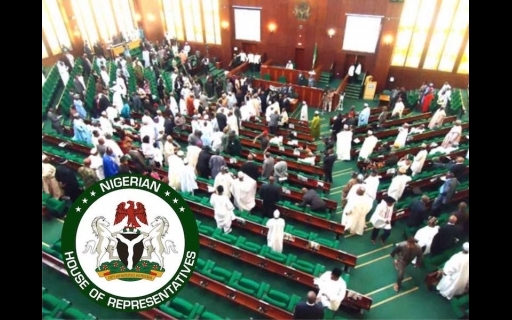
House of Representatives at plenary
Share

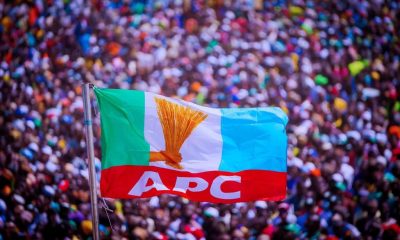
The House of Representatives is set to amend the provision of Direct Primaries in Electoral Act Amendment Bill.

Speaker of the House of Representatives, Femi Gbajabiamila disclosed this on Tuesday in his welcome remarks to members of the House.

The Speaker said the version of the bill circulating is not the same as the version sent to President Muhammadu Buhari. He, however, assigned a committee to investigate this.

According to him, the argument that political parties do not have a proper register of all their members is an indictment on political parties, as he wonders how they are able to conduct elections through direct or indirect methods without a comprehensive register.
The statement of the speaker also ruled out hopes of overriding President Buhari on the issue.

The lawmakers resumed plenary on Tuesday after their Christmas/New Year break.
The Federal Lawmakers proceeded on the holiday on December 21. Before the holiday, they had worked on and passed some resolutions and important bills including the controversial Electoral Act Amendment Bill.

Gbajabiamila in a speech to the lawmakers in December Last year to mark the adjournment of the House for the Christmas and New Year break said the House will address the matter in January 2022.

Gbajabiamila explained that the time was short to address the sensitive issue at hand in haste because members were set to proceed on break, and they must pass other important bills such as the 2022 Appropriation Bill and the Finance Bill before doing so.

President Buhari had earlier withheld his assent to the bill citing the cost of conducting direct primary elections, security challenges, and possible manipulation of electoral processes by political actors as reasons.

Continue Reading
Click to comment

Leave a Reply

Your email address will not be published. Required fields are marked *

News

Bamidele: 2026 Electoral Act Reflects Stakeholders’ Consensus, Not Legislative Imposition

Published

on

Senate Leader, Senator Michael Opeyemi Bamidele
Share

The Leader of the Senate, Opeyemi Bamidele, has stated that the provisions of the 2026 Electoral Act were the outcome of broad consultations with stakeholders rather than unilateral decisions by the National Assembly.

In an Easter message issued on Sunday through his Directorate of Media and Public Affairs, Bamidele explained that the new electoral law aligns with global best practices and was not designed to serve any political interest. He urged political actors to adhere to the rules collectively established to ensure stability, peace, and order within Nigeria’s democratic system.

His remarks come amid criticisms from opposition parties, particularly the African Democratic Congress (ADC), which alleged that certain provisions—such as Sections 77 and 84 of the Act—were introduced to weaken their chances ahead of the 2027 general elections. However, Bamidele dismissed the claims, insisting that all sections of the law were products of consensus involving civil society groups, development partners, and other stakeholders.

He defended the requirement for political parties to submit a digital register of members to the Independent National Electoral Commission (INEC), describing it as a transparency measure aimed at preventing undue influence by individuals outside party structures. According to him, the reform is essential for strengthening internal democracy and ensuring that party decisions reflect the will of legitimate members.

Bamidele also justified the restriction of candidate nomination processes to either direct primaries or consensus arrangements, noting that the move is intended to eliminate the delegate system, which he said had been susceptible to manipulation by wealthy individuals. He added that the new system empowers party members and reinforces majority rule in line with democratic principles.

Beyond electoral matters, the Senate leader condemned recent violent attacks in Plateau and Kaduna states, describing them as unacceptable acts against innocent citizens. He assured that the National Assembly is collaborating with federal and state authorities to tackle insecurity and prevent further loss of lives.

He disclosed that ongoing legislative efforts, including amendments to the Terrorism (Prevention and Prohibition) Act, are aimed at introducing stricter penalties for kidnappers, their sponsors, and collaborators. Bamidele expressed confidence that these measures would help restore security and stability across the country.

Reflecting on Easter, Bamidele called on Nigerians, especially political leaders, to embrace the values of sacrifice, tolerance, and unity exemplified by the resurrection of Jesus Christ, urging a collective commitment to nation-building.

Continue Reading

News

FG to Deploy AI Cameras to Tackle Insecurity in Plateau — Tinubu

Published

on

President Bola Tinubu
President Bola Ahmed Tinubu
Share


President Bola Tinubu has announced that the Federal Government will deploy over 5,000 artificial intelligence-enabled digital cameras across Plateau State to help security agencies combat rising insecurity.

The President made this known on Thursday during a visit to Jos, following the March 29 gun attacks in Angwan Rukuba, Jos North Local Government Area, which claimed several lives. He assured residents that such incidents would not recur, pledging decisive action to bring perpetrators to justice.

Tinubu directed security chiefs, including the Minister of Defence, Chief of Army Staff, and Inspector General of Police, to track down those responsible for the killings. He also tasked the Minister of Communications and Digital Economy, Bosun Tijjani, with overseeing the immediate installation of the surveillance system, starting in Jos and later expanding across the state.

Expressing sympathy to affected families, the President said no compensation could replace lost lives but promised government support and justice. He also directed the Ministry of Humanitarian Affairs to compile data on victims to ensure fair distribution of relief.

Plateau State Governor Caleb Mutfwang described the incident as a temporary setback, noting that the state had previously enjoyed relative peace. He expressed confidence in ongoing security efforts and thanked the Federal Government for approving the recruitment of 1,000 forest guards to strengthen local security.

Stakeholders at the meeting, including former governors and political leaders, called for greater collaboration and dialogue among Plateau indigenes, stressing that lasting peace would require collective responsibility.

Continue Reading

News

El-Rufai Returned to ICPC Custody After Court Appearance in Kaduna

Published

on

Former Kaduna State Governor,Nasir El -Rufai
Share

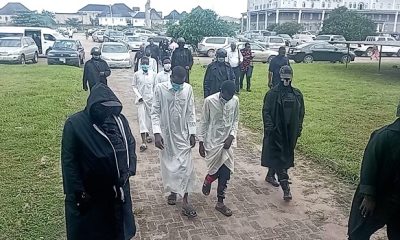
Former Kaduna State governor, Nasir El-Rufai, has been returned to the custody of the Independent Corrupt Practices and Other Related Offences Commission (ICPC) following court proceedings in Kaduna.

El-Rufai, who had earlier left custody on March 27, 2026, due to the death of his mother, was re-arraigned on Tuesday.

He first appeared before the Kaduna State High Court over a separate charge filed by the ICPC. However, proceedings were stalled due to the absence of the second defendant, prompting the court to adjourn the case until April 10, 2026.

Following the adjournment, El-Rufai was taken to the Federal High Court in Kaduna, where his application for bail was scheduled to be heard.

The court had earlier fixed March 31, 2026, for the hearing of his bail application.

Continue Reading