**Rescue Operation Ends Ordeal as NYSC DG, Security Chiefs Visit Victims in Owerri**
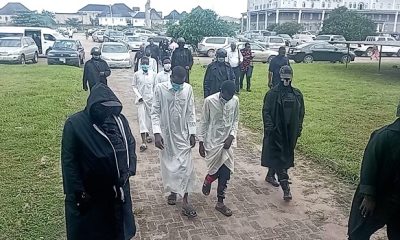
Twenty prospective members of the National Youth Service Corps (NYSC), along with another abducted passenger, have regained their freedom after days in captivity following their abduction along the Owerri-Onitsha Road in Imo State.
The victims were rescued from a forest in Amakohia-Ubi, Owerri West Local Government Area of the state, in a coordinated operation involving security agencies.
Their release brings relief to families who had endured days of uncertainty and anxiety following the October 1 abduction.
From Journey to NYSC Camp to Kidnappers’ Den
The victims were travelling from Ibadan, Oyo State, to NYSC orientation camps in Abia and Akwa Ibom states when their journey was abruptly cut short.
The two buses conveying the prospective corps members came under attack around Umunoha in Mbaitoli Local Government Area of Imo State.
The attack sparked a major security operation as authorities moved to locate the abducted corps members and dismantle the kidnappers’ hideout.
For the victims and their families, however, the days that followed were marked by fear, uncertainty and desperate prayers for their safe return.
Reports that the abductors were demanding as much as ₦50 million for each victim further heightened concerns among the families.
Security Forces Close In
As the search intensified, the Imo State Police Command reportedly located the kidnappers’ camp through drone surveillance.
However, security operatives were unable to immediately move into the area after intelligence indicated that the route and the camp had allegedly been fortified with improvised explosive devices.
Additional operational assets, including bulldozers and armoured personnel carriers, were subsequently deployed as security forces worked to gain access to the location.
Police had earlier announced the rescue of 10 victims following the attack, while efforts continued to locate those still being held captive.
The latest operation has now secured the freedom of the remaining 20 prospective corps members and another abducted victim.
Victims Receive Medical Attention
Following their rescue, the victims were taken to the Department of State Services (DSS) Hospital in Owerri for medical attention and comprehensive medical checks.
The Director-General of the NYSC, Brigadier General Olakunle Oluseye Nafiu, visited the rescued victims at the DSS clinic, where he addressed them and assessed their condition.
He was accompanied by the Imo State Commissioner of Police, the Director of the DSS in the state and the Commander of the 34 Artillery Brigade.
The presence of the NYSC leadership and senior security officials underscored the seriousness with which authorities treated the incident and the wellbeing of the rescued corps members.
While the victims have now regained their freedom, details surrounding the operation remain closely guarded.
It is also unclear whether any suspects were arrested during the rescue operation or whether any ransom was paid to secure the victims’ release.
The police, however, said the operation to apprehend those behind the abduction remains ongoing.
According to the Force Public Relations Officer, Ani Iniedu, security agencies would continue coordinated operations to ensure that those responsible are brought to justice.
Uzodimma Commends Security Agencies
Reacting to the development, Imo State Governor, Hope Uzodimma, commended the security agencies for what he described as their quick and coordinated intervention.
The governor expressed particular satisfaction that the corps members were rescued unharmed, praising the collaboration and patriotism demonstrated by the security agencies involved.
Uzodimma also acknowledged the cooperation between the Oyo and Imo State Governments, saying their joint efforts contributed to the successful release of all 20 captives.
He explained that because the incident involved the safety of human lives, authorities deliberately avoided releasing sensitive information while the rescue operation was underway.
According to him, the discreet approach was necessary to protect the victims and ensure that security agencies could carry out their operations without compromising their mission.
The governor also praised the parents and relatives of the abducted corps members for their patience and resilience throughout the difficult period.
He urged Nigerians to continue to have faith in the Federal Government and security agencies as efforts continue to address the country’s security challenges.
A Moment of Relief
For the rescued corps members, their release marks the end of a frightening interruption to what was supposed to be the beginning of a new chapter in their lives.
What started as a routine journey to NYSC orientation camps became an ordeal that left families waiting anxiously for news of their loved ones.
Their eventual rescue offers a moment of relief, while also renewing questions about security along major highways and the safety of young Nigerians travelling to serve their country.
For now, the focus remains on the recovery of the rescued victims, while security agencies continue efforts to identify, arrest and prosecute those responsible for the abduction.