Connect with us

Health

U.S. Donates 2.5 Million Doses Of Pfizer COVID-19 Vaccines To Nigeria

Published

on

COVID+19 Vaccine
Vaccines
Share

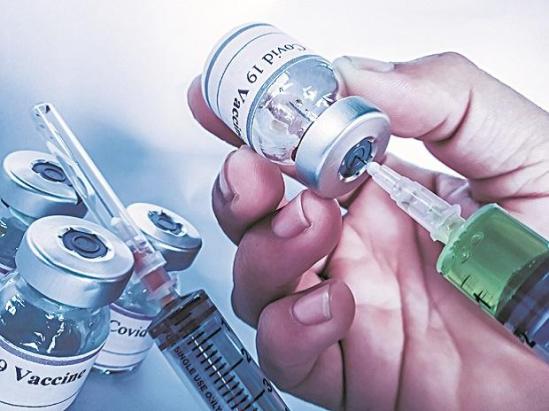
The United States has announced the donation of 2.5 million Pfizer vaccine doses to Nigeria.

This was disclosed in a statement by the U.S Embassy on Thursday.

According to the statement, the vaccine doses arrived in Abuja this week and were received by the National Primary Health Care Development Agency and taken to cold storage in preparation for distribution.

The vaccines are planned to be distributed to over 3,000 health facilities across all 36 states and FCT-Abuja. The statement added that the vaccines in the next few weeks will be available across major locations for vaccination in the country.

“Over the next several weeks, the vaccines will be available at major markets, shopping malls, event centers, motor parks, airports, places of employment, and religious institutions as part of Nigeria’s mass vaccination campaign.”

The statement added that, “the United States has donated more than 13.5 million doses of COVID-19 vaccine in partnership with COVAX, or bilaterally to Nigeria.

“Additionally, the United States has provided more than $119 million in COVID-19 related health assistance.”

The COVID-19 related health assistance according to the U.S Embassy includes a 40-bed mobile field hospital, ventilators, and related training for 88 hospitals, personal protective equipment, technical assistance for vaccine readiness, risk communication, and demand generation for vaccines.

Others include “conducting an epidemiological COVID-19 detection and vaccine hesitancy survey, setting up electronic record systems, rapid response teams, training for over 200,000 military and civilian personnel on COVID-19 control measures, and technology for virtual training.”

In addition, the United States leveraged the PEPFAR-supported National Integrated Specimen Referral Network (NiSRN) and laboratory investments to support the expansion of the NCDC (153) molecular laboratory network nationwide.

The statement explained that the United States is committed to helping end the pandemic in Nigeria and everywhere, also committed to donating more than one billion vaccine doses around the world, by early 2022.

This includes African countries primarily through the COVAX initiative.  Improving equitable distribution remains a priority for the United States to prevent the emergence of new variants that threaten populations everywhere.

.

Continue Reading
Click to comment

Leave a Reply

Your email address will not be published. Required fields are marked *

Health

FG Inaugurates Joint Task Team To Protect Health Investments

Published

on

Share

–ICPC member

In its bid to enforce preventive controls and protect investments in Nigeria’s health sector, the Federal Government has inaugurated a Joint Task Team comprising staff of the Federal Ministry of Health and Social Welfare and the Independent Corrupt Practices and Other Related Offences Commission (ICPC).

According to Ado Bako
Assistant Director, Information and Public Relations, of the Health ministry in a press release on Monday, 17th August, 2026, the Coordinating Minister of Health and Social Welfare, Prof. Muhammad Ali Pate said the initiative is a deliberate shift from the old practice of responding to wrongdoing after it had occurred to one of identifying vulnerabilities early, closing loopholes and strengthening systems before public resources are lost. The statement said:

“Every naira invested in our health system carries an obligation: to reach the facility, the health worker, and the Nigerian whose life depends on it. When those resources are diverted, the cost is not abstract. It is a medicine that never arrives, equipment that is unavailable when needed, or a service that falls short. In this sector, corruption can cost lives.”

Prof. Pate sees the Joint Task Team as “an instrument for institutional change”, whose mandate is centred on identifying institutional vulnerabilities, strengthening preventive controls and improving oversight across the health sector.

Under BHCPF 2.0, the Federal Government has deployed 774 Performance and Financial Management Officers, one to every Local Government Area, to independently verify the receipt and utilisation of funds. Verified National Identification Numbers are also being used to strengthen beneficiary authentication and reduce duplication, while digitalisation is improving transparency and traceability.

The Task Team builds on the Federal Government’s Red Letter of October 2025, which called on communities and ward health committees to track whether BHCPF funds reach their facilities. The Joint Task Team now adds structured institutional oversight to that citizen vigilance.

The Joint Task Team will conduct assessments following each quarterly disbursement of the Basic Health Care Provision Fund, with the BHCPF Secretariat serving as its Secretariat. The Team is co-chaired by the Director of Hospital Services, representing the Ministry, and a Director of the ICPC, with membership drawn from relevant supervising offices and departments. The Memorandum of Understanding runs for two years, subject to renewal.

The Permanent Secretary, Federal Ministry of Health and Social Welfare, Daju Kachollom S. mni, said protecting health-sector resources is fundamental to the Ministry’s mandate to save lives, reduce the physical and financial pain of ill-health, and produce health for all Nigerians. In her words:

“This is a Team designed to be embedded in how the Ministry already works, not to sit outside it.”

The Chairman of the ICPC, Dr. Musa Adamu Aliyu, represented by the Executive Secretary of the Commission, Mr. Clifford Oparaodu, said the partnership strengthens preventive oversight of health-sector resources, particularly the BHCPF.

“Corruption in the health sector is not measured only in financial losses or accounting irregularities. The losses are measured in maternal and infant mortality rates, rates of immunisation, mortality from preventable diseases, easy and affordable access to medical care at all levels.”

The Coordinating Minister, alongside the Chairman of the ICPC, formally inaugurated the Joint Task Team.

Continue Reading

Health

FG Reiterate Commitment to Health Sector Vows Zero Tolerance for Corruption 

Published

on

Share

The Coordinating Minister of Health and Social Welfare, Prof. Muhammad Pate, said this on Monday in Abuja during the inauguration of the Joint Task Team of the Federal Ministry of Health and Social Welfare and the Independent Corrupt Practices and Other Related Offences Commission (ICPC).

Pate said, “Let me be unequivocal: this Ministry will not tolerate corruption,” adding that effective systems should identify vulnerabilities early and close loopholes before resources were lost through misconduct or diversion.

He said that principle informed the establishment of the Joint Task Team between the ministry and ICPC, with prevention at the heart of the Memorandum of Understanding (MoU) and its mandate.

“The team is expected to identify institutional vulnerabilities, strengthen preventive controls, improve oversight across the health sector while supporting transparent management and accountability nationwide and closing gaps before they worsen further.”

Pate said the ministry was already applying the approach where significant public resources were being deployed, including BHCPF 2.0, where 774 officers, one per LGA, independently verify funds received and utilised.

He added that verified National Identification Numbers were being used to authenticate beneficiaries, reduce duplication, while tighter standards governed fund utilisation and violations attracted clear consequences across supported programmes nationwide already.

“The ministry is also digitalising processes so resources can be tracked transparently from allocation to use, while the ICPC provides independent preventive oversight to identify weaknesses before they become failures institutionally.

“This responsibility does not rest with government alone.

“The effort also requires public servants, honest contractors, development partners and citizens willing to speak when something goes wrong promptly and openly.”

He also charged members of the team to approach the assignment with professionalism, independence, courage and diligence, while ensuring recommendations outlast the team and strengthen systems beyond its lifespan through sustained implementation.

Also speaking, the Permanent Secretary in the ministry, Ms Daju Kachollom, described the partnership with ICPC as timely and important, saying the team would be embedded in existing ministry structures and continuity.

She said the team would be co-chaired by the Director of Hospital Services, representing the ministry, and an ICPC director, with members drawn from relevant supervising offices and departments as required.

Kachollom said the team would report through the ministry’s established workflow structures and conduct assessments after each quarterly BHCPF disbursement, with the BHCPF Secretariat serving as its secretariat throughout the two-year MoU.

In his remarks, the Chairman of the ICPC, Dr Musa Aliyu, said the team gave practical expression to the MoU signed between the commission and ministry in October 2025.

Represented by the Executive Secretary, Mr Clifford Oparaodu, Aliyu said the agreement reflected a shared commitment to transparency, accountability and integrity, particularly in managing BHCPF resources across Nigeria’s health sector effectively.

He said the MoU must produce concrete outcomes, ensuring funds allocated for primary healthcare reached intended facilities and people, while ICPC identified process weaknesses and eliminated opportunities for corrupt practices nationwide.

Aliyu described prevention as cheaper, less intrusive and more sustainable than reacting after corruption occurred, urging the team to undertake credible, evidence-based nationwide assessments of BHCPF flows and utilisation.

“Corruption in the health sector is not measured only in financial losses or accounting irregularities.”

The consequences, he emphasised directly affect lives and healthcare access.

“The losses are measured in maternal and infant mortality rates, rates of immunisation, mortality from preventable diseases, easy and affordable access to medical care at all levels,” he said.

Aliyu said integrity in healthcare meant medicines being available, functional equipment, working generators, present and paid health workers, and facilities capable of responding when citizens needed them most without delays or failures.

“Verify what you are told. Examine what has been delivered. Identify vulnerabilities, recommend practical remedies and follow through to ensure that corrective measures are implemented,” he said urging nationwide consistency.

The News Agency of Nigeria (NAN) reports that the MoU between organisations was signed in October 2025 to strengthen collaboration and preventive oversight in managing health-sector resources, particularly BHCPF funds nationwide

Continue Reading

Health

WHO Expresses Concern Over Trump’s Executive Order on Vaccines

Published

on

Share

The World Health Organisation (WHO) has expressed concern over U.S. President Donald Trump administration’s executive order on vaccines.

In a statement on Wednesday by the Secretary-General of WHO, Tedros Ghebreyesus underscored the critical role of vaccination for public health.

WHO, also on Wednesday, upheld the safety of childhood vaccines in response to a new directive from the White House to overhaul the recommended inoculation schedule.

He also acknowledged that “every parent wants to keep their children safe, and vaccines are among the most powerful tools for doing that, making deadly diseases preventable.”

On Monday, U.S. President Donald Trump signed an executive order that calls for reducing the number of routine childhood immunisation  from diseases 18 to 11.

The administration’s Gold Standard Childhood Vaccine Recommendations also advocate for separating the combined measles, mumps and rubella (MMR) vaccine into three single-disease shots that would be administered during separate medical appointments.

The policy also aims to improve vaccine research and to maximise parental choice over which shots their children receive.

This is to ensure state compliance with constitutional and federal statutory obligations regarding parental authority, religious freedom, accommodations for those with disabilities and equal protection under the law.

Tedros said WHO was concerned that the changes “are not aligned with decades of evidence” on when best to immunise children, how many doses are needed, and which vaccines can be administered together safely.

This evidence is also reviewed continuously as new data emerge from across the world.

“The current evidence is unequivocal: vaccines – including the MMR vaccine – are safe and do not cause autism,” he said.

Moreover, “delaying vaccines or separating doses unnecessarily does not make vaccination safer and can leave children unprotected.” he added.

Tedros said “global evidence and recommendations, including from WHO” inform national experts to determine which vaccines and schedules are best for their country.

He stressed that “vaccination policy should be guided by rigorous, independent and transparent review of the best available science, not by political influence.”

Continue Reading