News
Senate passes bill to establish Real Estate Regulatory Council
Published
5 years agoon
By
News Editor
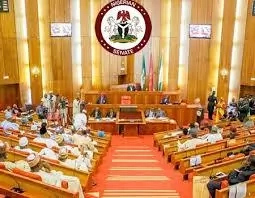
The Senate on Wednesday passed a bill to establish the Real Estate Regulatory Council of Nigeria.
The Council when established would, amongst others, curb fraudulent practices to ensure that the real estate business confirms with the National Building Code in Nigeria.
The bill which scaled third reading during plenary is tagged: The Real Estate Regulatory Council of Nigeria (Establishment) Bill, 2021.
The bill sponsored by Senator Aliyu Wamakko was read for the first time on April 28, 2021, and a scaled second reading on June 22, 2021.
The passage of the bill on Wednesday followed the consideration of a report by the Committee on Establishment and Public Service.
The report was laid during plenary by the Deputy Chief Whip, Senator Aliyu Sabi Abdullahi.
Senator Nicholas Tofowomo, who presented the report on behalf of the Committee Chairman, Ibrahim Shekarau, said the establishment of the Real Estate Council of Nigeria would provide efficient, effective and transparent administration of the business of real estate development in Nigeria.
According to the lawmaker, the Council would be responsible for prescribing minimum standards for the conduct of the businesses of real estate development across the country.
He recalled that the bill seeking to establish the Real Estate Council of Nigeria was passed by both chambers of the eighth National Assembly, but was not assented to by President Muhammadu Buhari.
He said the President’s decision to withhold assent to the bill was as a result of certain observations raised by stakeholders at the time.
“Those observations have been taken care of in this report by the Committee following the engagement with stakeholders to ensure that real estate business in Nigeria confirms with the Money Laundering Act 2011 (as amended) and the Nigeria Financial Intelligence Unit Act 2018 in terms of Anti-Money Laundering and Counter Terrorism Financing due diligence compliance”, Tofowomo said.
He explained that when established, the Council would standardize the business of real estate by regulating the conduct of transactions; and provide enabling environment and transparency in the business of real estate development in Nigeria.
The lawmaker stated that it would also curb fraudulent practices to ensure that the real estate business confirms with the National Building Code in Nigeria; as well as create an innovative and sustainable environment to promote Nigeria as a real estate investment destination in Africa and the world.
Meanwhile, two bill seeking to establish the Federal Orthopedic Hospital, Patigi, Kwara State; and Federal University of Agriculture, Akure, Ondo State, have passed second reading in the Senate.
The bills were sponsored by Senators Sadiq Suleiman Umar (Kwara North) and Patrick Ayo Akinyelure (Ondo Central).
The bills after scaling second reading were referred by the Deputy Senate President, Ovie Omo-Agege, who presided over plenary on Wednesday to the Committees on Health (Secondary and Tertiary); and Tertiary Institutions and TETFUND for further inputs.
Both Committees were given four weeks to report back to the upper chamber.
You may like
News
NFIU: Terrorists Adopt Crowdfunding, Dead/Proxy Accounts, Mules, Others To Raise, Transfer Funds
Published
39 minutes agoon
August 26, 2026
Crowdfunding networks, gender proxy accounts and other ways are now being exploited to raise and channel funds for terrorist operations, the Nigeria Financial Intelligence Unit has uncovered.
The new disclosures are contained in the NFIU’s 2025 Annual Report, obtained by the press from a top official.
The crowdfunding scheme involves foreign-based facilitators using social media platforms to solicit donations under false pretexts of humanitarian relief or educational support, before moving the funds through multiple layers to terrorist operatives in Nigeria.
The NFIU said hundreds of sympathisers were typically encouraged to make deliberately small donations, ranging from $50 to $500, through PayPal pages or conventional bank accounts, to evade automated anti-money laundering alerts.
“The following is a case study on Crowdfunding Network identified during the year: A foreign-based facilitator runs social-media campaigns claiming humanitarian relief or educational support and uses encrypted apps (Telegram, Signal) to share links to convincing PayPal pages or standard bank accounts.
“Hundreds of sympathiser donors contribute $50–$500 each, amounts small enough to avoid most automated AML alerts,” the report read.
The funds are subsequently pooled into a “master account” controlled by a senior member of the group living legally abroad.
“When the pool reaches a threshold, that account becomes the hub for onward movement,” the report stated.
The NFIU said the funds were again fragmented into dozens of smaller payments and transferred through International Money Transfer Operators and remittance applications to a network of money mules in Nigeria.
It identified students, small-business owners and relatives among those used as mules, noting that the strategy was designed to avoid reporting thresholds and obscure the origin and destination of the funds.
“Rather than sending one large transfer, the senior member fractures the funds and sends dozens of sub-threshold payments through IMTOs and remittance apps to a network of money mules in Nigeria; students, small-business owners, or relatives, avoiding reporting triggers.
“Upon receipt, the money was either converted to cash, used to purchase dual-use items such as motorcycles, fertilisers and satellite internet equipment, or transferred through mobile banking channels to logistics managers and field operatives.”
The report described the final stage as the “integration” of the funds into terrorist operational financing.
The Unit also identified the use of gender-based proxy accounts as another emerging terrorist financing technique, with terrorists opening bank accounts in women’s names while male commanders or logistics managers secretly control them.
“Terrorist financiers are opening bank accounts in women’s names while male commanders and logistics managers secretly control them.
“They exploit cultural norms that make women less likely to be suspected by authorities, using wives, sisters, or female associates as fronts to distance illicit funds from the true operatives.
“This tactic functions as identity laundering: women’s accounts are managed by men who hold ATM cards, mobile-banking credentials, and PINs, while the women often remain unaware of the transactions and volumes,” the report stated.
The report further revealed that terrorist facilitators were using telephone numbers that were not registered to the account holders or actual beneficiaries for mobile banking and transaction alerts.
It said pre-registered SIM cards, numbers registered to deceased persons and SIMs linked to gender-based proxies were being used to break the connection between bank accounts, SIM cards and Bank Verification Numbers.
“Terrorist facilitators use phone numbers for mobile banking or account alerts that are not registered to the account holder or the true beneficiary.
“They bypass the security link between SIM cards and BVNs by using pre-registered SIMs, SIMs registered to deceased people, or SIMs tied to gender-based proxies. This severs the audit trail: when a transaction is flagged, investigators trace the phone to an unrelated person, letting the real facilitator stay anonymous and continue operations,” it stated.
The NFIU also uncovered sophisticated methods of disguising terrorist transactions through detailed or coded narrations.
It said cells, particularly those linked to the Islamic State West Africa Province, used precise transaction descriptions to maintain what analysts described as an internal accounting system.
According to the report, frequent logistics-related payments with detailed narrations were often sent from a single source to multiple recipients, reflecting a structured financial system within the terrorist network.
“Terrorist cells, particularly those linked to ISWAP, routinely use precise, professional-sounding transaction narrations to maintain internal accounting. Operating like “shadow states” with strict bureaucratic controls, they require detailed descriptions so field commanders can justify expenses to central financial controllers. Although truthful narrations appear counterintuitive, they create an internal audit trail; analysts repeatedly observe high-frequency, logistics-related payments with accurate narrations sent from a single source to multiple recipients,” the report said.
The NFIU report added that some facilitators used innocuous words, secret codes and alphanumeric strings in transaction descriptions, sometimes switching between languages, to conceal the purpose of payments and evade automated bank filters.
“Transaction descriptions employ innocuous words, secret codes, or alphanumeric strings to conceal intent. Facilitators use this coded language, often switching languages to evade banks’ automated keyword filters that flag terms like ‘Jihad,’ ‘Arms,’ or ‘Boko.’
“This practice obscures the true purpose of transfers, preventing detection and enabling continued financing,” it said.
It noted that fraud remained a dominant predicate offence, with growing cases of Ponzi schemes, fraudulent crowdfunding arrangements, cryptocurrency-enabled investment scams and hacking-related fraud.
The Unit said the schemes increasingly exploited fintech onboarding gaps, including tiered accounts requiring minimal identification, while digital platforms were used to rapidly recruit victims and move funds.
The report also highlighted persistent vulnerabilities in public sector financial management, including the diversion of state and local government funds through accounts belonging to finance officers and associated third parties.
It identified procurement processes and cash transactions as significant risk areas, saying the latter complicated audit trails and efforts to trace illicit assets.
The NFIU said its findings were translated into targeted advisories, executive alerts and strategic intelligence products to support competent authorities, reporting entities and policy responses.
“Financial Fraud and Investment Scams: Fraud remains a dominant predicate offence, with notable growth in Ponzi schemes, fraudulent crowdfunding arrangements, cryptocurrency-enabled investment scams, and hacking-related fraud (including compromised social media and messaging accounts).
“Analytical reviews during the period examined these trends and informed internal advisories and alerts, some of which remained restricted for operational purposes.
“These schemes increasingly exploit fintech onboarding gaps, including tiered accounts with minimal identification requirements, and leverage digital platforms to rapidly scale victim recruitment and fund movement.
“Corruption and Misappropriation of Public Funds Analysis highlighted persistent vulnerabilities in public sector financial management, including the diversion of state and local government funds through accounts of finance officers and associated third parties.
“Procurement processes remain a significant risk area, while utilisation of cash transactions complicates audit trails and asset tracing efforts,” the report said.
A security expert, Chidi Omeje, called on Nigeria’s security and financial intelligence institutions to enhance their operational strategies to counter the rising sophistication of non-state actors in the country.
Omeje noted that criminal elements are constantly devising new methods to circumvent existing security architecture.
He urged key agencies, including the Nigeria Police Force, the Department of State Services, and financial regulatory authorities tasked with monitoring banking transactions, to step up their efforts, stay ahead of criminal networks, and track illicit financial flows.
“Every single day, these guys grow in sophistication and desperation, and we must also devise means to bring them to their knees.
“The state must ultimately deal with them. They must follow the money trail to monitor these movements and effectively tackle the situation,” he said.
Omeje emphasised that the government and security apparatus cannot afford to yield ground to criminal groups, insisting that intelligence-driven operations and financial tracking remain critical to safeguarding national security.
Another security analyst, Lawrence Alobi, urged security agencies to step up intelligence sharing and work closely with financial institutions to curb the trend.
Addressing the issue, Alobi emphasised that security agencies must enhance their information gathering to outsmart criminals attempting to evade detection through fraudulent account setups.
“It behoves us now, the security agencies, to intensify intelligence sharing and information gathering, because it is through information that we can get some of these things.
“Security agencies need to work with the banks and also warn them. Any bank found to have connived or aided this act should be sanctioned,” he said.
He further stressed the need for strict compliance and verification procedures within the banking sector to prevent proxies from being used to run illicit accounts.
“The banks themselves must sit up and ensure they properly verify every individual’s identity so that there is a real, verifiable person behind every account, not just someone acting by proxy. Intelligence agencies must go the extra mile to hold banks accountable for any loopholes exploited within their system,” he added.
News
Tinubu Reviews Tenure of NTA DG Dembos, NAN MD Ali For Second 3-Year Term
Published
1 hour agoon
August 26, 2026
President Bola Ahmed Tinubu has approved the renewal of the appointments of the Director-General of the Nigerian Television Authority, NTA, Mr. Abdulhamid Salihu Dembos, and the Managing Director of the News Agency of Nigeria, NAN, Mr. Ali Mohammed Ali, for a second term of three years each.
The renewals were announced in a Statehouse press release issued on Sunday, August 23, 2026, by the President’s Special Adviser on Information and Strategy, Bayo Onanuga.
According to the statement, the second term for both chief executives will commence on October 20, 2026. President Tinubu first appointed them on October 20, 2023.
Mr. Dembos, from Yola, Adamawa State, is a former National President of the Radio, Television, Theatre and Art Workers Union, RATTAWU. He joined NTA in 1989 as an announcer at the Kaduna Station after his National Youth Service.
He rose through the ranks to serve as General Manager at NTA Lokoja and NTA Kano, and later as Executive Director, Marketing, before retiring in 2017 as Acting Zonal Director, NTA Kaduna Network Centre.
Mr. Ali is a veteran journalist and media manager with over 30 years’ experience. He holds a first degree in English from Bayero University, Kano, a Post Graduate Diploma in Mass Communications from the same institution, and a graduate degree in International Affairs from Ahmadu Bello University, Zaria.
The statement described him as having “a keen interest in media evolution and content development in a digital world, meeting the needs of a diverse population with alternative news feeds.”
President Tinubu urged the two executives to justify the renewed confidence reposed in them by continuing to demonstrate commitment to their organisations’ mandates and to the promotion of the administration’s Renewed Hope Agenda.
News
Alia Appoints Angwe As PSA On Local Govt Affairs, IK Yereve GLO For Tarka
Published
1 hour agoon
August 26, 2026
Benue State Governor, Rev. Fr. Hyacinth Alia, has approved the appointment of Mr. Nathan Angwe as Principal Special Assistant to the Governor on Local Government Affairs, and Mr. Benjamin Aondonenge Ikyereve as Gubernatorial Liaison Officer, GLO, for Tarka Local Government Area.
The appointments were announced on Monday, August 24, 2026.
Angwe, a retired Principal Local Government Inspector, replaces former PSA, Mr. Ioryue Yajir.
A native of Mbayange, Mbaakpough, Mbayion in Gboko LGA, Angwe retired from the Bureau of Local Government and Chieftaincy Affairs, Makurdi.
He served as Local Government Inspector in several LGAs across the state before retiring as a Principal Local Government Inspector.
Ikyereve, a holder of B.Sc in Business Administration, is a former Secretary to the Tarka Local Government Council. He will serve as the Governor’s direct link to Tarka LGA.
Congratulating the appointees, Governor Alia said their appointments reflect “recognition of your distinguished service and proven competence in public administration.”
“It is my belief that drawing from your collective experiences; as a retired Principal Local Government Inspector with vast knowledge of local governance structures across the State, and as a business administrator with deep roots in local government administration, you are certainly not oblivious of your task of strengthening the critical interface between my office and our local government councils,” the Governor stated.
Governor Alia further charged them to ensure seamless coordination, facilitate effective implementation of government policies at the grassroots level, and serve as strategic advisors on matters affecting their communities.
Latest News
Nigeria, Thailand Deepen Economic Ties, Sign Technical Cooperation Agreement
ShareNigeria and Thailand have taken a fresh step towards strengthening bilateral relations with the signing of a Memorandum of Understanding...
NFIU: Terrorists Adopt Crowdfunding, Dead/Proxy Accounts, Mules, Others To Raise, Transfer Funds
ShareCrowdfunding networks, gender proxy accounts and other ways are now being exploited to raise and channel funds for terrorist operations,...
Dangote Refinery’s Free Fuel Delivery Reaches Kano, Imo, others
Share— Distribution burden removed for savings to reach consumers. — Dangote –IPMAN applauds initiative Free delivery of fuel to filling...
How Fraudsters’ Deepfake ads used Elon Musk, Johann Rupert to Swindle South African Investors of $61.5 million
ShareFor adopting deepfake digital ads to swindle unsuspecting investors, South Africa’s Financial Sector Conduct Authority, FSCA, has fined online trading...
‘Exclusion of Tiv on Tinubu’s Campaign Council’ Deliberate – Hembe, Benue ADC Gov Candidate
ShareAfrican Democratic Congress (ADC) 2027 governorship candidate in Benue State, Rt. Hon. Herman Hembe, has kicked against the exclusion of...