Connect with us

Defence and Security

Senate investigates budget utilisation by army

Published

on

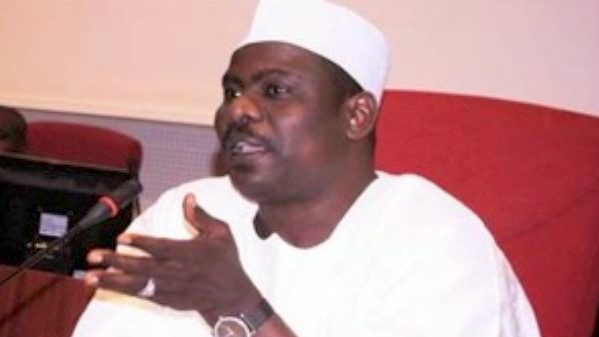
Senator Ali Ndume
Share

The Senate said on Wednesday that it had commenced investigation into the Nigerian Army’s utilisation of its 2019, 2020 and 2021 budgets.

The Chairman, Senate Committee on Army, Sen. Mohammed Ali Ndume, made the disclosure when he led commitee members on oversight of the 6 Division Nigerian Army, Port Harcourt.

Ndume said the investigation would enable the committee to properly make budgetary allocation for the army in 2022.

According to him, the inspection of projects in barracks and interaction with the army hierarchy would enable the committee to make adjustments in the 2022 Appropriation Bill.

“This will enable the committee to know areas that need adjustment, addition and attention, especially now that the 2022 budget is before the National Assembly.

“This oversight function will enable us to allocate what the army will get in 2022 with focus to the security challenges we are facing across the country,” he said.

Ndume said the strength of any nation was determined by the strength of its military and paramilitary agencies, noting that the government would continue to assist them to succeed.

He noted that the army was currently being overstretched due to its engagement in multiple fronts across the country.

“We commend the military and encourage the new guard (service chiefs) to continue with their good works while observing the rules of engagement,” he added.

The senator thanked the Chief of Army Staff (COAS), Lt.-Gen. Farouk Yahaya, for boosting the morale of troops and condoled with the 6 Division over the death of Maj.-Gen. Olu Irefin.

The General Officer Commanding (GOC), 6 Division Nigerian Army, Maj.-Gen. Sani Mohammed, commended the committee for its efforts to address the constraints in the army.

“We are happy that most of the interventions have been done especially in the area of equipment that are coming and efforts to improve army barracks.

“We also appreciate the donation of various types of operational vehicles to the army while the COAS has informed us that many more are coming,” he said.

Meanwhile, the House of Representatives on Wednesday said it would consider better budgetary allocation for the Nigerian Navy in the 2022 Appropriation Bill.

The Chairman, House Committee on Navy, Rep. Yusuf Gadji, gave the assurance whe he led other members of the committee on inspection of projects at the Nigerian Navy Ship (NNS) Pathfinder, Port Harcourt.

According to him, the navy and NNS Pathfinder had recorded milestone achievements in the execution of projects in its formations and units as budgeted in the 2020 fiscal year.

“We are on oversight to seek feedback from the navy that we superintend over, to enable us to address the concerns and seek ways to improve their operations.

“Going by what we have seen from our inspection of NNS Pathfinder base, we can say that they are doing a good job in the area of contract execution.

“We understand the challenges in this base but we will only assist in budgeting for the primary projects that are more significant due to the meagre resources available,” he said.

Gadji said the National Assembly was currently seeking ways to make the nation’s armed forces self-sufficient in the area of funding.

“To this end, we have two bills before the national assembly, including the Armed Forces Support Fund and the Maritime Security Trust Fund.

“These bills when passed will go a long way to solving the problems associated with funding of our military,” he said.

In a presentation, the Commander, NNS Pathfinder, Commodore Abdullahi Ahmed, said the base had destroyed hundreds of illegal refineries, bunkering sites as well as made many arrests in 2021 alone.

He said the successes were recorded with the deployment of swamp buggy machines that completely crushes the illegal refineries, thereby making it impossible for them to be reactivated. (NAN)

Continue Reading
Click to comment

Leave a Reply

Your email address will not be published. Required fields are marked *

Defence and Security

NSCDC Deploys Drones, Body Cameras to Strengthen Security Nationwide

Published

on

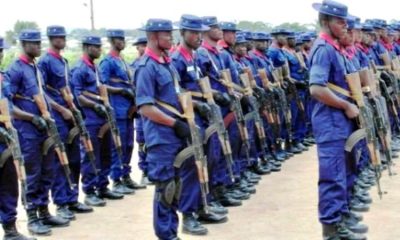
NSCDC Personnel
NSCDC Personnel
Share

The Nigeria Security and Civil Defence Corps (NSCDC) has begun deploying drones, body cameras, and other modern equipment across all states to improve security operations.

The Commandant-General, Ahmed Abubakar Audi, approved the rollout during the corps’ annual strategic meeting in Abuja, attended by state commanders from across the country.

He said the move is part of efforts to improve surveillance, intelligence gathering, and quick response to security threats.

The new equipment includes drones, GPS trackers, situation room kits, bulletproof vests, helmets, night-vision goggles, and body cameras. Officers also received backpacks with solar chargers and mini tablets.

Abubakar explained that the tools will help tackle issues like banditry, illegal mining, and infrastructure vandalism.

He warned officers to use the equipment strictly for official duties, adding that misuse would lead to serious punishment.

The NSCDC boss also noted that the corps has recently destroyed over 400 illegal refineries and arrested suspects involved in illegal activities.

He added that the new tools will support special units like Agro Rangers and improve cooperation with other security agencies.

Continue Reading

Defence and Security

Nigeria Climbs to 4th in 2025 Global Terrorism Index as Attacks Surge by 43%

Published

on

Islamic State West Africa Province
Share

Nigeria has risen to fourth place in the 2025 Global Terrorism Index (GTI), following a sharp escalation in terrorist activities across the country, according to a new report by the Institute for Economics & Peace.

The report indicates that terrorist attacks in Nigeria increased by 43 percent in 2025, with 171 incidents recorded compared to 120 in 2024. This surge has pushed the country up two places from its previous sixth position.

Nigeria now ranks behind Pakistan, Burkina Faso, and Niger Republic, which occupy the top three positions on the index.

According to the findings, the majority of attacks were carried out by Islamic State West Africa Province and Boko Haram, with both groups accounting for 80 percent of terrorism-related deaths in the country.

The report further highlights a growing human toll, with fatalities rising by 46 percent to 750 deaths in 2025—the highest level recorded since 2020. In addition, 243 people were injured in the attacks, bringing the total number of terrorism-related deaths in Nigeria since 2007 to 12,581.

Geographically, violence remained heavily concentrated in Borno State, which accounted for 67 percent of all attacks and 72 percent of total deaths recorded during the year.

Civilians continued to bear the brunt of the violence, representing 67 percent of those killed, while military personnel accounted for 19 percent. The report notes a sustained shift toward increased targeting of civilians over the past five years.

The GTI attributes the worsening security situation to ongoing internal instability and intensified clashes between ISWAP and Boko Haram, underscoring persistent challenges in counterterrorism efforts across Nigeria.

Continue Reading

Defence and Security

Nigeria Must Move Beyond Kinetic Approach to Defeat Terrorism – Senate Leader, Bamidele

Published

on

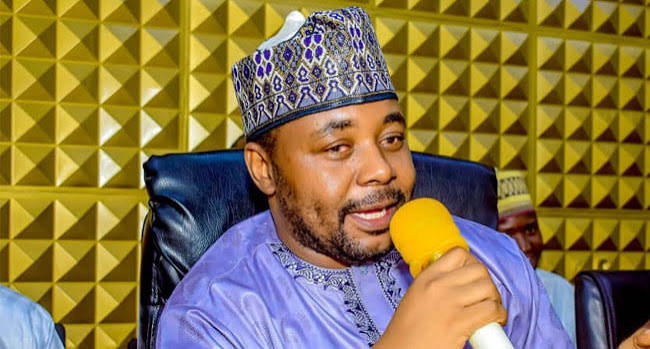
Senate Leader, Senator Michael Opeyemi Bamidele
Share


The Senate Leader, Opeyemi Bamidele, has called for a strategic shift in Nigeria’s fight against insecurity, urging authorities to complement military operations with sustained investments in human capital development and social cohesion.

In his Eid al-Fitr message to Muslims across the country, Bamidele congratulated Nigerians on the successful completion of Ramadan, describing the holy month as a period marked by sacrifice, reflection, charity, and devotion to God.

He noted that the lessons of Ramadan—tolerance, compassion, and self-discipline—should guide both individual conduct and government policies, particularly at a time of global uncertainty and domestic security challenges.

The Senate Leader referenced recent security incidents, including bomb explosions in Maiduguri, which resulted in loss of lives and injuries, stressing that such tragedies underscore the urgent need for a more comprehensive approach to national security.

While commending Nigeria’s defence, intelligence, and security agencies for their resilience, Bamidele emphasised that reliance on military force alone—often described as a kinetic approach—cannot guarantee lasting peace.

“Time and experience have shown that kinetic operations alone cannot guarantee the peace and stability of our nation,” he stated.

He therefore advocated a broader, multi-dimensional strategy that addresses the root causes of violent extremism.

According to him, religious leaders must promote tolerance and desist from teachings that could incite radicalisation, while socio-cultural leaders should prioritise dialogue in resolving inter-ethnic conflicts rather than resorting to violence.

Bamidele also highlighted the role of subnational governments, noting that the fight against insecurity is not solely the responsibility of the federal government. He urged state governments to prioritise human capital development by investing in education, healthcare, nutrition, and social protection systems.

He added that creating opportunities for innovation and creativity among young people would help reduce vulnerability to extremist ideologies.

At the legislative level, the Senate Leader disclosed that the National Assembly is pursuing a multi-pronged approach to strengthen national security and development.

He revealed that the Senate has constituted an ad-hoc committee on a National Security Summit aimed at identifying the root causes of insecurity across the country. He also pointed to the ongoing review of the 1999 Constitution, which he said would include amendments to grant subnational governments greater authority in managing security within their jurisdictions.

Bamidele reaffirmed the commitment of the National Assembly to enacting laws that support the fight against terrorism and violent extremism.

He concluded by extending warm Eid al-Fitr wishes to Muslims nationwide, urging Nigerians to embody the values of peace, unity, and mutual respect beyond the Ramadan season.

Continue Reading