Connect with us

News

Ahmed Joda: We’ve lost a patriot, most valuable citizens – Buhari

Published

on

President Muhammadu Buhari
Share


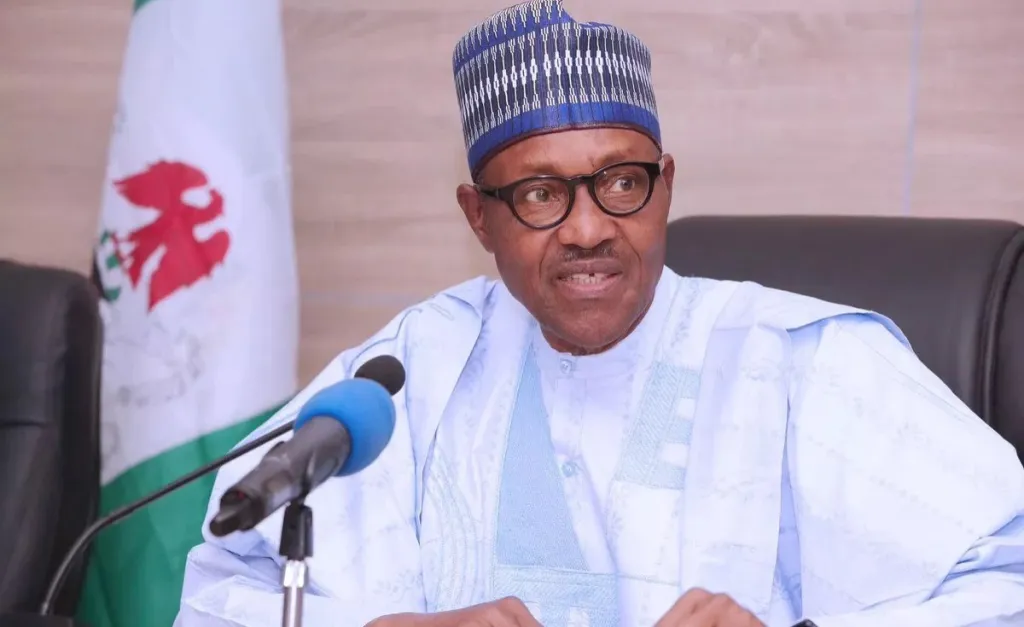
President Muhammadu Buhari has described former Permanent Secretary, Ahmed Joda, as a patriot and most valuable citizen, who gave his best for unity and development of the country.

Joda, who was also the Chairman, Buhari administration’s Transition Team, 2015, died at the age of 91 on Friday in Yola, Adamawa.

The president made his feelings known through a delegation led by Secretary to Government of the Federation (SGF), Boss Mustapha, to commiserate with family, friends and associates of the elder statesman in Yola on Sunday.

Buhari also condoled with the government and people of Adamawa over the passing of the elder statesman.

He said Joda’s transition was a collective loss to the family, state, country and the world that he touched and improved with integrity and competence.

The president told the family that: “Joda was a trustworthy and loyal companion, who steadfastly stood for the interest of the nation through highs and lows.

“The country will not forget his sacrifices.”

The family, through Alhaji Mustapha Aminu, Galadima of Adamawa, thanked the president for sending a high powered delegation to mourn with them, agreeing that Joda was a hero for all Nigerians.

Aminu highlighted the trust and loyalty that shaped the relationship between the president and the former permanent secretary, also known as one of the “Super Perm Secs’’, saying the president shared greatly in the loss as well.

At the palace of Lamido of Adamawa, Dr Barkindo Aliyu Mustapha, the SGF conveyed “deepest condolences” of the president and that of the government and the people of Nigeria to him and his people.

He said: “We have come to mourn a hero, a mentor and a father.”

The president commended the late permanent secretary for productive services to Nigeria and the world.

Buhari also said when he looked around for someone to help manage his transition to the Presidency, following his victory in the 2015 General Elections, he opted for Joda as most fitting, with “the right quality and calibre’’.

He said Joda made a deep impressed on all by the work he did at that time (2015), ensuring a “seamless transition by remaining focused, resourceful and avoiding land mines for a successful takeover”.

Responding, the Lamido thanked the president for sending the delegation and described Joda’s death as a big loss to the state and the country.

“Knowing the relationship between the President and Joda, we should be the ones going to Abuja to condole with the President instead of his sending a delegation to us,’’ he said.

Gov. Umaru Fintiri of Adamawa, who also received the presidential delegation, said the state and country had lost a “father, a friend and an adviser to whom we ran for solutions to intractable problems”.

The presidential delegation to Yola also included the Chief of Staff, Prof. Ibrahim Gambari; Senator representing Adamawa Central, Sen. Aishatu Binani, and members of the House of Representatives, representing Yola/Yola South and Gombi, Ja’afaru Ribadu and Yusuf Buba, accordingly.

Others were the Minister of Federal Capital Territory (FCT), Muhammad Bello; Senior Special Assistants to the President, Sarki Abba and Garba Shehu, and a Special Assistant in the Presidency, Ibrahin Bapetel.

Continue Reading
Click to comment

Leave a Reply

Your email address will not be published. Required fields are marked *

News

FOR THE RECORDS: The Bar and the Bench are the Guardians of Democracy

Published

on

Share

—George Manne Weah Tells NBA in Port Harcourt

I am glad to be here today, attending the 66th Annual General Conference of the Nigerian Bar Association here in Port Harcourt. With a membership of over One Hundred and Fifty Thousand, the Nigerian Bar is the largest, oldest and one of the most respected professional bodies on our continent.

I want to thank you for choosing a theme as bold as “Beyond Limits.” When I first heard it, I smiled, because if my own life has taught me one thing, it is that limits are very often not the walls we think they are. They are only the edge of what someone has tried so far.

I did not come into this hall as a lawyer, and I will not pretend to be one. I grew up in the ghetto of ‘Gibraltar’ in Monrovia, Liberia, where very few people believed that a boy raised largely by his grandmother would one day stand on the world’s biggest football stages, or take an oath as President of the Republic of Liberia.

I was told, in many quiet and not-so-quiet ways, what the limits of my life were supposed to be. I did not accept them — not out of arrogance, but because the limits placed on us by man are not the same as the limits placed on us by God. Beyond Limits, to me, is not a slogan. It is a living testimony of my life.

I am not here merely to tell you my story, but because what is true for one man can also be true for a profession, and for a continent.

Allow me to speak to you about two things today: first, the Bar and the Bench as guardians of our democracy, and the dangers that threaten that guardianship in West Africa today; and second, what it means for our peoples and our continent to truly go beyond limits — not in slogan, but in substance.

Let me start with a simple truth I came to understand not as a student of law, but as a man who has sat in the highest office of a nation. Democracy does not survive on the strength of elections alone. Elections are the doorway into democracy, not the house itself. What holds the house up — what keeps the roof from collapsing on the people who live inside it — are institutions, and among the most important of these, in every serious nation, is an independent judiciary, protected by a fearless, principled Bar.

And let me be plain about something else, because it is often the more dangerous of the two threats to democracy. The danger is not only that soldiers might seize power in the night, or that a defeated candidate might refuse to leave office. It is also that a leader who arrives in office through a free and fair election can, over time and often gradually, begin to govern like the very dictators the ballot was meant to guard against — leaning on the judiciary until it bends to his will, and strong-arming the legislature until it becomes an echo chamber rather than a check on his power. A tyrant with a certificate of return is still a tyrant. Democracy, properly understood, does not end on election night. It is tested every single day afterward, in how power treats the courts and the parliament that exist to restrain it.

I was glad to learn, in preparing to come before you, that your own outgoing President, Mazi Afam Osigwe, said something not long ago that I found myself nodding, as though he had seen my own notes before I wrote them. He said: “Democracy cannot survive on strong men. It survives on strong institutions.” That sentence deserves to be written above the door of every parliament and every courtroom in West Africa — a conviction that every serious African who has held power, and hopes to build something that stays after him, must eventually arrive at.

The rule of law is not an abstract phrase for law school lecture halls. It is the practical guarantee that a citizen’s rights do not depend on who is in office or what favor they can secure — that a journalist, a trader, or a student in Port Harcourt, Monrovia, or Bamako has the same protection under the law as a minister or a general.

The moment that guarantee weakens, everything else in a nation weakens with it: investment, security, public trust, and peace itself.

And here is the uncomfortable part: this danger does not only come from the coup-makers who seize power in the night. It also comes from governments that call themselves democratic — through budgets manipulation, wrong appointments, and pressure on judges, and deciding that courts should be a convenience rather than a check.

We have seen nations where a judiciary’s own budget must first pass through the executive it is meant to hold accountable. We have seen special courts created not to deliver justice but to secure political outcomes, and dozens of judges dismissed in a single stroke by presidential decree. And we have seen, across our region since 2020, an unsettling pattern of soldiers stepping over constitutions altogether.

I raise these examples because this Bar to which you belong and have gathered here in your thousands, cannot afford to assume that Nigeria, or Liberia, or any of us, is somehow immune. A court’s decision must mean what it says, without anyone’s political permission — it is what protects a nation from sliding, gradually but progressively, into the very conditions we condemn when soldiers do it with guns.

This is why I say to you: the Nigerian Bar Association is not merely a professional association negotiating welfare for its members. You are a standing sentinel of this Republic’s democracy. When the Bar is silent, courts become easier to be captured. When the Bar speaks with one voice, as guardians of the bench, the executive branch think twice before even dreaming of interference.

That tradition is not decoration. It is duty — because protecting the independence of your courts, and the rights of the ordinary Nigerian citizen, is protecting democracy itself, here in Nigeria and across our region.

Distinguished ladies and gentlemen, let me turn to the second thing I wish to leave with you: Beyond Limits is not only about defending what we have. It is about reaching for what we have not yet built. I have never believed that Africa’s limits are a matter of talent — I have stood beside the finest footballers our continent has produced, and sat at negotiating tables with heads of state from every corner of the earth. We Africans are not short of brilliance. We are short, too often, of the infrastructure and the organized will to let that brilliance connect to itself with us.

This room is proof of it. The Nigerian Bar counts among its numbers some of the finest legal minds in the world, many of whom have built extraordinary careers abroad — in London, in Washington, in the Gulf. That is nothing to be ashamed of, but it is something we must be strategic about. For too long we have called this only “brain drain,” as though it is purely a loss. I ask you to think instead about brain circulation — pulling that expertise back into nation-building without demanding anyone abandon what they have earned and learned abroad.

Our African diaspora already sends home well over one hundred billion dollars a year in remittances alone, more than the foreign aid and investment Africa receives combined. Imagine that same energy formally invited into legal reform and judicial modernization, as a deliberate national strategy.

Because the fight against poor governance and economic deprivation is not one we can afford to enter with half our talent unaccounted for. A Nigerian-trained lawyer on an arbitration panel in Paris, or advising a global institution in New York, is not lost talent — it is talent operating at the highest global standard, available to be called home if we organize the bridge for it to cross.

This, too, is what going Beyond Limits must mean for us: refusing to accept that our infrastructural and governance challenges, are any kind of ceiling on what is possible. I did not accept the limits the slum seemed to set for me.

I say this to you not as a theory but as something I have lived. In November 2023, when the early, provisional results of our run-off election made clear which way our country had voted, I did not wait for the count to be completed or for the final results to be formally announced before I picked up the telephone to congratulate my successor.

There were those around me who suggested patience — who argued that a sitting president owes it to himself to contest every figure until the very last vote is certified.

I chose otherwise. I chose to concede while the counting was still underway, because I have always believed, and still believe, that the will of the people must stand above the ambition of any one man in a democratic setting. Once elections do not follow democratic precepts, it is very dangerous for the peace and security of a country.

I am told that when this Association extended its invitation to me, its citation spoke directly of that decision — of a leader who chose to put his country before his own ambition. I want to thank the Nigerian Bar Association for that recognition.

It means a great deal to me, not because I need reminding of what I did, but because it tells me that this Bar understands precisely what is at stake when we insist that no office, however high, is worth more than the peace and the will of the people who conferred it.

If a small nation like mine can insist on that standard for itself, then surely this continent, with all its wealth of talent gathered in this very hall today, can insist on standards beyond the limits others have too often assumed for us.

Let me say, then, not only as a former president, but as a brother — a fellow traveler on this great continent of Africa, someone who understands deeply what it means to look at a wall of obstacles and decide to climb over it. When your leadership invited me to speak on the theme Beyond Limits, it resonated with the very core of my life’s journey.

To go beyond limits is not a phrase reserved for athletes who break records or politicians who win elections. It is a daily mandate for every lawyer, every judge, every leader, and every citizen who refuses to let their present circumstances dictate their ultimate destination. Limits, more often than not, are imagination born out of fear, of history, or of the low expectations others have placed upon us.

You already know part of my story — that boy from the slums of Monrovia. By every worldly measure, that boy was not supposed to play on the grandest stages of world football, let alone win the Ballon d’Or. He was certainly not expected to one day lead his nation, democratically, as president. So when I tell you that limits can be broken, I am not offering you a theory. I am offering you a life. How do we break these boundaries? We do it by anchoring our lives in five timeless, unshakeable values.

The first is discipline. Discipline is the bridge between goals and accomplishment. In football, talent without discipline gets you benched, or cut from the team entirely. In the law, brilliance without discipline leads to compromised justice. Discipline is the quiet commitment to doing what is right, what is necessary, and what is ethical, even when no one is watching.

Coupled with discipline is the raw necessity of hard work, because there are no elevators to success — you must take the stairs. To push past the barriers of systemic corruption, weak infrastructure, or institutional inertia, we must be willing to outwork our problems. As legal minds, your hard work secures the liberties of the common man and fortifies the rule of law.

Yet our labor means nothing if it is not governed by respect — respect for the dignity of every human being, for the sanctity of our institutions, and for the constitution that binds us.

True leaders do not go beyond limits by tearing others down. We go beyond limits by lifting others up, by respecting diversity of thought, and by upholding the integrity of the judicial process.

When you push against limits, the limits push back. That is where perseverance becomes your greatest weapon. You will face defeats. I lost elections before I ever won one. I lost matches before I ever raised a trophy.

Perseverance is the internal voice that says, “I will rise again.” For the legal profession in Nigeria and across Africa, perseverance means standing firm for justice even when the political or social winds blow fiercely against you.

Most importantly, we cannot transcend human limits without being spiritually strong. We must acknowledge a power greater than ourselves.

Spiritual strength gives us moral clarity when our choices are blurred. It gives conscience to our intellect and soul to our ambition. And it reminds us that every position of leadership we hold is a temporary stewardship, granted by the Almighty, to serve His people.

My distinguished friends, Nigeria holds a key to the promise of our whole continent. When the Nigerian Bar Association decides to go beyond limits, the legal architecture of Africa itself grows stronger. Let us commit today to breaking the chains of mediocrity — applying discipline to our craft, hard work to our duty, respect to our peers, perseverance to our trials, and faith to our foundational values.

Distinguished ladies and gentlemen, let us all stand for true justice — for the rule of law that builds greater unity, that makes a nation more attractive to investment, and that creates a stable environment in place of internal conflict.

True justice is blind. It does not know politics. It does not see family or friendship. It knows only the truth, and it interprets the law the same way whether or not anyone is watching.

Let us all interpret the law fairly, and apply it more effectively. Let justice prevail, and be done to all men and women, rather than spending our energy on division. The true measure of a lawyer is not how many cases you have won, how many titles you hold, or how much you earn. It is this: when the country needs courage, do you have the courage to stand? When justice needs a voice, will you give it one? And when the law itself is threatened, will you go beyond every limit to defend it? The law must never be an instrument of chaos. It must never become a weapon of war. It must remain what it was always meant to be: an instrument of remedy, of peace, of unity, and of accountability — an instrument for humanity, for transparency, and for truth.

My dear members of Nigerian Bar Association, I invite you to think of yourselves as referees who interpret the law fairly and plainly. As a lawyer, you must be able to protect the law whether the voice before you is rich, poor, or powerful.

As the law provides, you must be able to stand in defense of those who cannot defend themselves. You must ensure that due process is honored. Let us respect the law, and let us interpret it faithfully. I say to you, as with Lady Justice herself: carry the scales of substance and of justice, and let nothing tip them but the truth.

My brothers and sisters, Nigerians depend on you. West Africa depends on you. Africa depends on you. The world depends on you. Democracy depends on you. And free elections depend on you.

So I say to all of you here today: Africa must continue in peaceful coexistence, and we must all stand up for the rule of law. Stand up for fairness. Stand up for impartiality. Stand up for gender equality. Stand up for equality. Stand up for humanity. Stand up for peace and for democracy. Stand up against discrimination. Stand up for accountability. Stand up for free and fair elections.

Bravo, Nigerian Bar Association.
God bless the Nigerian Bar Association, and may God bless our beloved Africa.

I thank you.

Keynote Address
By George Manneh Weah,
Former President of the Republic of Liberia
At The 66th Annual General Conference of the Nigerian Bar Association
Theme: “Beyond Limits”
Port Harcourt, Rivers State. August 23, 2026.

Continue Reading

News

200,000 Asylum Seekers Risk Deportation as US Plans Mass Visa Revocation

Published

on

Share

The United State US Government headed by President Donald Trump is preparing to revoke the business and tourism visas of as many as 200,000 foreigners who have applied for or are currently seeking asylum in the United States, in what could become the largest single mass visa revocation in the country’s history.

The proposed action targets holders of B1 and B2 visas, which are generally issued for business travel and tourism. According to State Department documents obtained by the Associated Press and US officials, the visas under consideration were issued between 2016 and 2026 to people who subsequently sought asylum or have pending asylum claims.

The State Department is expected to begin announcing the revocations in the coming weeks, although officials have stressed that the final number remains uncertain and could change as the review progresses.

State Department spokesman Tommy Pigott said the agency was coordinating with the Department of Homeland Security to identify and revoke the visas of foreigners who entered the country claiming to be short-term visitors before filing for asylum.

The administration argues that the measure is aimed at addressing what it considers abuse of visitor visas and preventing people from using temporary visas as a route to remain permanently in the United States.

However, the proposed policy is likely to face legal challenges. Immigration advocates and lawyers are expected to question whether the government can use the visa-revocation process to broadly target people who later sought protection through the US asylum system.

The revocation of a B1 or B2 visa would not automatically mean that every affected person would be immediately deported. US officials told the AP that many people with pending asylum cases could instead be reclassified while losing their status as business or tourism visitors.

The distinction is significant because seeking asylum in the United States is a separate immigration process from holding a visitor visa.

The planned action would therefore primarily strip affected foreigners of their existing non-immigrant visa status rather than automatically determine the outcome of their asylum claims.

The proposed mass revocation comes as the Trump administration intensifies its broader immigration crackdown, including tougher visa screening, increased scrutiny of applicants’ backgrounds and social-media activity, and other restrictions on legal and humanitarian immigration.

The administration has already revoked more than 175,000 visas since Trump returned to office, according to Reuters, although those cancellations involved a range of cases and reasons.

If the planned B1 and B2 revocations proceed at the upper estimate of 200,000, the move would surpass previous large-scale visa cancellation efforts and represent an unprecedented use of visa revocation as part of the administration’s immigration enforcement strategy.

The State Department has not confirmed that exactly 200,000 visas will be revoked, and officials say the number remains dynamic. The final scope of the policy could also be affected by legal challenges or changes before implementation.

Continue Reading

News

How Tracking Helped ICPC Recover N2.06bn From Kaduna Projects

Published

on

Share

The tracking of 31 constituency and executive projects across the three senatorial districts of Kaduna State, has enabled the Independent Corrupt Practices and Other Related Offences Commission (ICPC) to recover N2.056 billion.

The projects, valued at about N2 billion, were monitored under the commission’s Constituency and Executive Project Tracking Initiative, which aims to ensure that public funds allocated to development projects are properly utilised and that projects are executed in line with approved specifications.

The exercise was coordinated by Chief Superintendent Haruna Aminu, who was among the commission’s officers monitoring the selected projects across the Kaduna South, Kaduna North, and Kaduna Central Senatorial Districts.

The officers visited selected project sites to assess their level of execution, determine whether they represented value for money and verify compliance with approved project specifications.

The commission also examined the utilisation of funds allocated to the projects as part of efforts to promote transparency and accountability in the implementation of government-funded projects.

The recovery of N2,056,467,766.86, representing Two Billion, Fifty-Six Million, Four Hundred and Sixty-Seven Thousand, Seven Hundred and Sixty-Six Naira, Eighty-Six Kobo, according to the ICPC, was facilitated by the monitoring exercise.

This feat, the commission maintained, gives highlights the importance of sustained monitoring of constituency and executive projects to protect public resources and ensure that government interventions deliver the intended benefits to citizens.

The ICPC’s project tracking initiative is designed to promote transparency, accountability and value for money in the implementation of government-funded projects, while deterring the diversion and misuse of public resources.

The recovery of the funds is therefore considered a significant outcome of the Kaduna State exercise, demonstrating the role of effective oversight in safeguarding government funds and ensuring proper implementation of public projects.

Continue Reading