Connect with us

International

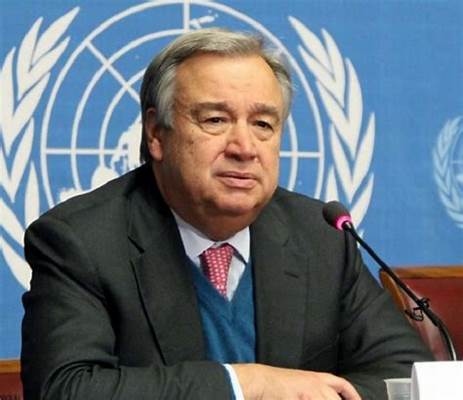
UN chief makes case for 476m indigenous people

Published

on

UN Chief Antonio Guterres
Share

Although some countries have begun to rectify their “heinous legacy” of discrimination against indigenous people, more action is still needed, UN Secretary-General António Guterres said on Monday.

In his message marking the International Day of the World’s Indigenous Peoples, the UN chief called for ending to the “grievous inequalities” affecting these communities.

“Indigenous peoples around the world continue to face overwhelming marginalisation, discrimination and exclusion.

“Rooted in colonialism and patriarchy, these profound disparities are sustained by a deeply held resistance to recognising and respecting the rights, dignity, and freedoms of indigenous peoples,” he said.

According to him, there are more than 476 million indigenous living in some 90 countries worldwide, representing just over six per cent of the global population.

They have a special relationship with their lands and reflect a vast diversity of unique cultures, traditions, languages and knowledge systems.

The secretary-general recalled that throughout modern history, indigenous people had been robbed of their lands and territories, and much more. In some cases, they have been robbed of their own children.

Some have also been stripped of political and economic autonomy, while their cultures and languages have been “denigrated and extinguished”.

Guterres noted that in recent months, the world had again learned about some of the horrors indigenous communities faced at the hands of colonisers.

“Some nations have begun to address this heinous legacy through apologies, truth and reconciliation efforts, and legislative and constitutional reforms.  But much more needs to be done.

“We need a new social contract – one that restores and honours the rights, dignity and freedoms of those who have been deprived of so much for so long.  Central to this must be genuine dialogue, interaction and willingness to listen.”

The secretary-general pointed to the 2007 UN Declaration on the Rights of Indigenous Peoples, and the outcome document of the World Conference on Indigenous Peoples held seven years later, as the “tools” to bring about the new social contract.

“There is no excuse for denying the world’s 476 million indigenous peoples self-determination and meaningful participation in all decision-making

“Free, prior and informed consent is central for indigenous peoples to exercise their own vision of development,” he said.

Additionally, even though recognition of the importance of indigenous knowledge grows, particularly in relation to solving global challenges such as the climate crisis and preventing emergence of contagious diseases, the UN chief stressed that this knowledge must be owned and shared by indigenous communities themselves.

“On this International Day of the World’s Indigenous Peoples, let us show true solidarity by working to end the grievous inequalities of indigenous peoples worldwide, to fully recognize the abuse they have endured, and to celebrate their knowledge and wisdom,” he said.

In a related development, while the COVID-19 pandemic has exposed and exacerbated inequalities affecting people worldwide, a UN independent expert warned that even recovery efforts are having some negative impacts on indigenous communities.

Special Rapporteur José Tzay said economic recovery measures had prioritised and supported the expansion of business operations at the expense of indigenous peoples, their lands and the environment.

“To avoid making the situation even worse, I urge States to involve representatives, leaders and traditional authorities of indigenous peoples, including those living in urban areas, in the design and implementation of recovery policies,” he said.

Tzay further urged governments to support solutions which put indigenous peoples’ rights to self-determination and land at the core of post-pandemic recovery efforts, in line with 2007 UN Declaration.

Special Rapporteurs and independent experts are appointed by the UN Human Rights Council in Geneva.

They operate in their individual capacity and are neither UN staff, nor do they receive a salary from the Organisation. (NAN)

Continue Reading
Click to comment

Leave a Reply

Your email address will not be published. Required fields are marked *

International

Finnish Court Jails Simon Ekpa Six Years for Terrorism

Published

on

Simon Ekpa
Share

A Finnish court on Monday sentenced Nigerian-born Finnish politician Simon Ekpa to six years in prison for terrorism-related offences.

The Päijät-Häme District Court found the 40-year-old former Lahti municipal councillor guilty of participating in a terrorist organisation, incitement to commit crimes for terrorist purposes, aggravated tax fraud, and violations of the Lawyers Act.

Prosecutors said that between 2021 and 2024, Ekpa promoted the independence of the so-called Biafra region in Nigeria through illegal means, using social media to influence followers and support armed groups the court classified as terrorist organisations.

The court ruled that Ekpa provided weapons and explosives through his contacts and urged his supporters on X, formerly Twitter, to commit crimes in Nigeria. He denied all charges.

Ekpa was arrested in December 2024 and tried over 12 sessions earlier this year. A three-judge panel delivered the unanimous verdict, ordering him to remain in custody.


Continue Reading

International

In Brazil, Tinubu Calls for Innovation-Driven Transformation in Nigeria

Published

on

President Bola Tinubu
President Bola Ahmed Tinubu
Share

President Bola Tinubu has reaffirmed his administration’s commitment to positioning Nigeria as a leader in Africa’s development, with a focus on technology, food security, and innovation.

Speaking to Nigerians in Brazil on Wednesday, Tinubu described his visit as a strategic step to deepen bilateral ties and learn from the South American country’s rapid development.

“Once upon a time, Nigeria and Brazil stood on the same level. Look at Brazil today — its technology, its food systems. We must ask ourselves: what do they have that we don’t? We have the brains, the energy, and the youth. We have everything we need. Now, we must act,” he said.

The President stressed that his government is laying the foundation for partnerships in manufacturing, technology, and cultural exchange, with the goal of unlocking Nigeria’s potential.

Acknowledging the difficulties citizens face due to ongoing economic reforms, Tinubu insisted that the measures are necessary for long-term prosperity.

“Yes, the reforms are tough — like bitter medicine. But once the fever is gone, you know the cure was worth it,” he said.

He commended the Nigerian diaspora community in Brazil, urging them to see themselves as critical stakeholders in building a new Nigeria.

“You are the pride of our nation. Your diversity, your commitment — it reflects the Nigeria we are working to build. I salute you all,” Tinubu stated.

The President further called for unity and resilience among Nigerians, adding that the dream of a prosperous nation must be pursued with urgency.

“If Wole Soyinka, at over 90, can still dream and act, then we have no excuse. The dream must be realised. The time is now,” he said.

Continue Reading

International

Tinubu Arrives in Brazil for Two-Day State Visit After U.S. Stopover

Published

on

President Bola Ahmed Tinubu stepping out from Airplane
Share

President Bola Tinubu has arrived in Brasília, Brazil, for a two-day state visit focused on deepening bilateral ties and securing new investments.

Tinubu, who flew in from Los Angeles after attending the Tokyo International Conference on African Development (TICAD9) in Japan, was received at the Brasília Air Base by senior Brazilian government officials, including Ambassador Carlos Sérgio Sobral Duarte, Secretary for Africa and the Middle East, and Carlos José Areias Moreno Garcete, Brazil’s Ambassador to Nigeria.

Nigeria’s Minister of State for Foreign Affairs, Bianca Ojukwu, also joined the reception. Other cabinet ministers, heads of key agencies, and private sector representatives later welcomed the president at his hotel.

The official welcoming ceremony, with full military honours, is scheduled for Monday at the Planalto Palace.

According to presidential aides, the visit will focus on activating multi-billion-dollar agricultural investments, advancing the $1.1 billion Green Imperative mechanisation project, and attracting fresh foreign direct investment in Nigeria’s agriculture and energy sectors.

Tinubu is also expected to participate in a Nigeria–Brazil business forum, bilateral meetings, and the signing of agreements and memoranda of understanding in technology, aviation, renewable energy, and climate resilience.

The presidency has not disclosed when the president is expected to return to Abuja.

Continue Reading