Connect with us

News

W/African countries want INEC’s election monitoring tool — Yakubu

Published

on

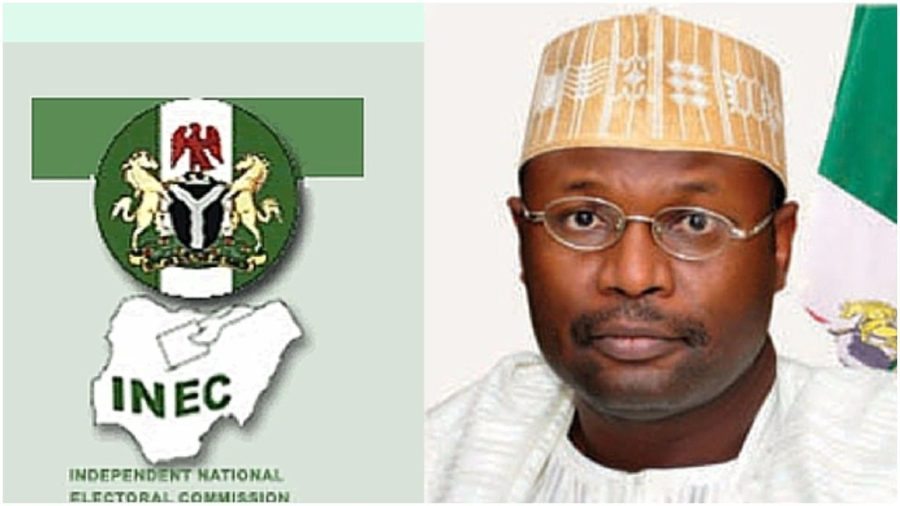
INEC Logo and Chairman,, Prof. Mahmood Yakubu
INEC Chairman Prof Mahmood Yakubu
Share

The Independent National Electoral Commission (INEC) says  many countries in West African have shown interest in studying and adopting its innovative tool on election monitoring and support system for their use.

INEC Chairman, Prof. Mahmood Yakubu, disclosed this on Friday at the opening of a two- day retreat on ”the Optimisation of the Election Monitoring And Support Centre (EMSC) operational structure” held in Keffi, Nasarawa.

Yakubu said that the EMSC had become a vital tool in the monitoring, implementation and management of Nigeria’s electoral plans and activities.

He said when his led-commission was first inaugurated in November 2015, its resolve was to consolidate on the gains of the last commission (2010-2015) in building systems for the continuous and effective management of the electoral process.

Yakubu said the goals were not only to address the challenges encountered during the 2011 and 2015 general elections.

He said it was also to develop proactive and knowledge-driven systems that would address those challenges in 2019, as well as continue to support the commission’s efforts in the planning, conduct and management of elections.

”The continuous search for innovative and better systems for the management of our electoral process crystalised into the 2017-2021 Strategic Plan (SP)/Strategic Programme of Action (SPA), the 2019 Election Project Plan (EPP), as well as the EMSC.

”Consequently, the commission has, over the years, continuously expanded the frontiers of electoral management and governance by introducing innovations and knowledge-driven systems. The EMSC is one of such innovations.

”As an electoral early-warning, monitoring, implementation and management tool, the EMSC, relying on field offices and personnel across the 36 states and the FCT, alerts the commission to the challenges, identifies electoral risks/threats and provides real-time information on the status of an election.

”In doing so, the EMSC makes available to the commission the necessary information in making real-time interventions to avert or mitigate potential risks or threats to an election,” he stated.

Yakubu added that in the build-up to the 2019 general election, it became increasingly clear to INEC that a coordinated early warning, monitoring and implementation system was necessary.

This, according to him, was to track hundreds of inter-related electoral activities in the Election Project Plan for the 2019 general election.

He said that accordingly, INEC accepted the recommendations of the 2019 Election Project Plan Committee (EPPC) to integrate the three monitoring mechanisms of the commission into a single unit called the EMSC.

He listed the three monitoring mechanisms as the Election Management System (EMS),  Electoral Risk Management (ERM) and Election Operations Support Centre (EOSC).

”The EMSC has greatly helped the commission in managing the electoral process.

”As a testimony to its robustness as an election management tool, many countries in the West African Region and beyond have shown interest in studying and adopting the system for their use.

”The Ethiopian and Malawi Electoral Commissions are already considering the deployment of some aspects of the tool in the management of their elections.

”The EMSC may well be another contribution of INEC (and indeed Nigeria) to election management in the world,” he noted.

Yakubu said that pioneers and INEC needed to keep pushing the frontiers of the system, fortifying its strengths, addressing its challenges and expanding its reach, in the conduct and management of elections.

”Having deployed it for the 2019 general election, the commission has certainly seen its advantages as well as its challenges.

”The advantages need to be strengthened and improved upon while resolving the anticipated challenges before the 2023 general election, which is just 560 days away,” he said.

The INEC boss further  noted that the retreat was therefore crucial to the EMSC and the commission.

He urged participants to work round the clock during the period of the retreat, suggest novel ways of tweaking the EMSC, addressing its challenges and formulating comprehensive policy guidelines for its operation.

”It must be repositioned to discharge its most primary responsibilities of providing early warning, identifying threats/risks, monitoring the implementation of election activities.

“(It must) reposition in ensuring real-time and accurate information to the commission on all field-related activities that have a direct bearing on elections,” he stated.

Mr Hamza Fassi-Fihr, Project Coordinator, European Centre for Election Support (ECES), said monitoring of processes was integral to the success of any system and a commitment toward ensuring accountability and transparency.

Fassi-Fihri, who represented Dr Isiaka Yahaya, ECES Senior Electoral Administration Expert, commended INEC’s effort at ensuring effective electoral management and promotion of electoral integrity through the innovative tool.

”It is clear that the EMSC has come to stay as an indispensable and integral part of Nigeria’s electoral system and a process to be exported across EMBS in the African region and beyond,” he said.

On his part, Ahmed Mu’azu, National Commissioner and Chairman Planning, Monitoring and Strategy Committee (PMSC), said the retreat was critical as INEC prepared for the 2023 general elections.

Mu’azu said that the EMSC had been key to the process adding that that it was the reason it had remained in the fore burner for INEC,  since it had become a strategic implementation framework in the electoral process.

Also Prof. Ikechukwu Ibeanu, INEC National Commissioner, and Chairman Electoral Operations and Logistics Committee (EOLC), described EMSC as an important aspect of INEC commitment to the use of technology to deepen electoral process in Nigeria.

He said the adoption of technology had helped in tracking and ensuring compliance in the electoral processes.

Ibeanu noted that it had  also helped in improving efficiency, as well as reduced negative human interference in the electoral process.

INEC Resident Electoral Commissioner, in Nasarawa Uthman Ajidagba said the retreat was timely and apt as the commission prepared for the 2023 general elections. (NAN)

 

Continue Reading
Click to comment

Leave a Reply

Your email address will not be published. Required fields are marked *

News

Senate Moves to Reshape Legal Profession, Proposes Two-Year Mandatory Pupillage for New Lawyers

Published

on

Senate Logo
Share

The Nigerian Senate on Wednesday considered sweeping reforms to the legal profession, passing into second reading a bill seeking to amend the Legal Practitioners Act 2004. Central to the proposal is a mandatory two-year pupillage programme for newly called lawyers, designed to align training and regulation with global best practices.

Debating the bill at plenary, lawmakers agreed that the legal system must evolve in response to technological advancement, complex commercial transactions, and growing demands for professional accountability. The bill was sponsored and led by the Leader of the Senate, Senator Opeyemi Bamidele.

According to Bamidele, the current law — nearly six decades old in design — no longer reflects contemporary realities of legal practice. He explained that the reform seeks to modernise oversight structures, strengthen discipline mechanisms, and enhance the quality of service within the profession.

A major highlight of the bill is the restructuring of the Body of Benchers, which, for the first time, will be established as a corporate legal entity with financial autonomy, strengthened secretariat, and defined rule-making authority. The reforms also introduce a clearer institutional framework for committees, oversight, and policy enforcement.

The Senate Leader stressed that the initiative would deliver “a coordinated and well-modernised regulatory framework that addresses admission to the bar, discipline, and professional standards.”

The bill also seeks to fast-track disciplinary processes by reorganising the Legal Practitioners Disciplinary Committee (LPDC). Under the proposed structure, multiple panels would sit across the country while wielding broader sanctioning powers, including suspension, disbarment, restitution, compensation, cost awards, and formal apologies. For transparency, disciplinary outcomes will be published, while affected practitioners will retain the right of appeal to the Supreme Court.

Additionally, the proposal creates a new Ethics, Adherence and Enforcement Committee empowered to inspect law offices, demand records, investigate public complaints, and prosecute cases before the LPDC.

To further boost competence, two years of compulsory pupillage and ongoing professional development will now be requirements for lawyers before full practice certification and licence renewal.

The bill also criminalises unauthorised legal practice, clearly defining the practice of law to protect the public from impersonators and unqualified service providers. Other provisions address the regulation of foreign lawyers, reform of the Senior Advocate of Nigeria rank, and improved safeguards for clients and public trust.

Speaking in support, Chief Whip of the Senate, Senator Tahir Monguno, recalled his experience entering practice over 35 years ago, noting that the realities of the digital age justify reform.

“This bill is very apt and germane,” Monguno said. “We are in the digital age, and our legal profession must reflect these realities.”

The Senate subsequently referred the bill to its Committee on Judiciary, Human Rights and Legal Matters for public hearing and a report within two weeks.


Continue Reading

News

Tinubu Approves Nigerian Team for US–Nigeria Joint Security Working Group

Published

on

President Bola Ahmed Tinubu
Share

President Bola Tinubu has approved the Nigerian contingent of the US–Nigeria Joint Working Group, a new collaborative platform aimed at strengthening security cooperation between both countries.

The decision follows agreements reached during a recent high-level visit to Washington, D.C., led by the National Security Adviser (NSA), Nuhu Ribadu. Ribadu will head the Nigerian side of the Working Group, supported by senior officials drawn from key security and government institutions.

The Nigerian members include Minister of Foreign Affairs, Amb. Yusuf Maitama Tuggar; Minister of Defence, Mohammed Badaru Abubakar; Minister of Interior, Hon. Olubunmi Tunji-Ojo; and the Minister of Humanitarian Affairs, Dr. Bernard M. Doro.

Also on the team are the Chief of Defence Staff, Gen. Olufemi Oluyede; Director-General of the National Intelligence Agency, Amb. Mohammed Mohammed; and the Inspector General of Police, Kayode Egbetokun.

Ms. Idayat Hassan of the Office of the National Security Adviser and Mr. Paul Alabi of the Nigerian Embassy in the United States will serve as the secretariat.

President Tinubu urged the members to work closely with their US counterparts to ensure the effective implementation of all agreements reached across various sectors.

The announcement was made on Wednesday in a statement by Bayo Onanuga, Special Adviser to the President on Information and Strategy.

Continue Reading

News

Obasanjo Returns $20,000 Allegedly Given for Fayose’s Birthday Logistics

Published

on

EX President Olusegun Obasanjo and Former Ekiti State, Ayo Fayose
Share

Former President Olusegun Obasanjo has returned the $20,000 allegedly provided to him by former Ekiti State Governor, Ayo Fayose, ahead of Fayose’s 65th birthday celebration, following a fresh disagreement between the two political figures.

Fayose confirmed the development during an interview with AF24 News, where he narrated the sequence of events surrounding the controversy. According to him, preparations for his birthday prompted him to reach out to individuals he had previously fallen out with politically. He noted that this move was aimed at “mending fences,” but stressed that his call to Obasanjo should not be misconstrued as an apology.

The former governor recounted that Obasanjo visited his Lagos residence days before the celebration and expressed willingness to attend the event, despite having a conflicting engagement in Rwanda. Fayose said that during the visit, Obasanjo requested financial support for his travel logistics, prompting him to provide $20,000.

“I changed $20,000 and gave it to him. How can you accept somebody’s money and come and be spiting that person?” Fayose said, expressing disappointment over Obasanjo’s subsequent public remarks.

The matter escalated after Obasanjo stated that he had not opened the money and would return it, comments that Fayose considered disrespectful. In response, Fayose said he sent the former president a strongly worded text message demanding clarity and expressing his displeasure.

Following the exchange, Obasanjo reportedly returned the money.

“I have written to him, and he has returned my $20,000,” Fayose confirmed during the interview. When asked how he felt about the return of the funds, he replied: “I am very happy. I will not allow such a man to carry my money away.”

The clash adds another layer to the long-standing political tension between both men, who have had a history of public disagreements spanning several years.

Continue Reading