Connect with us

Health

Nigeria registers 1,683 COVID-19 cases in 3 days

Published

on

NCDC Coronavirus
NCDC Coronavirus
Share


Nigeria has recorded more than 500 COVID-19 cases in daily figures for the third time on Friday as the government struggles to deal with a new and more infectious variant of the virus.

The Nigeria Centre for Disease Control (NCDC) said figures on Saturday morning showed another 590 cases were reported.

The News Agency of Nigeria (NAN) reports that in July 28, some 535 cases were reported, July 29, 558 were registered and on July 30, 590 cases were logged, which is now the biggest daily increase in the country since March 4, 2021, when 708 cases were registered.

According to the NCDC, the number of cases is rising, so is the country’s testing capacity since the peak of the first wave last year.

The NCDC said that the new daily tally of 558 on Thursday has now been overtaken by Friday‘s 590 cases and these have raised the total infections in the country to 173,411.

It said the country also registered eight new deaths from COVID-19-related complications on Friday, keeping the death toll at 2,148.

The NCDC stated that the 590 additional infections were across registered across 17 states and the Federal Capital Territory (FCT).

According to it, Friday’s figures are higher when compared with the 558 cases reported 24 hours earlier and ranks highest daily tally since March 4 when 708 cases were reported.

The Public health agency said that Lagos State reported 306 new infections, Akwa Ibom, 54 more cases, Katsina, Oyo and Rivers had 40, 39 and 26 fresh infections respectively.

Other states were Niger-23, Gombe-19, Ogun-16, Ekiti-15, the FCT-10, Nasarawa-10, Delta-9, Bayelsa and Plateau-5 each, Imo-4, Ebonyi and Jigawa-3 each and Kano-1.

The NCDC said Friday’s report includes cases reported for Niger state for July 28 (12) and July 29 (11).

It noted cases reported for Delta state for July 10 is (1), July 11 (1), July 13 (3), and July 29 (4).

It added that zero cases were reported from Ondo and Osun States.

The agency said that 48 people have recovered and were discharged from various isolation centres in the country on Friday.

It added that till date, 164,978 recoveries have been recorded nationwide in 36 states and the Federal Capital Territory.

The NCDC said that a multi-sectoral national emergency operations centre (EOC), activated at Level 2, continues to coordinate the national response activities.

The Public Health agency noted that the country had also tested more than 2.4 million samples for the virus out of the country’s roughly 200 million population.

The agency added that the country’s active cases stood at over 5,000.

NAN quoted the agency as saying that it would continue to monitor all variants closely, paying particular attention to the impact on hospitalisation and deaths which would help the country to understand the protective effects of vaccines.

It said that it was important for Nigerians to wear masks indoors to curb the Delta variant, especially when “you don’t know everyone’s vaccination status”.

It added that vaccinated people should still wear masks, given the incredibly fast transmission of the Delta Variant and its unique severity.

It noted that vaccines alone won’t stop community transmission. Nigerians need to use masks consistently, be in ventilated spaces even if they were vaccinated.

“People cannot feel safe just because they have been vaccinated. They still need to protect themselves,” it stated. (NAN)


Continue Reading
Click to comment

Leave a Reply

Your email address will not be published. Required fields are marked *

Health

Ebola: NCDC Tracks 53 Contacts, Including Health Workers

Published

on

Health Workers
Share


The Nigeria Centre for Disease Control and Prevention (NCDC) has placed 53 contacts linked to Nigeria’s confirmed Ebola case under surveillance. The contacts include healthcare workers, domestic staff and the spouse of the 42-year-old female patient diagnosed with the disease in October 2026.

In its Ebola Disease Situation Report dated October 24, the agency disclosed that Rivers State reported a new suspected case on October 23, but laboratory tests returned negative for Ebola. The NCDC said contact tracing and follow-up were ongoing to prevent further transmission of the disease.

The index patient reportedly returned from Uganda through Addis Ababa on October 3, arriving in Abuja on an international flight. She developed symptoms four days later and visited private health facilities on October 10 and 11 before being admitted. The NCDC was notified on October 19, and laboratory tests confirmed Ebola on October 20. Her symptoms included fever, diarrhoea, body aches and sore throat, with no bleeding reported.

The NCDC Director-General, Dr. Jide Idris, has assured Nigerians that the Federal Government and its health partners are taking urgent steps to contain the outbreak. Speaking at a press briefing on Sunday, Idris said the response was being coordinated through an Incident Management System and an Emergency Operations Centre, under the leadership of the Coordinating Minister of Health and Social Welfare, Professor Muhammad Pate, and the Presidential Task Force on Ebola Virus Disease.

Idris explained that public health teams were identifying people who might have been exposed to the patient and monitoring them for 21 days after their last possible exposure. He urged Nigerians contacted by health officials to provide accurate information about their movements, contacts and symptoms, stressing that being identified as a contact does not mean a person has Ebola.

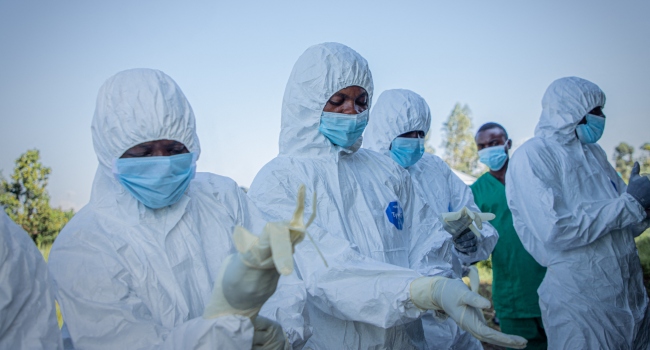
The NCDC chief also commended healthcare workers whose vigilance helped identify the case and called on public and private hospitals to strengthen infection prevention and control measures. He urged facilities to maintain proper screening and triage, observe hand hygiene, ensure environmental cleanliness and provide adequate personal protective equipment for their staff.

Idris further advised healthcare workers to promptly isolate and report suspected cases to the relevant public health authorities without waiting for laboratory confirmation before taking necessary precautions. He emphasised that protecting health workers and ensuring public cooperation were essential to containing the disease and preventing further transmission in Nigeria.


Continue Reading

Health

2 Abuja Doctors, 2 Others Arrested Over Organ Harvesting in Abuja

Published

on

Share

Two medical doctors and two other suspects have been arrested in Abuja for organ harvesting by the Nigerian Police Force in late August 2026. They were arrested for allegedly running an organ harvesting and human trafficking network operating between Abuja and Nasarawa State.

The arrested medical practitioners are Dr. Benjamin Oyime (a 48-year-old kidney consultant) and Dr. Daniel Otukpa (a 53-year-old Acting Director of Clinical Services).

Both nephrologists are linked to Wellington Clinics (Wellington Hospital) in Life Camp, Abuja.

The arrests were executed by the Special Tactical Squad (STS-FID) following an investigation brought to light by social media activist Martins Vincent Otse (popularly known as VeryDarkMan or VDM) and his team.

The victim, a 22-year-old man named Samuel Ezekiel approached the activists after medical scans at independent hospitals verified that his left kidney was missing.

The 23-year-old intermediary, Emmanuel Ode, allegedly confessed to recruiting Ezekiel and bringing him to Wellington Hospital for the illegal surgery.

Investigators report that the victim was manipulated into signing official consent documents under a fake name, “Isa Abubakar”.

It was further revealed that the victim was allegedly paid ₦1.7 million for the kidney, while legal representatives allege that the black-market syndicate resells these harvested organs to wealthy recipients for ₦50 million to ₦70 million.

Activists and lawyers from the Martin Luther King Centre fear that this is not an isolated incident, estimating that more than 10 young Nigerians may have fallen victim to this specific ring.

Following the police raids and public outcry, Wellington Clinics Abuja issued an official statement denying any deliberate involvement in commercialized organ trafficking. Meanwhile, the private facility immediately suspended all kidney transplant and services effective August 31, 2026, while the criminal investigation continues.

NewsBlast recalls that this case reflects previous enforcement actions by the National Agency for the Prohibition of Trafficking in Persons (NAPTIP), in which it arraigned doctors from Alliance Hospital in Abuja for similar black-market kidney transplants.

Furthermore, under the National Health Act, trading human organs for commercial gain or charging a fee for transplants carries severe criminal penalties in Nigeria.

Continue Reading

Health

FG Target 20,000 Yearly Medical Intakes Across Six Geo-political Simulation Centres

Published

on

Share

To counter the rising trend of Nigerian-trained health personnel migrating for greener pastures abroad, the Federal Government is expanding the country’s healthcare workforce and strengthening practical training for medical and other health professional students.

Consequently, it has disclosed plans to increase the annual medical school admissions to 20,000 within the next three years. Along with this is the targeted establishment of world-class medical simulation centres across Nigeria’s six geopolitical zones.

The Minister of Education, Dr. Tunji Alausa, disclosed this while receiving the report of the Tertiary Education Trust Fund Medical Simulation Committee.

This was part of a statement issued on Sunday and signed by Ikharo Attah, the Special Adviser on Media and Communications to the Minister of Education.

Alausa said the proposed centres would provide world-class practical training for medical, dental, nursing, pharmacy and other allied healthcare students. The said:

“I would like to thank the members of the committee that has worked so hard and assiduously to get us to this point in which we are now talking about building several simulation centres across the country to provide world-class training for our medical students, dental students, nursing students, pharmacy students and other allied healthcare professionals.”

Alausa said the expansion had become necessary to meet the country’s health needs.

He disclosed that nursing enrolment, which stood at about 38,000 three years ago, had risen to more than 120,000 students across nursing schools in the country.

The minister added that annual admission into medical schools had increased from about 5,000 students when Tinubu assumed office to almost 12,000 currently.

“Today, I’m happy to report that we’re admitting almost 12,000 students. Our goal in the next three years will be to increase the number of annual medical student enrolment in medical schools to about 20,000.”

He added that the number of students admitted into pharmacy and dental schools had also increased.

The minister commended the Chairman of the Medical Simulation Committee, Dr Wale Suleiman, and other members for their work in preparing the report and advancing plans for the centres.

He said the initiative would help ensure that the increasing number of students entering healthcare professions received adequate practical training.

The planned expansion comes against the backdrop of persistent concerns over the migration, popularly known as “Japa,” of Nigerian doctors, nurses and other healthcare professionals seeking better remuneration, working conditions and career opportunities abroad.

The migration of health workers has raised concerns among professional bodies and health-sector stakeholders about its impact on Nigeria’s already strained healthcare system, particularly shortages of skilled personnel in public hospitals.

With the proposed simulation centres, the government is seeking to expand training capacity while improving the quality of practical education for a growing pool of health professional students.

Continue Reading