Connect with us

International

UN highlights policing reforms to address systemic racism

Published

on

United Nations
UN logo
Share

UN rights chief Michelle Bachelet says radical policing reforms are needed to address systemic racism affecting people of African descent around the world.

Bachelet said on Monday as her Office published a series of recommendations prompted by the killing of George Floyd.

On May 25, 2020, George Floyd, a 46-year-old black man, was murdered in Minneapolis, Minnesota, United States while being arrested on suspicion of using a counterfeit 20 dollars bill.

During the arrest, Derek Chauvin, a white police officer with the Minneapolis Police Department, knelt on Floyd’s neck for over nine minutes after he was handcuffed and lying face down.

Prior to being placed on the ground, Floyd had exhibited signs of anxiety, complaining about having claustrophobia and being unable to breathe.

After being restrained he became more distressed, complaining of breathing difficulties and the knee on his neck, and expressing fear of imminent death.

Among the new measures proposed in the High Commissioner’s report on racial justice and equality, authorities are urged to reassess whether officers should continue to be the first responders to individuals with mental health problems.

In these and other police actions, the report found that law enforcement officers were rarely held accountable for human rights violations and crimes against people of African descent.

This was owing in part to “deficient investigations, a lack of independent and robust oversight and a widespread “presumption of guilt” against people of African descent.

“The status quo is untenable,” Bachelet said “Systemic racism needs a systemic response.

“We need a transformative approach that tackles the interconnected areas that drive racism, and lead to repeated, wholly avoidable, tragedies like the death of George Floyd”.

In a call to all states “to stop denying, and start dismantling, racism”, the UN rights chief appealed to them “to end impunity and build trust; to listen to the voices of people of African descent and to confront past legacies and deliver redress”.

The High Commissioner’s report collected information on more than 190 cases where people had died in police custody around the world.

It uncovered many similarities and patterns, such as the hurdles families encountered in trying to access justice, according to Peggy Hicks, Director of Thematic Engagement at the Office of the High Commissioner for Human Rights (OHCHR).

“Accountability is crucial and families do have some form of satisfaction in seeing someone in prison for a crime that is as violent as the murder of George Floyd which we saw on video tape.

“But of course, there are so many cases where there isn’t a video tape and there are even cases where there are video tapes but justice is not being dealt in those cases,” she said.

Across numerous countries, notably in North and South America and in Europe, people of African descent disproportionately live in poverty and face serious barriers.

They face serious barriers in accessing education, healthcare, employment, housing and clean water, as well as to political participation and other fundamental human rights, the report maintained.

These obstacles to fulfilling basic human rights contributed to a tradition of discrimination linked directly to colonialism and slave trading which resulted in the “dehumanisation” of people of African descent, according to the report.

“We realised that a main part of the problem is that many people believe the misconceptions that the abolition of slavery, the end of the transatlantic trade and colonialism have removed the racially discriminatory structures built by those practices but we found that this is not true,” said UN Human Rights Office’s Mona Rishmawi, Chief, Rule of Law, Equality and Non-Discrimination Branch.

As a result, countries have not paid adequate attention to the negative impact of policies on minority populations and the “conscious and unconscious bias” associated with it, the OHCHR officer insisted.

For people of African descent, these legacy impacts are “a part of their daily life and the daily reality of dehumanisation, marginalisation and denial of their rights”.

The High Commissioner’s report was set in motion by the Human Rights Council after international outrage at the killing of United States citizen George Floyd in 2020.

His death was caused by police officer Derek Chauvin who was captured on video kneeling on Mr Floyd’s neck for more than nine minutes.

After a six-week trial this year, Chauvin was found guilty of second-degree murder and sentenced last week to prison for more than two decades. (NAN)

Continue Reading
Click to comment

Leave a Reply

Your email address will not be published. Required fields are marked *

International

Trump Says Middle East War Could End ‘Very Soon’ as Markets Rally

Published

on

Donald Trump
US President, Donald Trump
Share


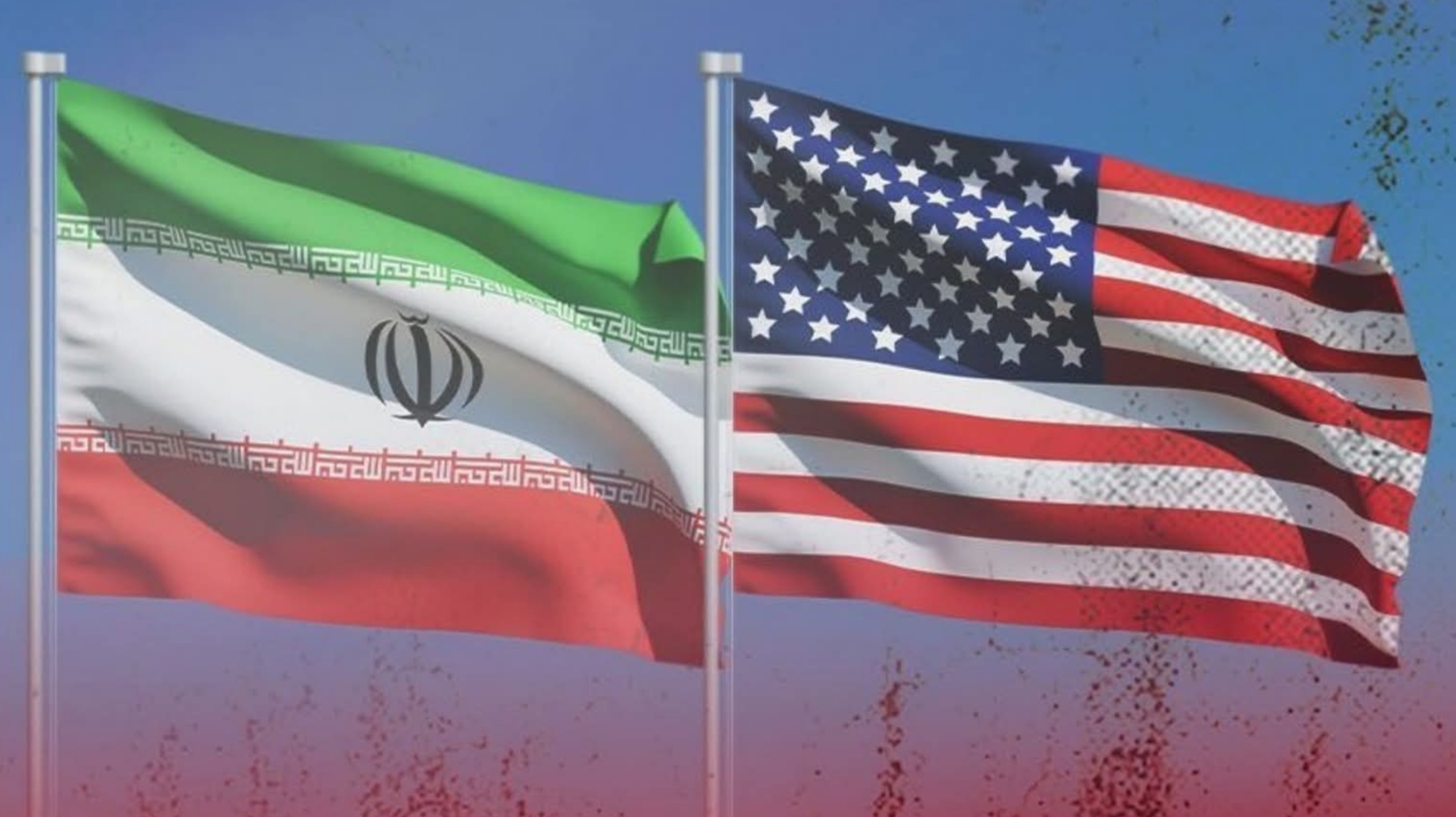
United States President Donald Trump has said the ongoing Middle East conflict could end within weeks, expressing confidence that the war may be concluded “very soon.”

Speaking at the White House, Trump told reporters that U.S. forces could withdraw from Iran within “two weeks, maybe three,” adding, “we’re finishing the job.” He also indicated that a diplomatic agreement could still be reached before any final military outcome.

Earlier, Iranian President Masoud Pezeshkian said Tehran possesses “the necessary will” to end the conflict, provided key conditions are met, including guarantees against future aggression.

The remarks from both leaders raised hopes for a resolution to the month-long crisis, prompting a surge in global financial markets. On Wall Street, the Nasdaq Composite rose 3.8 percent, while the S&P 500 gained nearly three percent.

Asian markets also posted strong gains, with major indices in Seoul, Tokyo, and Taipei rising sharply, alongside advances in Hong Kong, Shanghai, Sydney, Singapore, Manila, and Jakarta.

Despite the optimism, oil markets remained volatile amid concerns over the strategic Strait of Hormuz, through which roughly 20 percent of global oil and gas supplies pass. Trump stated that the United States would not intervene to reopen the strait if it were blocked, suggesting other nations should take responsibility.

Meanwhile, Israeli Prime Minister Benjamin Netanyahu signaled continued military operations, stating that Israel would press on with its campaign against what he described as a “terror regime.”

The economic fallout from the conflict has intensified, with U.S. gasoline prices surpassing $4 per gallon for the first time in four years and inflation pressures rising in Europe. Analysts warn that sustained high oil prices—currently above $100 per barrel—could further strain global economic growth.

Additional tensions emerged following reports that the United Arab Emirates is considering supporting efforts to reopen the Strait of Hormuz, potentially under a United Nations mandate, which could mark a significant escalation.

As diplomatic signals remain mixed, analysts caution that uncertainty surrounding the conflict and global energy supplies is likely to persist in the near term.

Continue Reading

International

UK Announces Tight Security, Road Closures Ahead of President Tinubu’s State Visit to Windsor Castle

Published

on

President Bola Tinubu with King Charles
Share

Authorities in the United Kingdom have announced road closures and temporary airspace restrictions ahead of the arrival of Nigerian President Bola Ahmed Tinubu for a state visit hosted by Charles III.

President Tinubu is expected to begin the visit on Wednesday, March 18, accompanied by Nigeria’s First Lady, Oluremi Tinubu. An official reception for the Nigerian leader is scheduled to take place at Windsor Castle.

In a statement issued on Wednesday, Thames Valley Police said it is working closely with the Royal Borough of Windsor and Maidenhead, the Royal Household, and other security partners to ensure the visit proceeds smoothly and securely.

As part of the heightened security arrangements, authorities confirmed that the permanent airspace restrictions over Windsor Castle will be extended on March 18 from 7:00 a.m. to 11:59 p.m.

Chief Superintendent Adrian Hall of the police force’s Joint Operations Unit said the airspace limitations form only one aspect of a comprehensive security operation planned for the high-profile diplomatic engagement.

“The air restrictions are just one part of our robust security operation for the state visit of Nigerian President Tinubu next week, with many measures you will see and others you will not,” Hall said.

He added that the police have extensive experience managing security during royal events in Windsor, noting that significant planning and preparation have gone into the operation.

Hall also warned that the authorities would strictly enforce the restrictions, stressing that any violation would constitute a criminal offence under the Air Navigation Order and could lead to arrest.

Security deployment during the visit will include specialised police units such as search teams, mounted officers, road policing personnel, and armed officers. These units will operate alongside neighbourhood policing teams and resources from the Project Servator.

Officials said additional safety measures would include Windsor’s extensive closed-circuit television network and hostile vehicle mitigation barriers positioned around key locations.

Authorities have urged members of the public to remain vigilant and report any suspicious activity by contacting police through 101 or speaking directly with officers on duty. Emergencies should be reported through the 999 service.

Meanwhile, road closures and parking restrictions are set to take effect from Tuesday, March 17, with temporary traffic disruptions expected in and around Windsor during the visit.

Thames Valley Police added that it is working in coordination with the Civil Aviation Authority and National Air Traffic Services to enforce the temporary flight restrictions. Individuals with legitimate reasons to operate drones during the restricted period have been advised to seek prior clearance from the police.

Continue Reading

International

Tinubu Dispatches Delegation to Represent Nigeria at Burial of Rev. Jesse Jackson

Published

on

President Bola Ahmed Tinubu and Late Rev Jesse Jackson
Share

President Bola Ahmed Tinubu has appointed a five-member delegation to represent Nigeria at the burial of American civil rights leader Jesse Jackson, who died on February 17, 2026, at the age of 84 in Chicago.

The delegation is headed by Senator George Akume, Secretary to the Government of the Federation. Other members include Minister of State for Foreign Affairs Bianca Odumegwu-Ojukwu; Minister of Arts, Culture and Creative Economy Hannatu Musawa; Special Presidential Envoy for Global and Pan-African Affairs Brian Browne; and Senior Special Assistant on Foreign Affairs and International Relations, Ambassador Sola Enikanolaye.

According to a State House statement issued on March 4 by the President’s Special Adviser on Information and Strategy, Bayo Onanuga, the delegation will formally convey President Tinubu’s condolences to Jackson’s family and associates.

In an earlier tribute, Tinubu described Jackson as “a great friend of Nigeria and Africa,” highlighting his vocal opposition to apartheid in South Africa. The Nigerian leader recalled Jackson’s advocacy for the release of Nelson Mandela and other leaders of the African National Congress, as well as his role in mobilising international support for sanctions against the apartheid regime.

Funeral events began on February 26 with a lying-in-state at the Rainbow PUSH Coalition in Chicago. Additional memorial services have been held in South Carolina and Washington, D.C., including a lying-in-state at the South Carolina Statehouse from March 1 to 5.

A “People’s Celebration” is scheduled for March 6 at the House of Hope in Chicago, followed by a private homegoing service on March 7 at the Rainbow PUSH Coalition.

Continue Reading