Connect with us

Education

USAID partners FG on accountable financial system for quality education, others

Published

on

Share

United States Agency for International Development (USAID) through its Accountability, Transparency and Effectiveness (State2State) project, is partnering with the Federal Government for a transparent financial management system in 36 states in Nigeria.

Mr John Onyeukwu, Deputy Chief of Party of the State2State project, disclosed this to the News Agency of Nigeria (NAN) in Abuja on Tuesday, at the sideline of a three day workshop for six focal states.

The focal states are Akwa Ibom, Adamawa, Bauchi, Ebonyi, Gombe, Sokoto.

Onyeukwu said that part of the focus of the project was to enable states of the federation to run accountable financial systems that would provide quality service in basic education, health and other priority sectors.

He further said that State2State, a five year project, meant to run from 2020 to 2025, was to ensure that public finance management was not only transparent but inclusive.

“When there is public finance management and citizens are involved, there is less conflict, there will be development and states will be able to make the right investments.

“Also, citizens will be able to have quality services in basic education, primary healthcare as well as Water, Sanitation and Hygiene (WaSH).

“We know states have their priority projects but in the hierarchy of human needs, you will realise that education, health and WaSH are things that can pull us out of poverty,” he said.

The chief of party noted that the project was designed to ensure that states were major stakeholders.

He added that governors of the six focal states had been briefed on the project and had registered their commitment to making it achieve its aim.

While explaining the activities of the project, Onyeukwu said one of the major focuses was helping states develop the Medium Term Expenditure Framework (MTEF) of between 2022 and 2025.

“In this project, the budget cycle is an important factor, where there has to be a Medium Term Expenditure Framework (MTEF), which is a three year plan, from which budget is derived every year.

“So, all our benefitting states are in the process of initiating their budget for the year 2022.

“What USAID is doing is to help the states prepare the MTEF so that it will be an easy ride for them,” he said.

He disclosed that besides State2State, there was a 750 million dollars World Bank project called State Financial Transparency Programme, which states could benefit from.

He said, “our ambition is to ensure that the states we are working with will be the top six states in that process in the next programme.

“The project is designed in a way that states, which base their performance on certain indices like publishing their budget, will have access to the fund.

“This is another source of resources for states to pay bills, particularly now that federal revenue share is reducing.

“So states are very anxious to have additional revenue and manage what they have very well as well as make the citizens happy.”

NAN reports some of the focal points of the workshop are, identifying fiscal risks and mitigation actions as well as sector and MDAs allocations and explanations.

Continue Reading
Click to comment

Leave a Reply

Your email address will not be published. Required fields are marked *

Education

CLE Bans Five Law Students From Bar Final Exam For 10 Years

Published

on

Council For Legal Education
Share


The Council of Legal Education (CLE) has barred five law students from taking the Bar Final Examination for 10 years over examination malpractice.

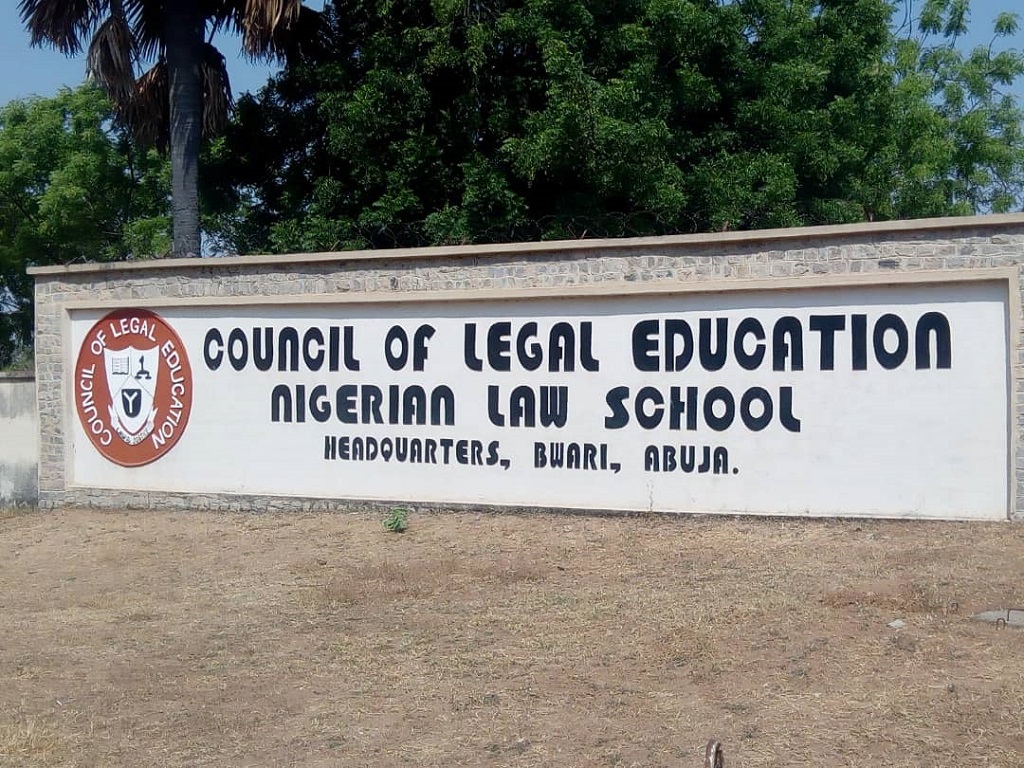
The decision was taken at the council’s third-quarter hybrid meeting held on August 13, 2026, at the Nigerian Law School headquarters in Bwari, Abuja.

In a statement, the council’s Secretary and Director of Administration, Aderonke Osho, said the decision followed a review of cases of examination misconduct recorded during the December 2025 Bar Final Examination.

The council approved the report of its Examination Misconduct Committee and found five candidates guilty of malpractice.

The affected candidates were subsequently disqualified and banned from sitting the Bar Final Examination for 10 years.

The meeting also considered various academic, regulatory and administrative matters concerning legal education and the administration of the Nigerian Law School.

In April, the council reported that 1,067 out of 7,602 candidates failed the 2025 Bar Final Examination, while 212 candidates obtained first-class honours and 1,216 earned second-class upper.

For the 2026 Bar Final resit held in May, 983 out of 1,955 candidates failed, representing 50.3 percent. Only 883 candidates passed, giving a pass rate of 45.3 percent.

The Bar Final Examination is the qualifying examination for law graduates who complete the required vocational training at the Nigerian Law School before they can be called to the Nigerian Bar.

Continue Reading

Education

JAMB: How Candidates Can Upload Result On Portal Without Visiting CBT Centre

Published

on

JAMB
Share

The Joint Admissions and Matriculation Board has introduced a new way candidates can now verify and upload their O’level results from the comfort of their homes without having to visit a Computer-Based Test centre.

JAMB’s Acting Director, Public Affairs and Protocol, Fabian Benjamin, announced this Monday in a statement shared on X.

Benjamin said the Board had facilitated the verification of candidates’ O’level results directly from the examination bodies responsible for conducting the Senior Secondary School Certificate Examination, beginning with the West African Examinations Council.

He said candidates could now upload their O’level results from home while JAMB verifies the results directly with the issuing examination bodies. The statement announced:

“UPLOAD OF O’LEVEL RESULTS FROM THE COMFORT OF CANDIDATES’ HOMES.”

“As a responsive organisation committed to providing efficient and accessible services, the Joint Admissions and Matriculation Board (JAMB) has facilitated the verification of candidates’ O’Level results directly from the various examination bodies responsible for conducting the Senior Secondary School Certificate Examination (SSCE), beginning with the West African Examinations Council (WAEC).

“Consequently, candidates can now upload their O’Level results from the comfort of their homes, while the Board undertakes the verification of such results directly with the issuing examination bodies.”

The initiative is aimed at making its services easier, faster and more convenient for candidates, according to the Board.

“The initiative is part of the Board’s renewed commitment to making services easier, faster, safer and more convenient for candidates.

“By using technology to reduce unnecessary visits to CBT centres, queues and manual processes, JAMB is putting candidate ease of service delivery at the centre of its operations.”

JAMB said the arrangement would also help address problems associated with manual O’level result uploads, including misplaced or mixed-up paper results, unverified or fraudulent results and errors in entering subjects and grades.

“The new arrangement also addresses challenges associated with manual O’Level result uploads, including misplaced or mixed-up paper results, presentation of unverified or fraudulent results, and errors in the manual entry of subjects and grades,” Benjamin said.

Through the integration of JAMB’s e-Facility platform with examination bodies, results can now be verified against the records of the issuing examination bodies before being downloaded into candidates’ profiles.

Steps to verify your O’level result

1. Visit buyresultsverificationcode.ng.

2. Enter your NIN and click “Verify NIN.”

3. Select the desired number of sittings and the appropriate examination body or bodies, then click “Continue.”

4. Enter your email address and GSM number, then click “Pay Now.”

5. Make payment using your debit card or bank transfer.

6. After successful payment, enter your examination details, including:

Examination number
Examination series
Examination year

7. Verify your result or results for the number of sittings selected and obtain your Verification Code.

How to upload your O’level result

8. Send “VERIFY” followed by your Verification Code to 55019 or 66019.

9. Your result will be uploaded and you will receive a notification.

10. Candidates with two sittings will be notified to visit their profile on JAMB e-Facility.

11. On the e-Facility dashboard, click “2026 UTME O’Level Upload.”

12. Enter your Verification Code. Your two verified results will be displayed.

13. Select the required subjects from the displayed results.

Candidates must select a minimum of five subjects and a maximum of nine subjects, with no subject selected more than once.

14. Click “Apply the O’Level Results.”

15. Upon successful upload, you will receive a notification confirming the submission.

JAMB added that the verification service would provide candidates with a convenient alternative, particularly during periods of high patronage and network challenges at CBT centres.

Benjamin said the initiative reflected the commitment of JAMB’s sixth Registrar, Prof Segun Aina, to a more customer-oriented and technology-driven service delivery system.

“The Board will continue to deploy technology and collaborate with relevant examination and government agencies to make its services simpler, safer and more accessible to candidates,” he said.

Continue Reading

Education

Nigeria’s First Female-Only Varsity, Tazkiyah University Commences off 2026 Session

Published

on

Share

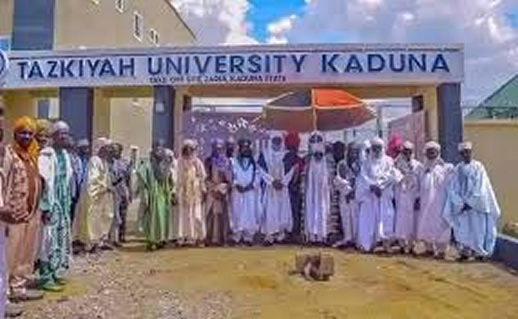
NUC-approved landmark project of National Mosque Imam, Prof. Ibrahim Maqari has commenced admissions for the 2026/27 academic year.

This development has made history in Nigeria’s education landscape.

The National Universities Commission, NUC, granted operating licence to Tazkiyah University, the first female-only university in the country in 2025.

The approval, which came alongside eight other new private institutions, spotlights the man behind it, Sheikh Professor Ibrahim Ahmad Maqari, Deputy Chief Imam of the National Mosque, Abuja, and one of Nigeria’s Islamic scholars.

Located in Zaria, Kaduna State, Tazkiyah University is envisioned as a higher institution dedicated exclusively to female students, with prospects of employing an all-female faculty,

Prof. Maqari, who announced the development on his Facebook page, said the university would serve both as a centre of academic excellence and as a moral project for social change.

According to him, profits from the institution would not be pocketed but channelled into a trust fund to support orphans across Nigeria.

“This is a trust from Allah and an amanah (sacred responsibility). The dream is to give women a platform for empowerment through knowledge, and to secure a future for children who have no parents to provide for them.”

Education Minister, Dr. Tunji Alausa, while announcing the new licences, listed Tazkiyah among nine newly approved private universities. Others are Leadership University, Abuja; Jimoh Babalola University, Kwara State; Bridget University, Imo State; Greenland University, Taraba State; JEFAP University, Niger State; Azione Verde University, Imo State; Unique Open University, Lagos State; and American Open University, Ogun State.

Although Tazkiyah’s permanent site is planned for Kaduna metropolis, its take-off campus will be in Zaria before relocating fully.

Continue Reading