Connect with us

News

FG commences completion of abandoned Farin Ruwa Multipurpose Dam in Nasarawa State.

Published

on

Share

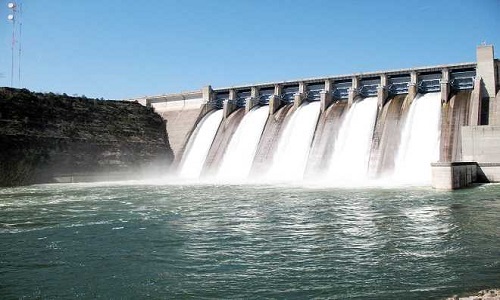
The Federal Government has officially commenced the completion process for the 20 megawatts Farin Ruwa Multipurpose Dam in Wamba Local Government Area of Nasarawa state.

The News Agency of Nigeria (NAN) reports that the Federal Executive Council had earlier approved N8.1 billion for the completion of the dam.

Speaking in Nasarawa on Saturday, Minister of Water Resources, Mr Suleiman Adamu, said the dam project had potential for irrigation, water supply and boosting socioeconomic and industrial development of the state.

Adamu said the contract, which had a 24-month timeline, comprised the completion of the dam embankment, spillway and outlet works.

He added that it would include water supply and hydro power components, 20 kilometres of access road and the rehabilitation of some service quarters that had already been under construction before the project was abandoned.

The minister noted that the project which started in 2003, suffered setback due to lack of funding, hence the state’s soliciting for intervention from the Federal Government.

“In consideration of the state’s request, President Muhammadu Buhari graciously approved the take-over and completion of the project in 2018.

“The President not only approved the completion of the project as designed, he also expanded it to include a regional water scheme and construction of irrigation infrastructure of 2,000 hectares for the people,” Adamu explained.

He expressed optimism that upon completion, the dam’s multipurpose uses would be beneficial to the populace.
Adamu pledged the commitment of the present administration to promoting infrastructural development that would improve the lives of all citizens and guarantee socio-economic development.

In his speech, Governor Abdullahi Sule said the potential in Farin Ruwa Waterfalls was more than tourism, with the capacity to generate 40 megawatts of electricity and 40,000 acres of irrigation land for agriculture.

Sule said that when he visited the waterfalls and discovered the biggest challenge was road infrastructure, the state awarded a N3 billion contract for the road network leading to the site.

The governor said that the bottom table of the waterfalls could generate 15 megawatts of power while the dam itself could easily generate 25 megawatts of power, totaling 40 megawatts capacity.

Sule said when he took over leadership in the state, he learnt that N5.8 billion had been spent on the abandoned project, hence he looked for means to complete it so as to maximize its advantages.

The Governor pledged the state’s commitment to support the full completion of the project within the stipulated time. (NAN)

Continue Reading
Click to comment

Leave a Reply

Your email address will not be published. Required fields are marked *

News

Gunmen Attack Ekiti Church, Kill Pastor, Abduct Worshippers

Published

on

Gun Men
Images of Gunmen
Share

Gunmen on Tuesday evening attacked a church in Eda Oniyo, Ilejemeje Local Government Area of Ekiti State, killing a pastor and abducting several worshippers.

The attackers reportedly stormed the church during an open-air crusade on the outskirts of the community. Witnesses said the gunmen, who were heavily armed, opened fire and operated for several minutes before taking an unknown number of people, including elderly persons and children, into a nearby forest.

A community source said the pastor was shot during the attack, while many worshippers were forced away by the gunmen.

The exact number of victims has not been confirmed, but the incident has caused fear and panic in the area.

A government official, who spoke on condition of anonymity, confirmed the attack and said security operatives have been deployed to rescue the victims and track down the assailants.

Police authorities have not yet issued an official statement on the incident.


Source: PT

Continue Reading

News

Jet Fuel Surge: CSO Urges FG, States to Support Hajj Air Carriers Ahead of 2026 Pilgrimage

Published

on

Share


The Independent Hajj Reporters (IHR) has appealed to the Federal Government and state governments to urgently introduce support measures, including possible subsidy arrangements, for airlines engaged in transporting Nigerian pilgrims for the 2026 Hajj.

In a statement signed by its National Coordinator, Ibrahim Muhammed, the civil society organisation expressed concern over the sharp increase in the price of Jet A1 aviation fuel, warning that it could disrupt the smooth airlift of pilgrims if not addressed promptly.

According to Muhammed, rising fuel costs have placed significant financial pressure on airlines contracted for the pilgrimage, many of which depend on leased aircraft for the operation. He noted that the spike in fuel prices has eroded projected profit margins, leaving some operators at risk of breaking even or even incurring losses.

He aligned with earlier concerns raised by aviation stakeholders under the platform of Concerned Aviation Stakeholders, led by Bukalti Gamawa, who cautioned that airlines might struggle to sustain operations under the current pricing realities.

“Available industry data shows that the rising cost of aviation fuel has created a major financial strain on airlines engaged for the 2026 Hajj. Without timely intervention, the operation could face severe disruptions,” Muhammed stated.

The organisation acknowledged that while the Federal Government no longer provides direct subsidies for Hajj operations, the current situation requires urgent policy intervention to ensure the success of the pilgrimage.

It cited examples from countries like Indonesia and Pakistan, where governments have reportedly stepped in to offset the increased cost of airfare for their pilgrims following the surge in aviation fuel prices.

The group explained that increasing Hajj fares at this stage may not be a viable option, especially with the airlift of pilgrims expected to commence soon. It warned that passing the additional costs to pilgrims could lead to a sharp rise in fares, placing further financial burden on intending pilgrims.

“When contracts were signed, Jet A1 sold at about ₦1,000 per litre locally. Today, prices have climbed to nearly ₦3,000 per litre across major departure centres. This represents a significant deviation from initial projections,” Muhammed said.

He further revealed that a single Hajj flight, which consumes approximately 70,000 litres of fuel, could now attract an additional cost exceeding ₦100 million, depending on the location.

Muhammed also pointed to the rising cost of aviation fuel in Saudi Arabia, noting that airlines face a “double financial burden” as they must also pay for return flights in foreign currency at significantly higher rates.

“Even if domestic interventions address outbound flights, airlines still face high fuel costs in dollars for return operations. This creates a double financial burden that must be addressed holistically,” he added.

The Independent Hajj Reporters called for coordinated efforts among relevant government agencies, aviation regulators, airlines, and fuel suppliers to ensure a seamless and successful 2026 Hajj exercise.

The group emphasised that timely intervention would not only safeguard airline operations but also protect pilgrims from sudden and excessive fare increases.

Continue Reading

News

Senate Moves to Strengthen Police Funding, Advances Trust Fund Bill

Published

on

Senate in Session
Senate in Session
Share


The Senate on Thursday took a major step toward improving the funding of the Nigeria Police Force by passing a bill seeking to reform the Police Trust Fund to second reading.

The proposed legislation, sponsored by Opeyemi Bamidele, aims to repeal and re-enact the existing law to introduce multiple and more sustainable funding sources for the police.

Leading the debate, Bamidele explained that the bill proposes a diversified funding structure, including one percent of total revenue from the Federation Account, development levies under tax laws, grants from federal, state, and local governments, as well as donations from international partners and contributions from the private sector.

He noted that the reform had become necessary due to persistent funding challenges facing the police, which have affected their ability to effectively tackle insecurity across the country. According to him, despite significant annual allocations, police formations often operate with inadequate resources, poor infrastructure, and limited operational tools.

The senator added that the new framework would enhance operational capacity, improve technological capabilities, and support the renovation of police facilities. It would also strengthen training programmes and ensure better welfare for officers.

Bamidele further stated that the bill proposes a structured governance system for the trust fund, including a governing board made up of key stakeholders such as representatives from relevant ministries, the police hierarchy, and the private sector.

Supporting the bill, Abba Moro emphasized the urgent need to address inadequate police funding, noting that many formations lack modern equipment needed to combat crimes such as kidnapping.

Also backing the proposal, Jubril Barau described the bill as crucial to national security, stressing that the police serve the entire federation and require adequate support.

However, concerns were raised by Ibrahim Dankwambo, who warned that the proposed one percent deduction from the Federation Account could face legal challenges, as similar arrangements had previously been contested by state governments. He also questioned how the funding model would align with ongoing discussions on state policing.

In his contribution, Abdulfatai Buhari argued that beyond funding, the police also need better equipment and operational support. He pointed out that Nigeria has about 300,000 police officers serving a population of over 200 million, which falls below global standards.

After extensive deliberation, the President of the Senate, Godswill Akpabio, put the bill to a voice vote, with the majority of lawmakers supporting it.

Akpabio announced that the bill would proceed to a public hearing to address concerns such as accountability of past funds, alternative funding options, and its compatibility with potential state police structures.

The bill has now been referred to the Senate Committee on Police Affairs, chaired by Ahmed Mallam-Madori, which has been given two weeks to report back to the Senate.

Continue Reading