Defence and Security
20 Abducted Corps Members Regain Freedom in Imo After Days in Captivity
Published
2 months agoon
**Rescue Operation Ends Ordeal as NYSC DG, Security Chiefs Visit Victims in Owerri**
Twenty prospective members of the National Youth Service Corps (NYSC), along with another abducted passenger, have regained their freedom after days in captivity following their abduction along the Owerri-Onitsha Road in Imo State.
The victims were rescued from a forest in Amakohia-Ubi, Owerri West Local Government Area of the state, in a coordinated operation involving security agencies.
Their release brings relief to families who had endured days of uncertainty and anxiety following the October 1 abduction.
From Journey to NYSC Camp to Kidnappers’ Den
The victims were travelling from Ibadan, Oyo State, to NYSC orientation camps in Abia and Akwa Ibom states when their journey was abruptly cut short.
The two buses conveying the prospective corps members came under attack around Umunoha in Mbaitoli Local Government Area of Imo State.
The attack sparked a major security operation as authorities moved to locate the abducted corps members and dismantle the kidnappers’ hideout.
For the victims and their families, however, the days that followed were marked by fear, uncertainty and desperate prayers for their safe return.
Reports that the abductors were demanding as much as ₦50 million for each victim further heightened concerns among the families.
Security Forces Close In
As the search intensified, the Imo State Police Command reportedly located the kidnappers’ camp through drone surveillance.
However, security operatives were unable to immediately move into the area after intelligence indicated that the route and the camp had allegedly been fortified with improvised explosive devices.
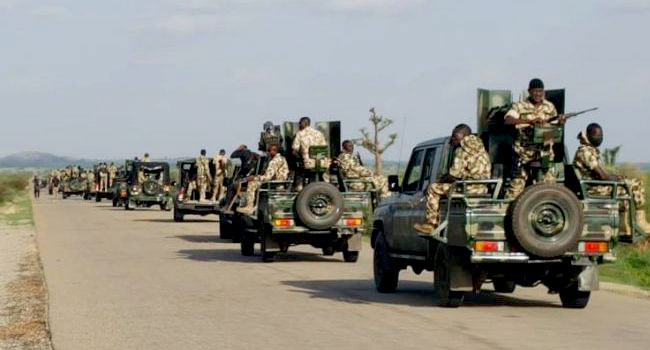
Additional operational assets, including bulldozers and armoured personnel carriers, were subsequently deployed as security forces worked to gain access to the location.
Police had earlier announced the rescue of 10 victims following the attack, while efforts continued to locate those still being held captive.
The latest operation has now secured the freedom of the remaining 20 prospective corps members and another abducted victim.
Victims Receive Medical Attention
Following their rescue, the victims were taken to the Department of State Services (DSS) Hospital in Owerri for medical attention and comprehensive medical checks.
The Director-General of the NYSC, Brigadier General Olakunle Oluseye Nafiu, visited the rescued victims at the DSS clinic, where he addressed them and assessed their condition.
He was accompanied by the Imo State Commissioner of Police, the Director of the DSS in the state and the Commander of the 34 Artillery Brigade.
The presence of the NYSC leadership and senior security officials underscored the seriousness with which authorities treated the incident and the wellbeing of the rescued corps members.
While the victims have now regained their freedom, details surrounding the operation remain closely guarded.
It is also unclear whether any suspects were arrested during the rescue operation or whether any ransom was paid to secure the victims’ release.
The police, however, said the operation to apprehend those behind the abduction remains ongoing.
According to the Force Public Relations Officer, Ani Iniedu, security agencies would continue coordinated operations to ensure that those responsible are brought to justice.
Uzodimma Commends Security Agencies
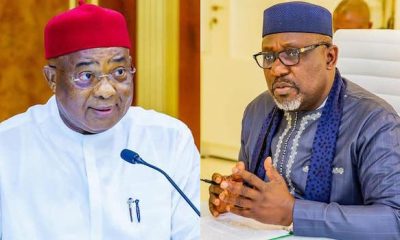
Reacting to the development, Imo State Governor, Hope Uzodimma, commended the security agencies for what he described as their quick and coordinated intervention.
The governor expressed particular satisfaction that the corps members were rescued unharmed, praising the collaboration and patriotism demonstrated by the security agencies involved.
Uzodimma also acknowledged the cooperation between the Oyo and Imo State Governments, saying their joint efforts contributed to the successful release of all 20 captives.
He explained that because the incident involved the safety of human lives, authorities deliberately avoided releasing sensitive information while the rescue operation was underway.
According to him, the discreet approach was necessary to protect the victims and ensure that security agencies could carry out their operations without compromising their mission.
The governor also praised the parents and relatives of the abducted corps members for their patience and resilience throughout the difficult period.
He urged Nigerians to continue to have faith in the Federal Government and security agencies as efforts continue to address the country’s security challenges.
A Moment of Relief
For the rescued corps members, their release marks the end of a frightening interruption to what was supposed to be the beginning of a new chapter in their lives.
What started as a routine journey to NYSC orientation camps became an ordeal that left families waiting anxiously for news of their loved ones.
Their eventual rescue offers a moment of relief, while also renewing questions about security along major highways and the safety of young Nigerians travelling to serve their country.
For now, the focus remains on the recovery of the rescued victims, while security agencies continue efforts to identify, arrest and prosecute those responsible for the abduction.
You may like
-
Court Disqualifies Uzodimma as APC Imo West Senatorial Candidate, Declares Okorocha Primary Winner
-
Imo Court Targets January 2027 for Trial of Five Suspected Kidnappers
-
Gunmen Kidnap Catholic Priest In Imo State
-
Imo Guber: Anyanwu Picks PDP Ticket
-
Kidnapped 4 Catholic reverend sisters freed in Imo
-
Imo Killing: Fish out perpetrators, Northern Elders task security agencies
Defence and Security
DSS Intercepts 25 Guns, 825 Magazines Smuggled From Niger Republic, Arrests Female Courier in Sokoto
Published
2 weeks agoon
November 12, 2026
The Department of State Services (DSS) has intercepted a major shipment of illegal arms allegedly smuggled into Nigeria from the Niger Republic, recovering 21 AK-47 rifles, four PKT machine guns and 825 magazines in an intelligence-led operation in Sokoto State.
The operation, carried out in Dawakawa, Goronyo Local Government Area, also comes amid growing concerns over the proliferation of illegal weapons and the activities of terrorist and bandit networks across the country.
A security source disclosed that the interception followed sustained surveillance and intelligence gathering on suspected terrorist networks believed to be facilitating the movement of arms into Nigeria.
The source said the DSS had intensified its operations against illegal arms trafficking, forcing criminal networks to devise alternative methods of transporting weapons, including the use of women and animals such as camels to evade security surveillance.
In a related operation, DSS operatives reportedly arrested a suspected female arms courier, identified as Hafsat Umar, in Talata Mafara Local Government Area of Zamfara State, earlier in the week.
Umar was allegedly found in possession of 12 grenades and two ammunition belts. She is reportedly the 14th female arms courier arrested by the service between February 2025 and November 2026.
Preliminary intelligence reportedly linked her to an alleged ammunition procurement network, with indications that she had travelled to Niger State to source ammunition for onward delivery to a suspected bandit leader, Saidu Marafa, in Kani Kawa, Maradun Local Government Area of Zamfara State.
The latest arrests form part of a wider DSS crackdown on arms trafficking networks, with suspected female couriers apprehended in Zamfara, Nasarawa, Ebonyi, Taraba, Kaduna and Plateau states.
In one of the recent operations, operatives arrested Aisha Mohammed in Keffi, Nasarawa State, last month. She was allegedly found with 202 rounds of 7.62mm AK-47 ammunition and three empty AK-47 magazines.
The DSS also arrested two suspected arms couriers, Chika Aguzie and Blessing Nwamba, at separate locations in Ebonyi State in September 2026 over alleged links to the supply of weapons and explosives to commanders of the outlawed Eastern Security Network (ESN).
The suspects were reportedly linked to Chinonso Amobi Okafor, also known as Temple, and another commander identified as B44, said to be operating in Anambra State. Fourteen wraps of improvised explosive device (IED) detonators were recovered during the operation.
Other arrests included Rabiatu Halidu, who was apprehended along Abacha Road in Nasarawa State in August with 501 rounds of 7.62mm ammunition, and Aisha Ibrahim, arrested in Tsafe Local Government Area of Zamfara State in February with 975 rounds of ammunition.
In January, DSS operatives reportedly arrested Sakina Muhammad and Badariyya Abubakar along the Wukari-Jalingo Road in Taraba State. Recovered from them were an AK-47 rifle, 984 rounds of special ammunition, 105 rounds of GPMG ammunition and 14 empty AK-47 magazines.
The agency also recorded several arrests in 2025 involving suspected female couriers allegedly working with illegal arms dealers and bandit networks, including Rahane Sanusi, Suwaiba Abubakar, Halima Umar, Firdausi Haruna, Saidya Ibrahim and Fatima Sani.
Beyond arrests and seizures, the DSS has also secured convictions in terrorism-related cases involving female arms couriers.
The Federal High Court in Abuja reportedly sentenced three women — Halima Abdullahi, Safiya Salihu and Halima Umar — to 20 years’ imprisonment each following their arraignment on terrorism-related charges.
The security source disclosed that Hafsat Umar would also be charged to court, adding that the service remained committed to dismantling illegal arms supply networks and bringing all those involved to justice.
According to the source, the DSS would sustain intelligence-driven operations and tactical interventions to identify, apprehend and prosecute individuals involved in the illegal arms trade.
Defence and Security
Troops Foil Mass Abduction in Borno, Rescue 119 Hostages, Recover Eight Vehicles
Published
2 weeks agoon
November 8, 2026
Troops of the Nigerian Army have reportedly foiled a mass abduction attempt by suspected terrorists in Borno State, rescuing 119 civilians, including women and children, and recovering eight vehicles seized during the attack.
The successful operation followed a swift military response to the activities of armed terrorists who barricaded the Dutsen Kura–Bulazarma–Kamuya road, intercepting travellers and abducting civilians.
According to counter-insurgency publication Zagazola Makama, the rescue operation was carried out on Friday by troops of the 135 Special Forces Battalion, operating under the 27 Task Force Brigade, Sector 2, during a routine surveillance mission along the strategic route.
The troops reportedly detected a group of terrorists mounting an illegal roadblock and forcibly abducting motorists and passengers alongside their vehicles.
Following the discovery, the military immediately mobilised the Special Forces Quick Reaction Force (QRF) of the battalion, reinforced by another response team from the headquarters of the 27 Task Force Brigade.
The combined forces advanced through the Mangari–Dora axis, launching a pursuit of the terrorists in a coordinated operation aimed at rescuing the abducted civilians.
Faced with the advancing troops, the terrorists reportedly abandoned their captives and seized vehicles before fleeing the area.
The military operation resulted in the rescue of 119 civilians, comprising 69 men, 35 women and 15 children, while eight vehicles were successfully recovered.
The rescued victims were subsequently reunited with their families.
Meanwhile, during the troops’ withdrawal from the operational area, an Improvised Explosive Device (IED) was discovered around the Bam Buratai Junction–Bula Zarma axis.
An Explosive Ordnance Disposal (EOD) team was immediately deployed to the location, where the suspected explosive device was identified, marked and secured for safe disposal.
The operation highlights the continuing efforts of Nigerian troops to counter terrorist activities, protect vulnerable communities and secure major transportation routes in the North-East.
Military operations remain ongoing across Borno State and other parts of the North-East as security forces intensify efforts to disrupt terrorist movements, prevent abductions and restore safety along vulnerable highways.
Defence and Security
State Police: NASS Targets December 2026 for Final Legislative Process — Bamidele
Published
3 weeks agoon
October 29, 2026
Senate Leader, Senator Opeyemi Bamidele, says 30 states have endorsed constitutional amendment, insists reform will strengthen community security as he urges lawmakers to measure legislative performance by impact on citizens
The establishment of state police in Nigeria has moved closer to reality, with at least 30 state Houses of Assembly approving the proposed constitutional amendment, Senate Leader, Senator Opeyemi Bamidele, has declared, announcing that the National Assembly is targeting December 2026 to complete the remaining legislative processes and transmit the bill to President Bola Tinubu for assent.
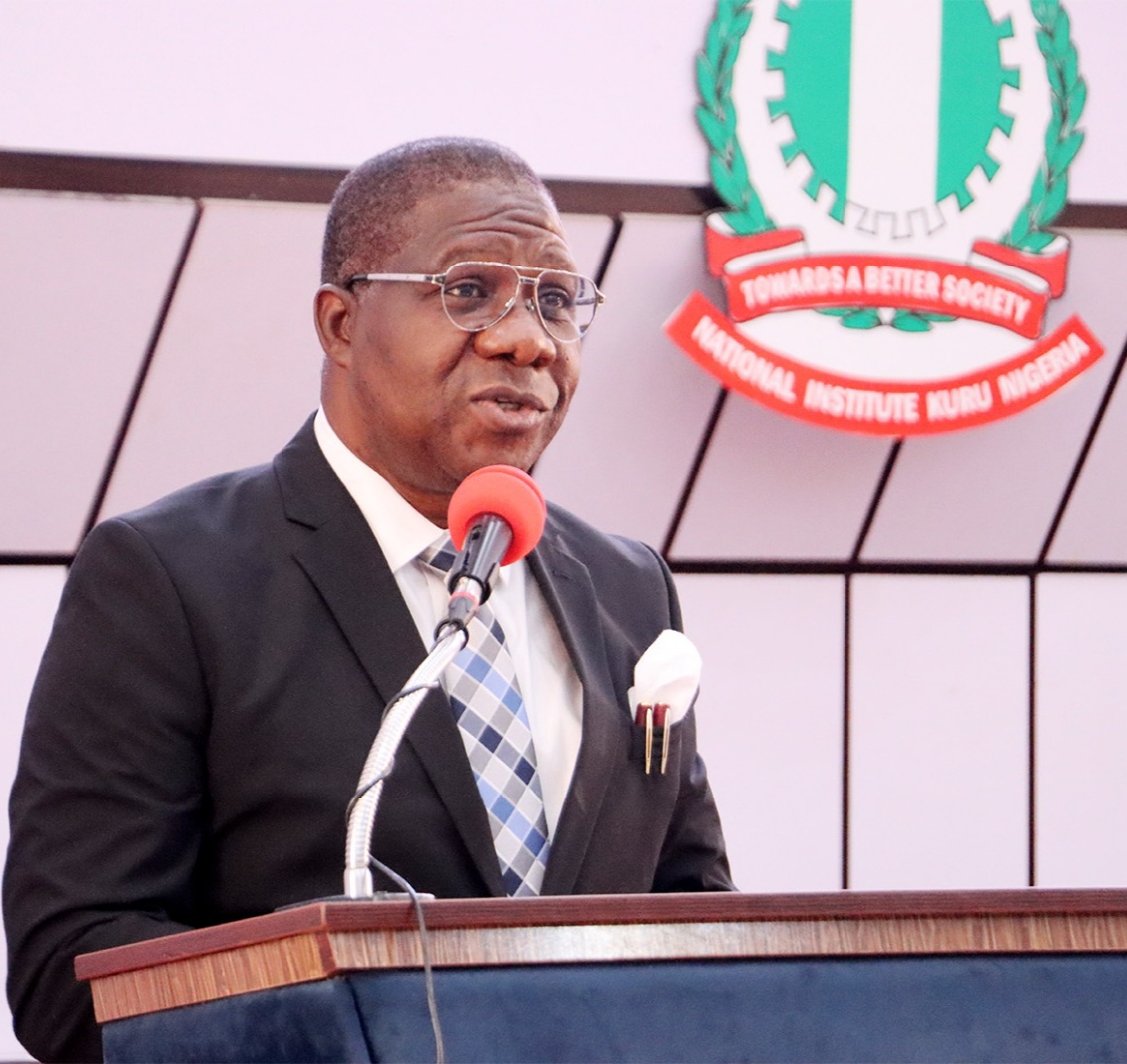
Bamidele, who is also Vice Chairman of the Senate Committee on the Review of the 1999 Constitution, described the development as a historic breakthrough in the country’s efforts to restructure its security architecture, improve intelligence gathering and establish a policing system that responds more effectively to the security needs of local communities.
He disclosed this on Thursday while delivering a lecture to participants of Senior Executive Course 48 at the National Institute for Policy and Strategic Studies (NIPSS), Kuru, Jos, Plateau State.
The lecture, titled “Improving the Efficiency and Effectiveness of Governance through Proactive Lawmaking,” examined the role of strategic legislation in strengthening public institutions, improving national security and promoting effective governance.
According to the Senate Leader, the approval of the State Police Constitution Alteration Bill, 2026, by at least 30 state assemblies has satisfied the constitutional requirement for state-level concurrence, paving the way for the National Assembly to complete the next stages of the amendment process.
He explained that Section 9(2) of the 1999 Constitution, as amended, requires the approval of not less than two-thirds of all State Houses of Assembly for a constitutional alteration of this nature.
“We are pleased to inform our constituents across the federation that State Police have moved from rhetoric to reality. We have already received formal reports from the State Houses of Assembly and, as of today, no fewer than 30 states have approved the State Police Constitution Alteration Bill, 2026,” Bamidele said.
He added that the National Assembly was now required to consider and collate the reports submitted by the state assemblies before passing the necessary resolution by a simple majority of members in each chamber.
Once that stage is completed, he said, the bill would be transmitted to the President and Commander-in-Chief for assent.
“We have set a clear timeline for ourselves. We intend to conclude all these legislative stages — consideration of reports, passage of resolution, and transmission for presidential assent — on or before December 2026,” he stated.
Bamidele stressed that the development marked a significant departure from more than 15 years of unsuccessful attempts to establish state police through constitutional reform.
“What this means is that State Police is no longer a campaign promise or a subject of endless debate. It is now a constitutional reality. It means that the security of lives, private property and public assets occupies a prime place in the legislative agenda of the 10th National Assembly,” he said.
He maintained that decentralising policing would enable Nigeria to develop a system better equipped to understand local terrain, communicate in indigenous languages, respond to community-specific security threats and improve accountability to the people.
The Senate Leader, however, clarified that the proposed reform was not designed to weaken the Federal Government or undermine national unity, but to strengthen Nigeria’s federal structure through a more responsive security framework.
According to him, state police would not amount to the creation of state armies, but would provide state-led, community-anchored policing within clearly defined constitutional safeguards, operational standards, oversight mechanisms and human rights protections.
He assured Nigerians that the National Assembly, under the leadership of Senate President Godswill Akpabio, remained committed to completing the legislative process.
“The National Assembly remains committed to delivering on the establishment of State Police. We will not falter until every Nigerian, whether in Kuru, in Iyin-Ekiti, in Gusau or in Yenagoa, can sleep with both eyes closed,” Bamidele said.
10th NASS Prioritises People-Centred Legislation
Beyond security sector reform, Bamidele said the 10th National Assembly had prioritised strategic, people-oriented legislation designed to address critical national challenges and improve the welfare of citizens.
He argued that the effectiveness of a legislature should not be determined merely by the number of bills introduced or passed, but by the tangible difference its interventions make in the lives of Nigerians.
According to him, the National Assembly has enacted several laws addressing education financing, workers’ welfare, taxation, social investment, electoral administration, cybersecurity, investment regulation, insurance and regional development.
Among the legislations he highlighted were the Student Loans (Access to Higher Education) Act, 2024; the Minimum Wage (Amendment) Act, 2024; the four Tax Reform Acts of 2025; and the National Social Investment Programme Act.
Others include the Electoral Act, 2026; the Cybercrimes (Amendment) Act; the Investments and Securities Act, 2025; the Nigerian Insurance Industry Reform Act, 2024; and the laws establishing regional development commissions.
He said these legislative interventions reflected a proactive approach to governance, in which lawmakers anticipate emerging challenges, address institutional weaknesses and establish legal frameworks capable of supporting sustainable development.
Bamidele explained that proactive lawmaking could strengthen national security, drive economic transformation, improve public financial management, enhance electoral credibility and expand opportunities in education, healthcare and technological innovation.
He added that effective legislation could also promote environmental sustainability and improve relations between the different tiers of government.
Good Laws Alone Cannot Guarantee Good Governance
The Senate Leader cautioned that passing legislation was only one component of effective governance, stressing that laws must be properly implemented, adequately funded and regularly evaluated to deliver meaningful outcomes.
He observed that some laws could fail to achieve their objectives when they were disconnected from prevailing realities, inadequately funded or poorly administered.
“Good governance requires good laws. But good laws alone do not guarantee good governance. We require laws that are relevant, evidence-based, implementable, adequately funded, properly administered, effectively monitored, periodically reviewed and ultimately measured by their impact on citizens,” he said.
He therefore urged lawmakers and public institutions to adopt a performance-driven approach that places citizens’ welfare and measurable development outcomes at the centre of legislative activities.
According to him, the true value of lawmaking lies not simply in the passage of bills, but in the extent to which legislation resolves societal problems, strengthens institutions and improves the quality of life of the people.
Bamidele Seeks Stronger NIPSS-NASS Collaboration
Bamidele also called for stronger institutional collaboration between the National Assembly and NIPSS to improve legislative foresight, policy development and strategic decision-making.
He described the institute as a critical national institution with the capacity to bring together expertise from the public service, military, private sector, academia and other strategic sectors.
He noted that the multidisciplinary structure of the Senior Executive Course, which covers policy, strategy, leadership, economics, international relations, security, science and technology, as well as peace and conflict studies, positioned NIPSS to contribute meaningfully to the development of effective legislation.
He encouraged the institute to deepen its engagement with the National Assembly by providing research, policy analysis and strategic insights that could help lawmakers anticipate emerging challenges and develop evidence-based legislative responses.
The lecture was attended by the Chairman of the Senate Committee on Employment, Labour and Productivity, Senator Diket Plang; Chairman of the Senate Committee on Tourism, Senator Pam Dachungyang; Director-General of NIPSS, Professor Ayo Omotayo; and former President of the Nigerian Institution of Estate Surveyors and Valuers, Mr. Adekunle Alonge.
The proposed state police framework remains a major component of Nigeria’s ongoing constitutional review process, with its anticipated completion expected to shape future debates on policing responsibilities, public safety and the country’s broader security architecture.

Latest News
Adeboye, Oyedepo, Idahosa, Others to Feature as Dunamis Marks 30th Anniversary in Abuja
ShareThe seven-day celebration will bring together leading Nigerian and international Christian ministers, gospel artistes and delegates from across the world...
Tinubu Assures Nigerians of Improved Electricity, Pledges Leyland Factory Revival
Share President Bola Tinubu has assured Nigerians of improved electricity supply, promising to tackle the persistent power challenges as his...
Ekiti Targets Over 100,000 Women for Economic Empowerment Through Nigeria for Women Programme
Share The Ekiti State Government has intensified efforts to promote women’s economic empowerment through the Nigeria for Women Programme...
Bamidele Celebrates Wole Olanipekun at 75, Hails His Landmark Courtroom Victories as Pillars of Nigeria’s Democracy
Share Says legal icon’s five decades at the Bar, philanthropy and commitment to justice have strengthened the rule of law...
ONDO STATE POLITICS: LEADERSHIP IS NOT A MONOPOLY, AND LOYALTY MUST NOT BE CONFUSED WITH SUBSERVIENCE
Share With all due respect, this write-up is a classic example of how political loyalty can sometimes cloud objective...