Connect with us

Health

FG Inaugurates Joint Task Team To Protect Health Investments

Published

on

Share

–ICPC member

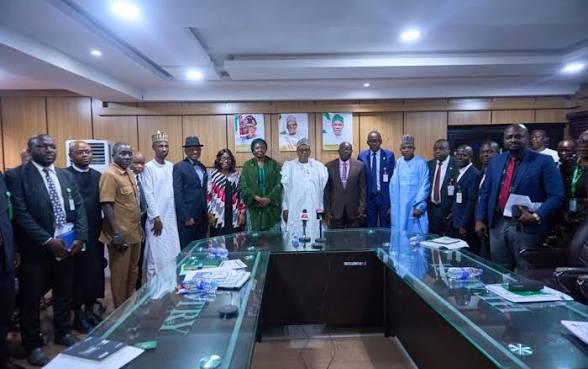
In its bid to enforce preventive controls and protect investments in Nigeria’s health sector, the Federal Government has inaugurated a Joint Task Team comprising staff of the Federal Ministry of Health and Social Welfare and the Independent Corrupt Practices and Other Related Offences Commission (ICPC).

According to Ado Bako
Assistant Director, Information and Public Relations, of the Health ministry in a press release on Monday, 17th August, 2026, the Coordinating Minister of Health and Social Welfare, Prof. Muhammad Ali Pate said the initiative is a deliberate shift from the old practice of responding to wrongdoing after it had occurred to one of identifying vulnerabilities early, closing loopholes and strengthening systems before public resources are lost. The statement said:

“Every naira invested in our health system carries an obligation: to reach the facility, the health worker, and the Nigerian whose life depends on it. When those resources are diverted, the cost is not abstract. It is a medicine that never arrives, equipment that is unavailable when needed, or a service that falls short. In this sector, corruption can cost lives.”

Prof. Pate sees the Joint Task Team as “an instrument for institutional change”, whose mandate is centred on identifying institutional vulnerabilities, strengthening preventive controls and improving oversight across the health sector.

Under BHCPF 2.0, the Federal Government has deployed 774 Performance and Financial Management Officers, one to every Local Government Area, to independently verify the receipt and utilisation of funds. Verified National Identification Numbers are also being used to strengthen beneficiary authentication and reduce duplication, while digitalisation is improving transparency and traceability.

The Task Team builds on the Federal Government’s Red Letter of October 2025, which called on communities and ward health committees to track whether BHCPF funds reach their facilities. The Joint Task Team now adds structured institutional oversight to that citizen vigilance.

The Joint Task Team will conduct assessments following each quarterly disbursement of the Basic Health Care Provision Fund, with the BHCPF Secretariat serving as its Secretariat. The Team is co-chaired by the Director of Hospital Services, representing the Ministry, and a Director of the ICPC, with membership drawn from relevant supervising offices and departments. The Memorandum of Understanding runs for two years, subject to renewal.

The Permanent Secretary, Federal Ministry of Health and Social Welfare, Daju Kachollom S. mni, said protecting health-sector resources is fundamental to the Ministry’s mandate to save lives, reduce the physical and financial pain of ill-health, and produce health for all Nigerians. In her words:

“This is a Team designed to be embedded in how the Ministry already works, not to sit outside it.”

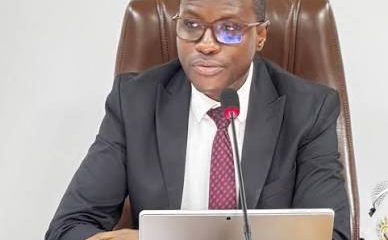
The Chairman of the ICPC, Dr. Musa Adamu Aliyu, represented by the Executive Secretary of the Commission, Mr. Clifford Oparaodu, said the partnership strengthens preventive oversight of health-sector resources, particularly the BHCPF.

“Corruption in the health sector is not measured only in financial losses or accounting irregularities. The losses are measured in maternal and infant mortality rates, rates of immunisation, mortality from preventable diseases, easy and affordable access to medical care at all levels.”

The Coordinating Minister, alongside the Chairman of the ICPC, formally inaugurated the Joint Task Team.

Continue Reading
Click to comment

Leave a Reply

Your email address will not be published. Required fields are marked *

Health

Ebola: NCDC Tracks 53 Contacts, Including Health Workers

Published

on

Health Workers
Share


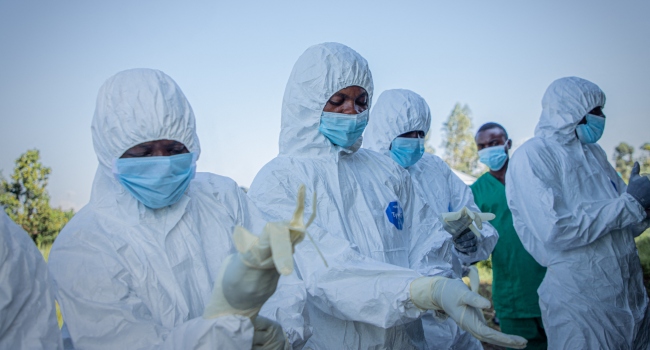
The Nigeria Centre for Disease Control and Prevention (NCDC) has placed 53 contacts linked to Nigeria’s confirmed Ebola case under surveillance. The contacts include healthcare workers, domestic staff and the spouse of the 42-year-old female patient diagnosed with the disease in October 2026.

In its Ebola Disease Situation Report dated October 24, the agency disclosed that Rivers State reported a new suspected case on October 23, but laboratory tests returned negative for Ebola. The NCDC said contact tracing and follow-up were ongoing to prevent further transmission of the disease.

The index patient reportedly returned from Uganda through Addis Ababa on October 3, arriving in Abuja on an international flight. She developed symptoms four days later and visited private health facilities on October 10 and 11 before being admitted. The NCDC was notified on October 19, and laboratory tests confirmed Ebola on October 20. Her symptoms included fever, diarrhoea, body aches and sore throat, with no bleeding reported.

The NCDC Director-General, Dr. Jide Idris, has assured Nigerians that the Federal Government and its health partners are taking urgent steps to contain the outbreak. Speaking at a press briefing on Sunday, Idris said the response was being coordinated through an Incident Management System and an Emergency Operations Centre, under the leadership of the Coordinating Minister of Health and Social Welfare, Professor Muhammad Pate, and the Presidential Task Force on Ebola Virus Disease.

Idris explained that public health teams were identifying people who might have been exposed to the patient and monitoring them for 21 days after their last possible exposure. He urged Nigerians contacted by health officials to provide accurate information about their movements, contacts and symptoms, stressing that being identified as a contact does not mean a person has Ebola.

The NCDC chief also commended healthcare workers whose vigilance helped identify the case and called on public and private hospitals to strengthen infection prevention and control measures. He urged facilities to maintain proper screening and triage, observe hand hygiene, ensure environmental cleanliness and provide adequate personal protective equipment for their staff.

Idris further advised healthcare workers to promptly isolate and report suspected cases to the relevant public health authorities without waiting for laboratory confirmation before taking necessary precautions. He emphasised that protecting health workers and ensuring public cooperation were essential to containing the disease and preventing further transmission in Nigeria.


Continue Reading

Health

2 Abuja Doctors, 2 Others Arrested Over Organ Harvesting in Abuja

Published

on

Share

Two medical doctors and two other suspects have been arrested in Abuja for organ harvesting by the Nigerian Police Force in late August 2026. They were arrested for allegedly running an organ harvesting and human trafficking network operating between Abuja and Nasarawa State.

The arrested medical practitioners are Dr. Benjamin Oyime (a 48-year-old kidney consultant) and Dr. Daniel Otukpa (a 53-year-old Acting Director of Clinical Services).

Both nephrologists are linked to Wellington Clinics (Wellington Hospital) in Life Camp, Abuja.

The arrests were executed by the Special Tactical Squad (STS-FID) following an investigation brought to light by social media activist Martins Vincent Otse (popularly known as VeryDarkMan or VDM) and his team.

The victim, a 22-year-old man named Samuel Ezekiel approached the activists after medical scans at independent hospitals verified that his left kidney was missing.

The 23-year-old intermediary, Emmanuel Ode, allegedly confessed to recruiting Ezekiel and bringing him to Wellington Hospital for the illegal surgery.

Investigators report that the victim was manipulated into signing official consent documents under a fake name, “Isa Abubakar”.

It was further revealed that the victim was allegedly paid ₦1.7 million for the kidney, while legal representatives allege that the black-market syndicate resells these harvested organs to wealthy recipients for ₦50 million to ₦70 million.

Activists and lawyers from the Martin Luther King Centre fear that this is not an isolated incident, estimating that more than 10 young Nigerians may have fallen victim to this specific ring.

Following the police raids and public outcry, Wellington Clinics Abuja issued an official statement denying any deliberate involvement in commercialized organ trafficking. Meanwhile, the private facility immediately suspended all kidney transplant and services effective August 31, 2026, while the criminal investigation continues.

NewsBlast recalls that this case reflects previous enforcement actions by the National Agency for the Prohibition of Trafficking in Persons (NAPTIP), in which it arraigned doctors from Alliance Hospital in Abuja for similar black-market kidney transplants.

Furthermore, under the National Health Act, trading human organs for commercial gain or charging a fee for transplants carries severe criminal penalties in Nigeria.

Continue Reading

Health

FG Target 20,000 Yearly Medical Intakes Across Six Geo-political Simulation Centres

Published

on

Share

To counter the rising trend of Nigerian-trained health personnel migrating for greener pastures abroad, the Federal Government is expanding the country’s healthcare workforce and strengthening practical training for medical and other health professional students.

Consequently, it has disclosed plans to increase the annual medical school admissions to 20,000 within the next three years. Along with this is the targeted establishment of world-class medical simulation centres across Nigeria’s six geopolitical zones.

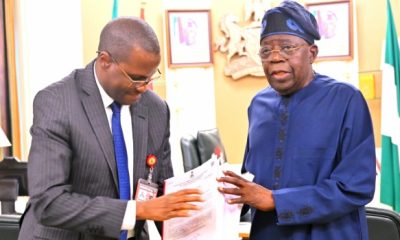
The Minister of Education, Dr. Tunji Alausa, disclosed this while receiving the report of the Tertiary Education Trust Fund Medical Simulation Committee.

This was part of a statement issued on Sunday and signed by Ikharo Attah, the Special Adviser on Media and Communications to the Minister of Education.

Alausa said the proposed centres would provide world-class practical training for medical, dental, nursing, pharmacy and other allied healthcare students. The said:

“I would like to thank the members of the committee that has worked so hard and assiduously to get us to this point in which we are now talking about building several simulation centres across the country to provide world-class training for our medical students, dental students, nursing students, pharmacy students and other allied healthcare professionals.”

Alausa said the expansion had become necessary to meet the country’s health needs.

He disclosed that nursing enrolment, which stood at about 38,000 three years ago, had risen to more than 120,000 students across nursing schools in the country.

The minister added that annual admission into medical schools had increased from about 5,000 students when Tinubu assumed office to almost 12,000 currently.

“Today, I’m happy to report that we’re admitting almost 12,000 students. Our goal in the next three years will be to increase the number of annual medical student enrolment in medical schools to about 20,000.”

He added that the number of students admitted into pharmacy and dental schools had also increased.

The minister commended the Chairman of the Medical Simulation Committee, Dr Wale Suleiman, and other members for their work in preparing the report and advancing plans for the centres.

He said the initiative would help ensure that the increasing number of students entering healthcare professions received adequate practical training.

The planned expansion comes against the backdrop of persistent concerns over the migration, popularly known as “Japa,” of Nigerian doctors, nurses and other healthcare professionals seeking better remuneration, working conditions and career opportunities abroad.

The migration of health workers has raised concerns among professional bodies and health-sector stakeholders about its impact on Nigeria’s already strained healthcare system, particularly shortages of skilled personnel in public hospitals.

With the proposed simulation centres, the government is seeking to expand training capacity while improving the quality of practical education for a growing pool of health professional students.

Continue Reading