Connect with us

News

Mararaba Gridlock: N44bn Flyover Set for December Completion

Published

on

Mararaba
Share


The N44 billion Mararaba flyover in Nasarawa State is expected to be completed by December 2026, offering relief to motorists and commuters travelling along the busy Abuja-Keffi corridor.

The Nasarawa State Government disclosed this during an inspection tour of infrastructure projects in the state by the Renewed Hope Ambassadors Presidential Media Team.

The five-day inspection tour, led by Presidential Spokesperson Bayo Onanuga, covered major infrastructure projects across Benue and Nasarawa states.

Speaking at the Mararaba flyover project site, the Managing Director of the Nasarawa State Urban Development Agency (NSUDA), Wada Mohammed, said the project would be delivered by the end of the year.

Mohammed explained that the project was initially awarded for N11.1 billion with an 18-month completion period. However, the scope of the project was later expanded, leading to an increase in its overall cost.

According to him, the design was modified to increase the height of the bridge and provide sufficient clearance for heavy and high vehicles. The entry and exit ramps were also extended.

He added that the state government had paid more than N600 million in compensation to property owners affected by the construction.

The 2.6-kilometre project comprises a continuous flyover, two pedestrian flyover bridges and five pedestrian bridges designed to provide safer crossings for pedestrians.

Mohammed said the permanent construction works would cost nearly N40 billion, while compensation, road markings, signage, streetlights and other road furniture would bring the total project cost to about N44 billion.

He said the flyover was conceived as a long-term solution to the persistent traffic congestion in Mararaba, while ensuring that businesses and commercial activities in the area could continue during construction.

When completed, the project is expected to significantly reduce travel time between Abuja and Keffi, from more than two hours during periods of heavy traffic to less than 40 minutes.

The NSUDA boss attributed the pace of construction to the capacity and commitment of the contractor, as well as the state government’s prompt payment for certified works.

He said Governor Abdullahi Sule had consistently approved funds for certified projects without unnecessary delays, allowing the contractor to maintain the construction schedule.

Mohammed also said increased federal allocations had given the state greater financial capacity to undertake the project, despite Nasarawa being among the states receiving relatively low allocations from the Federation Account.

He, however, appealed to the Federal Government to reimburse the state for the money already spent on the project.

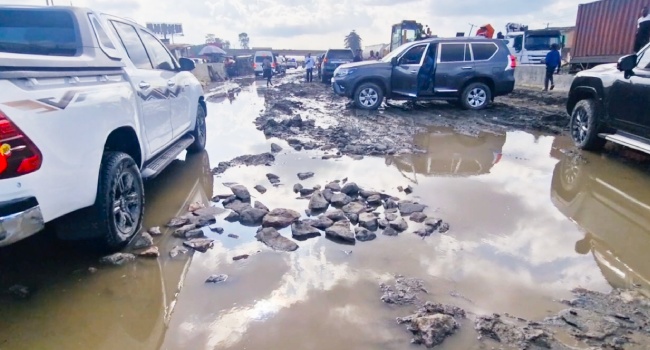
Mararaba, located immediately outside Abuja, is one of the busiest points along the Abuja-Keffi corridor. Motorists using the route have historically faced severe traffic congestion, long delays, fuel wastage and significant travel stress.

The demolition of the old Mararaba bridge between late 2025 and early 2026 further disrupted traffic, with ongoing construction resulting in diversions, restricted movement, dust and delays.

During the inspection tour on August 5, members of the presidential media team travelled about 37 kilometres from the Federal Secretariat to Ado Village in approximately one hour and 20 minutes due largely to construction activities.

In contrast, the journey from Ado Village to Makurdi, a distance of about 300 kilometres, took approximately four and a half hours, highlighting the impact of construction-related congestion around the Abuja-Keffi corridor.

Once completed, the Mararaba flyover is expected to ease traffic congestion, improve road safety and connectivity, reduce travel time and boost economic activities along the corridor.

It is also expected to provide lasting relief to the thousands of motorists, commuters and businesses that depend on the Abuja-Keffi road daily.

Continue Reading
Click to comment

Leave a Reply

Your email address will not be published. Required fields are marked *

News

Okpebholo Removes Omonzane as Edo SUBEB Chairman, Appoints Oyakhilome

Published

on

Edo State Governor, Monday Okpebholo
Share

Edo State Governor, Monday Okpebholo, has removed Mrs Sonia Ebanehita Omonzane as Executive Chairman of the State Universal Basic Education Board (SUBEB).

The governor replaced her with Hon. Ayewoh Ambrose Oyakhilome, who was until his appointment the Executive Chairman of the Edo State Rural Access Roads Agency (RARA).

The appointment was announced in a statement issued by the Secretary to the Edo State Government, Umar Musa Ikhilor, on Tuesday.

According to the statement, Oyakhilome’s name will be forwarded to the Edo State House of Assembly for screening and confirmation.

The governor described Oyakhilome as a dedicated politician and public administrator with a strong commitment to effective leadership.

He said the new SUBEB chairman was expected to promote policies and initiatives aimed at improving the quality of education and learning outcomes across the state.

Oyakhilome’s appointment marks another change in the leadership of Edo SUBEB under the Okpebholo administration.

In May 2025, the governor removed Barrister Onomen Goodness Briggs as SUBEB chairman and redeployed her to the Board for Technical and Vocational Education (BTVE), while Omonzane was moved from BTVE to SUBEB.

The governor had earlier removed Dr Paddy Iyamu as SUBEB chairman and appointed him as Commissioner for Education.


Continue Reading

News

EU Will Deploy Electoral Experts for Nigeria’s 2027 Election

Published

on

EU Delegation Ambassador to Nigeria and ECOWAS, Gautier Mignot
Share
  • Denies boycotting election claim
  • Urges journalists to very facts before reporting

The European Union Delegation to Nigeria and ECOWAS has pledged to deploy an Electoral Expert Mission of two to four independent experts to be part of Nigeria’s 2027 elections.

It also denied withdrawing from observing Nigeria’s 2027 general elections.

On Monday, the EU Delegation Ambassador to Nigeria and ECOWAS, Gautier Mignot released a statement concerning its position on the matter.

Furthermore, it urged journalists to verify reports concerning EU positions directly with its press and communication office.

The statement said:

“The European Union Delegation to Nigeria and ECOWAS has noted with surprise inaccurate press reports published today stating that it had sent a letter to the Independent National Electoral Commission (INEC) declining an invitation to observe the 2027 polls in Nigeria and citing in the correspondence two reasons for this decision: the worsening security situation across the country and the hostile treatment of its observers and officials after the publication of its final report on the 2023 general election.”

Instead, the delegation said it received a formal invitation from INEC dated April 17, 2026, and responded on July 28, informing the commission that the EU would field an Electoral Expert Mission (EEM).

The statement equally explained the role of the eem saying:

“An EEM, like an Electoral Observation Mission, assesses whether the electoral process is conducted in line with international, regional and national obligations and commitments on the conduct of democratic elections to which the country has subscribed. The EEM submits a final report with recommendations on how to improve the electoral framework and future electoral processes, the report will be shared with the government, and if they agree, it can also be released to the wider public.”

The EU Delegation also dismissed the reported false narrative that worsening insecurity and the alleged hostile treatment of its observers and officials after its 2023 election report were reasons for its decision.

“The EU Delegation further underlines that the two alleged reasons mentioned in the press reports do not appear in the letter: these are pure speculations,” it said.

The delegation explained that the European Union decides annually on the electoral missions it sends to partner countries that extend invitations, as well as the type of mission to be deployed, based on individual circumstances and available resources.

“It is on this basis that the decision to conduct an EEM in Nigeria has been taken and will be further consulted with the relevant Nigerian authorities for its implementation,” the statement said.

The EU stressed that the decision would not affect its wider support for Nigeria’s democratic and electoral processes.

“This decision does not affect in any way the continuation of the implementation of the EU-funded project ‘Support to Democratic Governance in Nigeria’ including its dimension of support to the electoral process,” it said.

Continue Reading

News

EU Denies Rejecting INEC Invitation, Confirms Election Observer Mission for Nigeria’s 2027 Polls

Published

on

EU Flag
Share


The European Union (EU) has denied reports that it rejected an invitation from Nigeria’s Independent National Electoral Commission (INEC) to observe the country’s 2027 general elections.

The EU Delegation to Nigeria and the Economic Community of West African States (ECOWAS) said it had, in fact, accepted INEC’s invitation and would deploy an Electoral Expert Mission (EEM) to monitor aspects of the electoral process.

The clarification was contained in a statement issued on Monday in Abuja and signed by the EU Ambassador to Nigeria and ECOWAS, Gautier Mignot.

According to the EU, INEC formally invited the bloc on April 17, 2026, to deploy an electoral observation mission for the 2027 elections.

The delegation said it responded to the invitation on July 28, confirming its decision to deploy an Electoral Expert Mission comprising between two and four independent experts.

The experts, it added, would be formally accredited as election observers by INEC.

The clarification followed media reports suggesting that the EU had declined INEC’s invitation because of concerns over Nigeria’s worsening security situation and alleged hostile treatment of EU observers and officials after the publication of the bloc’s final report on the 2023 general elections.

The EU rejected the reports, describing them as inaccurate and stressing that neither of the reasons attributed to its decision was contained in its response to INEC.

“The two alleged reasons mentioned in the press reports do not appear in the letter: these are pure speculations,” the EU delegation said.

The bloc explained that it takes annual decisions on whether to deploy electoral missions to partner countries that formally invite it, with the nature and size of each mission determined by the prevailing circumstances in the country and the resources available to the EU.

It said the decision to deploy an Electoral Expert Mission to Nigeria was made within that framework and would be discussed further with the relevant Nigerian authorities.

What the EU Mission Will Do

The EU said an Electoral Expert Mission is designed to assess whether an electoral process complies with international, regional and national obligations and commitments relating to democratic elections.

Unlike a larger-scale election observation mission, the EEM will consist of a small team of independent experts who will examine key aspects of Nigeria’s electoral framework and process.

Following its assessment, the mission is expected to prepare a final report containing recommendations aimed at strengthening Nigeria’s electoral framework and improving future electoral processes.

The EU also stressed that its decision to deploy the Electoral Expert Mission would not affect its broader democratic governance programmes in Nigeria.

It said the mission would operate alongside the EU-funded “Support to Democratic Governance in Nigeria” project, which includes support for the country’s electoral process.

The EU delegation further urged Nigerian media organisations to verify reports concerning its positions, decisions and official statements before publication.

It specifically encouraged journalists and media outlets to contact its press and communication office whenever clarification is required.

“The European Union Delegation respectfully reminds members of the esteemed media community that, to avoid issuing such misleading information about positions or statements of the EU, they can simply check their accuracy with the press and communication office of the EU,” the statement said.

The clarification effectively puts to rest reports that the EU had withdrawn from Nigeria’s 2027 electoral process, confirming instead that it intends to send a team of independent electoral experts as preparations intensify for the general elections.

Continue Reading