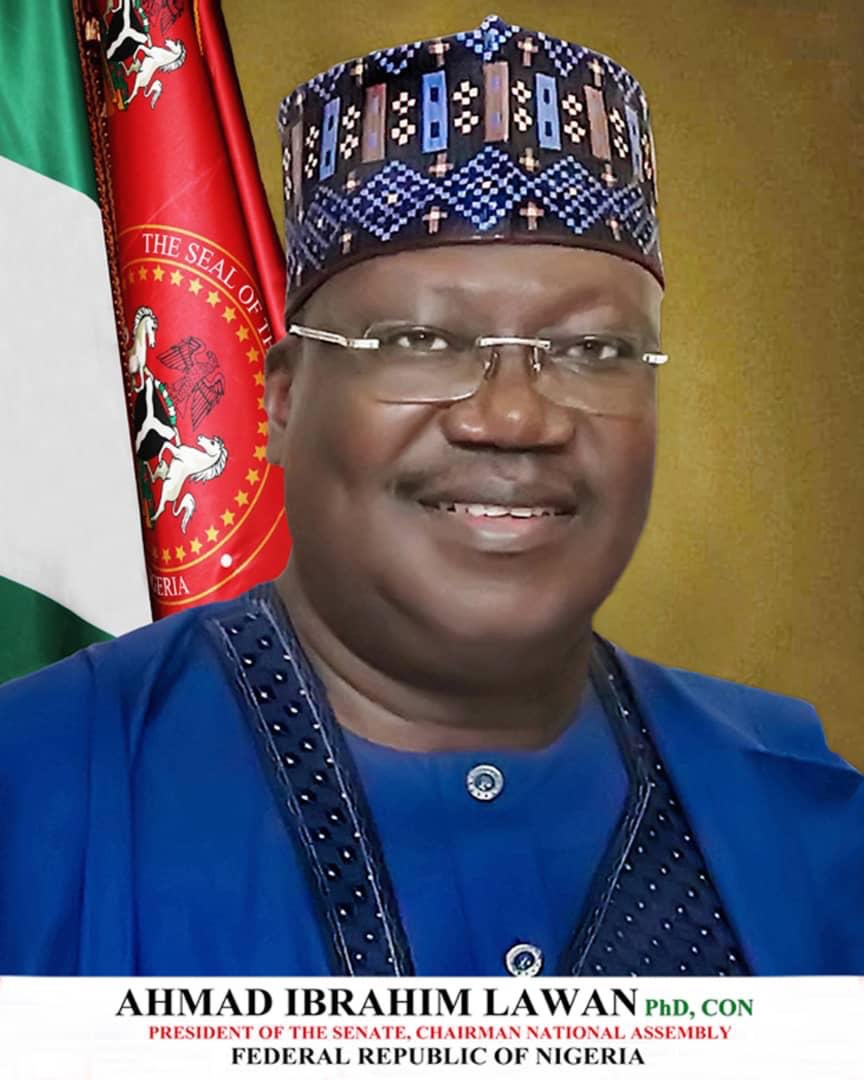
Distinguished Colleagues, this will be the last plenary session that we will hold in the first half of the life of this Ninth Assembly of the Senate. On Friday June 11, we will be marking the second anniversary of our inauguration in this hallowed chamber.
At the outset of our journey, we had developed a comprehensive Legislative Agenda to guide us in the pursuit of our constitutional mandates of lawmaking, representation and oversight.
Distinguished Colleagues, we would recall that the Agenda was developed against the backdrop of an underperforming economy, security challenges, unemployment and a myriad of other socio-economic problems. The thrust of the Agenda was therefore to contribute solutions to those and other challenges and restore the hope of Nigerians in their country, and their confidence in its democratic institutions.
The key focus areas of the Agenda are the economy, security, constitution amendment, anti-corruption legislation, judiciary reform, electoral reforms, and socio-economic development through poverty alleviation, jobs creation, education and healthcare. Permit me, therefore, to examine some of the interventions we have made in those areas.
Lawmaking
The primary responsibility of Parliament is to make laws for the good governance of the country. That is also the priority of our Agenda. The Senate passed hundred of bills, legislation, including confirmation of appointments for Executive Arm of Government.
About 742 Bills were introduced during the two sessions of the Assembly, out of which 58 have been passed. 355 Bills have gone through first reading, 175 have gone through second reading and have been referred to the relevant committees for further legislative business, while 11 Bills referred by the House of Representatives for concurrence have also been passed. The Bills cut across all the sectors and touch most areas of needs in the lives of our citizens.
Economy
As I said earlier, we agreed in our Agenda to focus on some key areas, including the economy. One of our most significant interventions in this sector is the restoration of the national annual budget to the January to December cycle. This measure has made the nation’s fiscal plans more predictable and boosted the confidence of local and foreign investors in our economy. It is noteworthy that for the first time under the Fourth Republic, the budget achieved 100 per cent implementation level last year.
The restoration was achieved in partnership with the House of Representatives and with the cooperation and commitment of the Executive Arm. And it signaled the possibilities in our country when all stakeholders are working together.
Also noteworthy is the passage of the Deep Off-Shore and Inland Basin Production Sharing Contracts Act CAP D3 LFN 2004 (Amendment Bill, 2009). We passed this very important law to increase Nigeria’s share of revenue from its crude oil.
Other laws that we passed that are having significant impacts on the economy include the Finance Bill 2019 (Nigeria Tax and Fiscal Law) (SB.140), which amended seven existing tax laws.
In our Legislative Agenda, we had also promised to create a legal environment conducive for ease of doing business. We kept this promise by passing the Companies and Allied Matters Act, Cap C20 LFN 2004 (Repeal and Reenactment) Bill 2019 (SB.270).
Petroleum Industry Bill (PIB)
We also promised to break the jinx on the Petroleum Industry Bill (PIB) and we are on the verge of doing this by finally passing the Bill this month after about 20 years of failed attempts.
Security
Security challenges are currently pushing our country to the edge of the precipice. Insurgency, banditry, kidnapping and attacks on public facilities are occurring daily in many parts of the country with our security forces stretched almost to their elastic limit.
To address the emergency, we passed several resolutions as part of our legislative interventions and kept engaging with the Executive in order to achieve the desired outcome.
Constitution Amendment
Review of the 1999 constitution as amended is one of the important items of our Legislative Agenda.
In this respect our Committee on the review of the Constitution just concluded Public Hearings in six Geo-Political Zones of the Country from which the Committee collected Memoranda from Nigerians and listened to their views. The zonal hearings were followed by a national public hearing in Abuja last week.
The essence of this process is to consider the major issues that Nigerians feel strongly about. We believe consensus building is essential to achieve the changes. It is gladdening, however, that Nigerians have showed enthusiasm for the process.
It is in line with this that we have set a target to consider the report of the Committee on the Amendment of 1999 Constitution before we embark on this year’s summer break in July.
Electoral Reform Bill
Our electoral process has shown remarkable improvement in the Fourth Republic with the cycle now virtually stable. In 2023, we shall have the seventh regular cycle of general elections, the longest in the history of our nation. Despite the progress, gaps and inadequacies have been identified in the process. The electoral reform Bill seeks to address these gaps and we have committed ourselves to passing the Bill before the annual summer recess.
Anti-Corruption Bill
The fight against corruption is critical to the progress of Nigeria and is a key point in the Agenda of the All Progressives Congress-led Federal Government of President Muhammadu Buhari. As part of our commitment to the success of the fight, we passed the Chartered Institute of Forensic Investigative Professionals of Nigeria (Establishment) Bill 2021 to boost institutional capacity for fighting corruption in Nigeria. We believe that the new institute will provide the kind of services that can nip corruption in the bud in both the public and private sectors.
We had earlier passed the Public Procurement Act 2007 (Amendment) Bill, 2019 (SB.109); and the Public Procurement Act, 2007 (Amendment) Bill, 2019 (SB.158) also to block the avenues for corruption in the procurement process by MDAs.
One of the developments we did not foresee at the inception of the Ninth Assembly was the outbreak of the COVID-19 pandemic. The disease caught the entire world by surprise and wreaked havoc on economies large and small. Thanks to the unity of purpose in this chamber and the National Assembly at large, however, we were able to provide the necessary intervention in support of the efforts of the Executive to combat the virus.
To help the nation cope with the health emergency and its dire economic consequences, we promptly revised the budget which we had passed early in the previous December.
Permit me to conclude these remarks by expressing my profound gratitude to you all, my Distinguished Colleagues, for the support and cooperation that you have graciously given to the Leadership of the Senate over this past two years. This has been one of the most peaceful, stable and focused Assembly of the Senate and the credit goes to all of you. You have always risen above partisan interests to stand firm for the unity, peace, progress and development of our beloved country.
I urge us to continue in the same spirit so that we can keep the Ninth Assembly on its glorious course.
I want to also commend the Clerk of the Senate and the Secretariat for providing the support services necessary for us to function.
Similarly, I want to thank the Senate Press Corps for providing valuable media coverage to our activities. You have been professional, patriotic, and are worthy partners.
In conclusion, let me thank Nigerians for the support and understanding in the last two years. We cherish your constructive criticisms and call to order. As the representatives of our people, we must continue to engage and provide veritable platform for citizen participation in Legislation in particular and Governance in general.
Thank you all.