Connect with us

Blast Politics

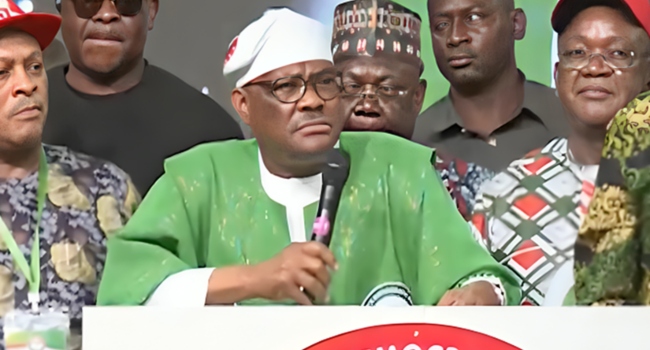
Wike Rejects Turaki-Led PDP Caretaker Committee, Labels Move ‘Fraudulent’

Published

on

Wike and others
Share


The Minister of the Federal Capital Territory, Nyesom Wike, has dismissed the formation of a caretaker committee within the Peoples Democratic Party (PDP) by supporters of Tanimu Turaki, describing the move as fraudulent and misleading.

Speaking on Tuesday, Wike warned Nigerians not to be deceived by what he called an attempt to create confusion within the party. He insisted that there is no leadership crisis in the PDP and maintained that the party operates from its officially recognized national secretariat at Wadata House in Wuse Zone 5, Abuja.

According to Wike, the Turaki-led group has no legal backing to set up a parallel leadership or sell nomination forms. He argued that such actions amount to fraud, especially as the group has not overturned existing court judgments.

“You cannot claim to be a party and fail to identify a legitimate national secretariat,” Wike said. “If you are selling forms, where will they be submitted? That is clear deception.”

The minister also stated that the recent PDP convention held at the Moshood Abiola National Stadium remains the only valid convention of the party. He noted that the event was monitored by the Independent National Electoral Commission (INEC) and produced the current national leadership.

Meanwhile, the PDP Board of Trustees (BoT), led by Adolphus Wabara, had earlier announced the appointment of a 13-member interim National Working Committee headed by Turaki. The group said its decision followed a Supreme Court ruling that nullified the Ibadan convention, which it claims created a leadership vacuum in the party.

The caretaker committee was inaugurated after a meeting held at the Yar’Adua Centre, attended by several prominent party figures. These include Seyi Makinde, former Niger State governor Babangida Aliyu, elder statesman Jerry Gana, and former minister Zainab Maina.

The Turaki-led faction insists that the Abuja convention which produced the current PDP leadership is invalid. However, Wike and his allies continue to reject this position, maintaining that there is no vacancy in the party’s leadership.

Continue Reading
Click to comment

Leave a Reply

Your email address will not be published. Required fields are marked *

Blast Politics

Oyebamiji Alleges Fresh Attacks on APC Members in Osun

Published

on

Share


Bola Oyebamiji, the All Progressives Congress (APC) candidate in the August 15 governorship election in Osun State, has alleged fresh attacks on some members of the party.

Oyebamiji made the allegation on Friday after meeting with President Bola Tinubu at the State House in Abuja.

He said Tinubu advised him and other stakeholders to prioritise peace, noting that governance is ultimately about the people.

Oyebamiji appealed to residents of Osun State to remain calm as the APC continues to review the election results.

The Independent National Electoral Commission (INEC) declared Governor Ademola Adeleke the winner with 511,067 votes, while Oyebamiji polled 444,815 votes.

Adeleke won 19 of the 30 local government areas, while Oyebamiji won 11.

Oyebamiji said the APC was still examining the election results and would announce its position after completing the review.

He also called on Adeleke to caution his supporters against violence.

According to him, the appeal followed alleged attacks on APC members after the election.

Oyebamiji alleged that four or five people were attacked in his hometown, Ikire, on Friday morning.

He said the incidents had been reported to security agencies.

He urged APC members and other residents to remain calm, stressing that violence would not benefit the people of the state.

Continue Reading

Blast Politics

2027 Presidency: Tinubu Unveils APC Campaign Council, Names Yari DG, Uzodimma Secretary

Published

on

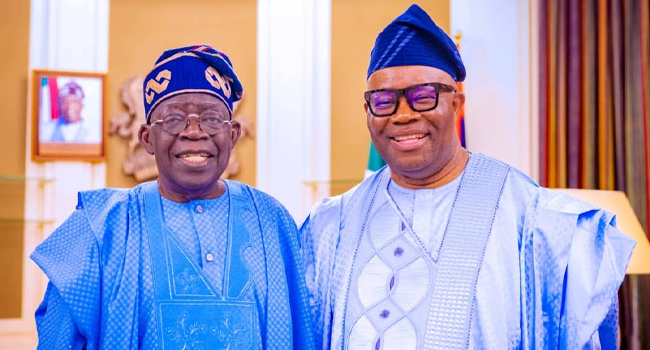
President Bola Ahmed Tinubu and Vice President, Kashim Shettima
Share


President Bola Ahmed Tinubu has constituted the All Progressives Congress (APC) Presidential Campaign Council ahead of the 2027 general elections, placing former Zamfara State Governor, Senator Abdulaziz Yari, at the helm of the campaign as Director-General.

The campaign council, unveiled on Saturday, August 22, 2026, brings together senior party leaders, serving and former governors, legislators, ministers, political strategists and media professionals as the governing party begins preparations for the presidential contest.

President Tinubu will serve as Chairman of the council, while Vice President Kashim Shettima will occupy the position of Vice Chairman. APC National Chairman, Professor Nentawe Yilwatda, is also designated Vice Chairman.

Governor Hope Uzodimma of Imo State has been appointed Secretary of the campaign council, while APC National Secretary, Senator Ajibola Bashiru, and Hadiza Bala-Usman will serve as Deputy Secretary and Assistant Secretary respectively.

Yari Takes Charge of Campaign Structure

The appointment of Senator Abdulaziz Yari as Director-General places the former Zamfara governor at the centre of the APC’s operational strategy for the 2027 presidential election.

Yari will be expected to coordinate the various directorates and political structures of the campaign council as the party seeks to consolidate its hold on the presidency and mobilise support across Nigeria’s six geopolitical zones.

President Tinubu will be supported by a team of senior political advisers comprising former APC National Chairman, Chief Bisi Akande; former Ogun State Governor, Chief Segun Osoba; Senator Rochas Okorocha; former APC National Chairman, Senator Abdullahi Adamu; and Senator Florence Ita Giwa.

Akpabio, Abbas, Bamidele Get Zonal Responsibilities

The campaign structure also assigns major responsibilities to the leadership of the National Assembly and key state governors.

Senate President Godswill Akpabio, Speaker of the House of Representatives Tajudeen Abbas and Yobe State Governor Mai Mala Buni have been appointed Deputy Directors-General responsible for campaign activities in the South and North.

They will work alongside Senate Leader Senator Opeyemi Bamidele and Deputy Senate President Senator Jibrin Barau in coordinating political activities across the respective zones.

Senator Adams Oshiomhole has been appointed Deputy Director-General in charge of mobilisation, while the President’s Chief of Staff will serve as Deputy Director-General for Administration.

Faleke Returns to Election Planning

James Abiodun Faleke, a prominent figure in the APC’s previous presidential campaign, has been brought back into the campaign structure as Deputy Director-General for Election Planning, Coordination and Monitoring.

Faleke will supervise a team of zonal directors responsible for coordinating election-related activities across the country.

They include Senator Olushola Adeyeye for the South-West, Dr Ngozi Olejeme for the South-South, Senator Uche Ekwunife for the South-East, Muntaqha Rabe for the North-West, Ahmed Muhammed Ketso for the North-Central and Senator Sani Danladi for the North-East.

Stella Okotete, Engineer Abdullahi Garba Ramat and Audu Maikori have also been appointed secretaries of the Election Planning Directorate.

Legal Team Takes Shape

The legal arm of the campaign will be headed by Muiz Adeyemi Banire as Director, with Dr Liman Hassan and Babatunde Ogala serving as Deputy Directors.

Other members of the legal directorate include Attorney-General of the Federation and Minister of Justice, Prince Lateef Fagbemi; former Katsina State Governor Ibrahim Shema; Worgu Boms; and Dr Kingsley Tochukwu Udeh.

The directorate is expected to provide legal and strategic support to the campaign throughout the electoral process.

Mohammed Idris Leads Media and Strategic Communications

The campaign’s media and strategic communications machinery will be coordinated by the Minister of Information and National Orientation, Mohammed Idris Malagi.

He will work with former presidential spokespersons and senior media strategists, including Dele Alake, Bayo Onanuga and Lanre Issa-Onilu.

Tunde Rahman, Sunday Dare, Daniel Bwala and Felix Morka have been designated Coordinating Deputy Directors within the media directorate.

Abdulaziz AbdulAziz, Temitope Ajayi, Arabinrin Aderonke and Frederick Nwabufor will serve as Coordinating Secretaries.

Segun Dada has also returned as Director of New Media, a role he occupied during the 2022/2023 presidential campaign, while Solomon Arowolo has been appointed Secretary of the New Media Directorate.

Five Spokespersons Named

The APC campaign council has further appointed five spokespersons to drive its public communication strategy.

Dele Alake will lead the team, with Alwan Hassan, Ayobami Oyalowo, Kemi Asekun-Shittu and Adamu Fanda serving alongside him.

The spokespersons are expected to articulate the campaign’s message, defend the administration’s record and communicate its agenda to voters as the election season gathers momentum.

Tinubu Tasks Council With Securing Victory

In his message to members of the campaign council, President Tinubu charged them to work relentlessly towards securing victory for the APC in the January 2027 elections.

The President also directed leaders of the various directorates to extend their reach beyond those formally listed in the council, encouraging them to bring other capable party members into the campaign effort.

Tinubu said the administration had fulfilled its campaign promises and positioned Nigeria for economic recovery, urging members of the campaign team to make the government’s achievements central to its electoral message.

He said the country had moved beyond the period of economic difficulty and was approaching the benefits of a more prosperous economy.

The President further urged the campaign team to confidently present the administration’s record to Nigerians and inspire hope across the country, while defeating political forces seeking to reverse the direction of the nation.

With the unveiling of the campaign council, the APC has effectively moved into a more organised phase of its preparations for the 2027 presidential election, assembling a broad political and communication structure designed to coordinate mobilisation, election planning, legal strategy and messaging across the federation.

The council’s composition also signals the central role that the presidency, the National Assembly leadership, governors and experienced political operators will play in the APC’s bid to retain power at the federal level in 2027.


Continue Reading

Blast Politics

2027 Elections: INEC Sets November for Nationwide BVAS Mock Accreditation

Published

on

INEC
INEC Logo
Share

**Commission to Test Electoral Technology, Recruit 1.4m Ad-Hoc Staff as Preparations Intensify**


The Independent National Electoral Commission (INEC) has announced plans to conduct a nationwide mock accreditation exercise in November 2026 as part of its preparations for the 2027 General Election.

The exercise will provide the electoral body with an opportunity to test the functionality of the Bimodal Voter Accreditation System (BVAS) and other critical electoral equipment ahead of the polls, while allowing the Commission to identify and resolve possible operational challenges before election day.

INEC Chairman, Prof. Joash Amupitan, disclosed this on Friday when he received a delegation from the Canadian High Commission, led by Canada’s Chargé d’Affaires to Nigeria, David Sproule, at the Commission’s headquarters in Abuja.

Amupitan described the planned mock accreditation as one of five major strategic priorities adopted by INEC to ensure a credible, efficient and technologically sound electoral process in 2027.

According to him, the Commission’s other priorities include consolidating technological gains, deepening electoral inclusion, strengthening institutional capacity and technical support, and combating misinformation while protecting the integrity of the electoral process.

Osun Election as 2027 Benchmark

The INEC chairman said the Commission would build on lessons from recent off-cycle elections as it fine-tunes its preparations for the 2027 elections.

He specifically referenced the governorship elections in Anambra and Ekiti states, the FCT Area Council elections and the August 15, 2026 Osun State governorship election as important testing grounds for electoral reforms and operational improvements.

“We view the success in Osun not as a final destination, but as the gold standard that will guide our preparations for 2027,” Amupitan was quoted as saying.

According to him, the Osun election recorded significant operational improvements, with 3,556 out of 3,763 polling units, representing 94.5 per cent, opening for accreditation and voting by 8:30 a.m.

He also cited the optimal performance of BVAS, seamless uploading of results through the INEC Result Viewing Portal (IReV) and proactive management of emerging challenges as some of the positive outcomes from the election.

The Commission is expected to use the November mock exercise to subject its systems and personnel to another nationwide test, with the aim of ensuring that identified weaknesses are addressed well before the 2027 polls.

INEC Targets 1.4 Million Ad-Hoc Personnel

As part of its preparations for the massive electoral exercise, Amupitan disclosed that INEC would require approximately 1.4 million ad-hoc personnel to conduct the 2027 elections across more than 176,000 polling units nationwide.

The scale of the deployment underscores the logistical and administrative demands facing the electoral body as it prepares for one of the country’s largest democratic exercises.

Beyond personnel and logistics, the Commission is also expanding its focus on emerging technology, particularly artificial intelligence.

INEC Establishes AI Unit

Amupitan disclosed that INEC had established a dedicated Artificial Intelligence (AI) unit to explore responsible applications of the technology in critical areas of the electoral process.

The unit is expected to examine how AI can support areas including data management, voter registration and results transmission, while also developing safeguards against the potential misuse of the technology.

The Commission will further participate in the Global Conference on Responsible AI and Elections, scheduled to hold from September 9 to 11, 2026, in Ottawa, Canada.

According to Amupitan, the conference will provide an opportunity for INEC and other stakeholders to examine responsible applications of AI in elections and develop strategies to tackle emerging threats such as deepfakes, disinformation and other technology-driven attempts to undermine electoral integrity.

INEC Reaffirms Independence

The INEC chairman also used the occasion to reassure the Canadian delegation and the international community of the Commission’s commitment to conducting elections without political interference.

He reaffirmed INEC’s “absolute independence, neutrality, and unyielding commitment to democratic integrity.”

The assurance comes amid growing political activity ahead of the 2027 elections, with political parties and major political actors already intensifying their mobilisation and realignment efforts.

The Canadian delegation, meanwhile, reaffirmed Canada’s commitment to supporting Nigeria’s democratic development and electoral processes.

The areas of support include strengthening electoral participation, promoting women’s inclusion, improving public awareness, providing technical assistance and supporting election observation.

2027 Election Timetable

The 2027 presidential and National Assembly elections are scheduled for January 16, 2027, while the governorship and State House of Assembly elections will take place on February 6, 2027.

Campaigns for the national elections commenced on Wednesday, while political campaigns for the governorship and State House of Assembly elections are scheduled to begin on September 9, 2026.

With less than five months to the presidential and National Assembly elections, the November nationwide mock accreditation exercise is expected to serve as a major readiness test for INEC, particularly its BVAS deployment, personnel mobilisation and wider election technology infrastructure.

The Commission’s ability to identify and resolve weaknesses during the exercise could prove critical to its efforts to deliver a seamless and credible electoral process in the 2027 elections.

Continue Reading