Connect with us

Defence and Security

Coordinated Explosions Rock Maiduguri as Renewed Insurgent Offensive Raises Security Alarms

Published

on

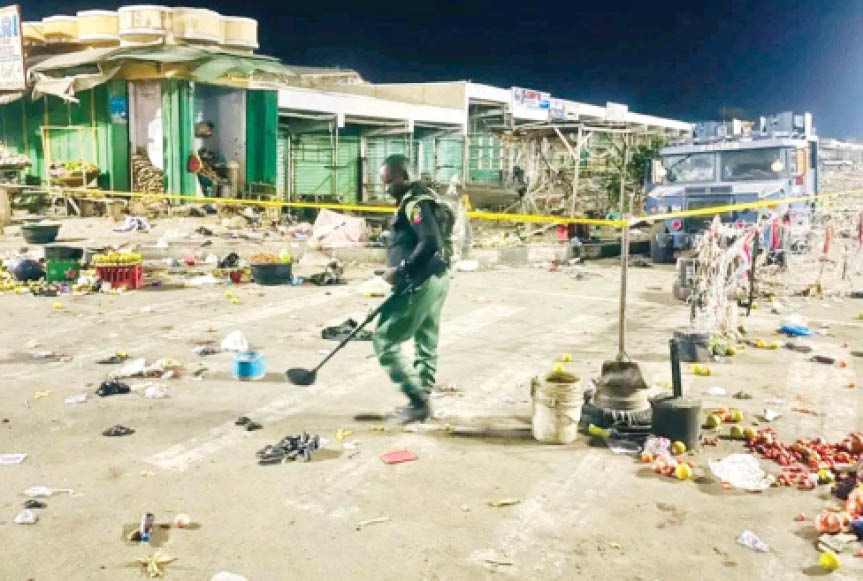
Anti Bomb Police combing Scene of Explosion
Share


….Multiple blasts, rising casualty fears, and sustained attacks on military positions signal escalating threats around Borno capital

MAIDUGURI, BORNO STATE — A series of coordinated explosions struck key locations across Maiduguri on Monday evening, triggering panic, casualties, and renewed concerns over the expanding reach of insurgent operations in Nigeria’s North-East.

The blasts, which occurred almost simultaneously, targeted high-traffic civilian areas including the gate of the University of Maiduguri Teaching Hospital (UMTH), the Monday Market roundabout, and the Post Office district—areas typically crowded with residents, traders, and commuters.

The attacks came less than 24 hours after insurgents launched assaults on military formations in Ajilari, Baga, and Damboa, suggesting a deliberate escalation in both tempo and coordination.

Casualties and Immediate Impact
While the exact number of casualties remains unconfirmed, early reports indicate multiple fatalities and several injuries. A Nigerian Red Cross official confirmed that at least five people were pronounced dead at a specialist hospital, with additional bodies reportedly recovered from the Monday Market area.

Eyewitness accounts described scenes of chaos and confusion.
One victim, Abacha Mustapha, recounted how the explosion struck shortly after traders had closed for the day’s Ramadan fast.

“We had just broken our fast and were leaving the market when the blast went off. I suddenly realized I was bleeding from my neck. My brother had to use his cloth to stop the bleeding and rush me to the hospital,” he said.

Another witness, Umar Bolori, alleged that some of the improvised explosive devices (IEDs) were transported into the market using tricycles and detonated near commuter points, including areas where passengers were boarding public buses.

Emergency responders, including health workers and humanitarian agencies, were seen evacuating the injured and recovering bodies amid the debris.

Modus Operandi and Security Response
Security sources indicated that the attacks involved a mix of planted IEDs and suicide bombers, including female operatives—pointing to a level of tactical planning consistent with insurgent groups such as Boko Haram and ISWAP.

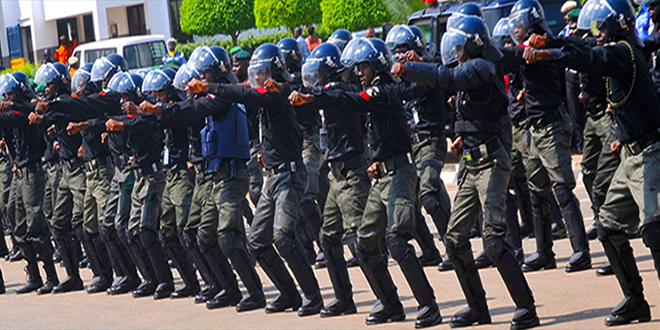
Authorities confirmed that joint security forces have been deployed to affected areas to contain the situation, conduct sweeps for additional threats, and restore order.

The Borno State Police Command urged residents to remain calm, avoid impacted zones, and report suspicious activities, while providing emergency contact lines for rapid response.

Growing Fear of Encirclement
Beyond the city center, residents reported intensified insurgent across surrounding communities, including Dalwa, Ajilari, Dalori, Jakana, Konduga, and Kawuri—ranging from 2km to 50km from Maiduguri.
The pattern of attacks has fueled fears among locals that insurgents are attempting to encircle the state capital.

“The sound of gunfire and explosions filled the air. People are afraid this could be a repeat of past invasions,” said a resident of Gomari.
Others described widespread anxiety, with families recalling previous displacement experiences and bracing for potential escalation.

Strategic Context: Sustained Pressure on Military Targets
Over the past month, insurgents have carried out repeated attacks on military installations across Borno State, including in Konduga, Jakana, Marte, Kawuri, Mainok, and Ngoshe.

Security sources say these assaults have, in some cases, resulted in the looting of military armouries—providing insurgents with additional firepower and emboldening further.

Intelligence reports also suggest that insurgents may be executing a broader operational plan aimed at infiltrating Maiduguri and expanding their reach toward other strategic locations.

A circulating video allegedly featuring insurgent claimed responsibility for previous attacks and threatened to extend operations beyond Borno, raising concerns about wider regional implications.

Government Reaction
Borno State Governor, Professor Babagana Zulum, condemned the attacks, describing them as “despicable, cruel, and cowardly.”

In a statement issued through his media aide, the governor called for heightened vigilance, particularly in public spaces and places of worship, and reassured residents that security agencies are actively responding to the threat.

He also linked the recent spike in attacks to intensified military operations targeting insurgent enclaves in the Sambisa forest and surrounding.

Expert Analysis: “They Never Left”
Security analyst Dr. Yahuza Getso argued that the current wave of attacks should not be seen as a resurgence of insurgency, but rather evidence of its persistence.

“The question is not whether they are back. The question is: where did they go? They never left,” he stated.

Getso identified systemic challenges—including corruption, weak accountability, and socio-economic inequalities—as underlying drivers of the prolonged conflict. He warned that without structural reforms and improved governance, attacks are likely to continue.

Outlook
The latest explosions underscore the fragile security situation in Borno State and highlight the of insurgent groups to strike both military and civilian targets.

With increasing reports of coordinated assaults, territorial incursions, and strategic planning by insurgents, security experts warn that Maiduguri may face heightened risks in the coming weeks.
Authorities continue to urge public vigilance and cooperation as efforts intensify to prevent further attacks and stabilize the region.

Continue Reading
Click to comment

Leave a Reply

Your email address will not be published. Required fields are marked *

Defence and Security

Nigeria Climbs to 4th in 2025 Global Terrorism Index as Attacks Surge by 43%

Published

on

Islamic State West Africa Province
Share

Nigeria has risen to fourth place in the 2025 Global Terrorism Index (GTI), following a sharp escalation in terrorist activities across the country, according to a new report by the Institute for Economics & Peace.

The report indicates that terrorist attacks in Nigeria increased by 43 percent in 2025, with 171 incidents recorded compared to 120 in 2024. This surge has pushed the country up two places from its previous sixth position.

Nigeria now ranks behind Pakistan, Burkina Faso, and Niger Republic, which occupy the top three positions on the index.

According to the findings, the majority of attacks were carried out by Islamic State West Africa Province and Boko Haram, with both groups accounting for 80 percent of terrorism-related deaths in the country.

The report further highlights a growing human toll, with fatalities rising by 46 percent to 750 deaths in 2025—the highest level recorded since 2020. In addition, 243 people were injured in the attacks, bringing the total number of terrorism-related deaths in Nigeria since 2007 to 12,581.

Geographically, violence remained heavily concentrated in Borno State, which accounted for 67 percent of all attacks and 72 percent of total deaths recorded during the year.

Civilians continued to bear the brunt of the violence, representing 67 percent of those killed, while military personnel accounted for 19 percent. The report notes a sustained shift toward increased targeting of civilians over the past five years.

The GTI attributes the worsening security situation to ongoing internal instability and intensified clashes between ISWAP and Boko Haram, underscoring persistent challenges in counterterrorism efforts across Nigeria.

Continue Reading

Defence and Security

Nigeria Must Move Beyond Kinetic Approach to Defeat Terrorism – Senate Leader, Bamidele

Published

on

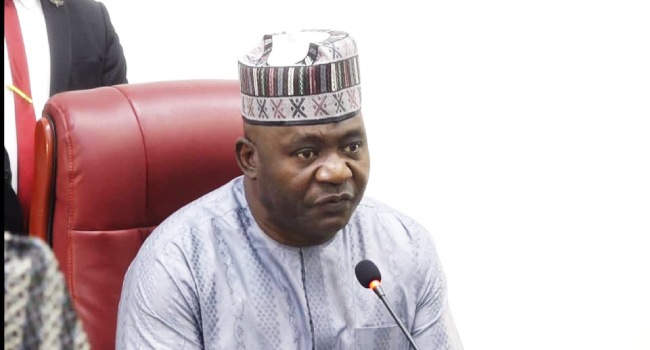
Senate Leader, Senator Michael Opeyemi Bamidele
Share


The Senate Leader, Opeyemi Bamidele, has called for a strategic shift in Nigeria’s fight against insecurity, urging authorities to complement military operations with sustained investments in human capital development and social cohesion.

In his Eid al-Fitr message to Muslims across the country, Bamidele congratulated Nigerians on the successful completion of Ramadan, describing the holy month as a period marked by sacrifice, reflection, charity, and devotion to God.

He noted that the lessons of Ramadan—tolerance, compassion, and self-discipline—should guide both individual conduct and government policies, particularly at a time of global uncertainty and domestic security challenges.

The Senate Leader referenced recent security incidents, including bomb explosions in Maiduguri, which resulted in loss of lives and injuries, stressing that such tragedies underscore the urgent need for a more comprehensive approach to national security.

While commending Nigeria’s defence, intelligence, and security agencies for their resilience, Bamidele emphasised that reliance on military force alone—often described as a kinetic approach—cannot guarantee lasting peace.

“Time and experience have shown that kinetic operations alone cannot guarantee the peace and stability of our nation,” he stated.

He therefore advocated a broader, multi-dimensional strategy that addresses the root causes of violent extremism.

According to him, religious leaders must promote tolerance and desist from teachings that could incite radicalisation, while socio-cultural leaders should prioritise dialogue in resolving inter-ethnic conflicts rather than resorting to violence.

Bamidele also highlighted the role of subnational governments, noting that the fight against insecurity is not solely the responsibility of the federal government. He urged state governments to prioritise human capital development by investing in education, healthcare, nutrition, and social protection systems.

He added that creating opportunities for innovation and creativity among young people would help reduce vulnerability to extremist ideologies.

At the legislative level, the Senate Leader disclosed that the National Assembly is pursuing a multi-pronged approach to strengthen national security and development.

He revealed that the Senate has constituted an ad-hoc committee on a National Security Summit aimed at identifying the root causes of insecurity across the country. He also pointed to the ongoing review of the 1999 Constitution, which he said would include amendments to grant subnational governments greater authority in managing security within their jurisdictions.

Bamidele reaffirmed the commitment of the National Assembly to enacting laws that support the fight against terrorism and violent extremism.

He concluded by extending warm Eid al-Fitr wishes to Muslims nationwide, urging Nigerians to embody the values of peace, unity, and mutual respect beyond the Ramadan season.

Continue Reading

Defence and Security

Tinubu Pushes UK Alliance to Counter Sahel-Linked Terror Threats

Published

on

President Bola Tinubu with King Charles
Share


President Bola Ahmed Tinubu has called for deeper security cooperation with the United Kingdom to combat rising terrorism threats and strengthen regional stability across West Africa.

Speaking at a state banquet at Windsor Castle, Tinubu warned that the growing influence of extremist groups operating from the Sahel poses significant risks to Nigeria and neighbouring countries.

He stressed that Nigeria bears a “major responsibility” in maintaining stability in the region and requires sustained international partnerships to address evolving security challenges, including cross-border insurgency and terrorism financing.

The President noted that intelligence sharing, counterterrorism coordination, and capacity building would be key areas of collaboration in his upcoming talks with UK Prime Minister Keir Starmer.

Tinubu also highlighted the longstanding strategic ties between Nigeria and the UK, particularly in governance, institutional development, and defense cooperation. He said the partnership remains critical in addressing modern security threats that transcend national borders.

While acknowledging historical links through the Commonwealth of Nations, Tinubu emphasized that current realities demand a stronger, security-focused alliance to counter instability emanating from the Sahel region.

Despite ongoing threats, the President expressed confidence in Nigeria’s resilience, reaffirming the country’s commitment to working with global partners to ensure peace, security, and sustainable development in West Africa.

Continue Reading