Connect with us

Africa News

Memo Ordering Withdrawal Of Police From VIPs, Fake – Police Sources

Published

on

Share

Stories making the rounds in Some online  media outlets about a purported memo with the order for the withdrawal of Mobile Police personnel from the very important personality (VIPs) has been described to be fake by  a retired police Commissioner who was very conversant with the workings of the Police Mobile Force.

Reacting to the purported Memo  retired Police Mobile Squadron Commander, CP Mike Ademola  who is conversant with signals and memos of the PMF having led the Mobile police before retirement,  said it didn’t come from the police authority as and therefore, it is fake.

CP Ademola rtd explained that the wordings of the memo shows that it is fake as police signal does not appear without proper identification and directions but from the memo, you would notice that some persons were not properly identified and this is a sign of fake news.

He also commended the acting IGP, Olukayode Egbetokun for having the courage to initiate policies that would reform the Nigeria Mobile Police in order for the PMF to regain the lost glory.

He said, with the initiative like this, the IGP has set the police ready for a better future.

Also, the Force PRO, CSP Olumuyiwa Adejobi when contacted to react to the memo, said the Force management team is currently having their meetings now where critical decisions will be taken.

Meanwhile, our checks showed that no mobile squadron commander has withdrawn their personnel from the people mentioned in the memo as at Monday.

Part of the memo had named important personalities like former secretary to the government of the federation, Boss Mustapha, former governor of Ogun State, Gbenga Daniel, former Zamfara State governor, Matawalle among others as people whose police were withdrawn.

Recall that when the acting inspector-general of police, IGP Olukayode Egbetokun resumed duty as the police boss, he had stated that he would effect the withdrawal of Police Mobile Force personnel from VIP escort/guard duties.

This was even as he established the Special Intervention Squad which according to him would have 40,000 highly trained police officers including selected officers from the Police Mobile Force.

He had explained that this action was to allow the mobile police take back its place in the internal security architecture of the country and reclaim its lost glory.

According to him, “In a bid to kick-start the process of regaining our pride of place in the internal security architecture of our dear country first and foremost, modalities for the creation of a new special squad – the Special Intervention Squad have been initiated.

“This special squad shall consist of 40,000 specially trained elite officers. The Squad will be formed by selecting officers from the pool of existing Police Mobile Force personnel and all tactical units in the country.

“These officers will undergo an intensive pre-deployment training to make them combat-ready for frontline operational duties in all the states of the Federation, with a particular focus on areas plagued with unrest and turmoil.

“By pooling together the expertise and experience of our PMF personnel and other tactical units, we can establish a formidable force that is well-equipped to handle the evolving challenges we face.”

The IGP also said the establishment of the squad would help the police to promptly respond to security threats, noting that 1000 personnel would be deployed to every state.

Continue Reading
Click to comment

Leave a Reply

Your email address will not be published. Required fields are marked *

News

FG Declares May 1 Public Holiday for Workers’ Day

Published

on

Share

The Federal Government has declared Friday, May 1, 2026, a public holiday to commemorate this year’s International Workers’ Day.


The Minister of Interior, Olubunmi Tunji-Ojo, made the announcement on behalf of the government, congratulating Nigerian workers on the occasion.


In a statement signed by the Permanent Secretary, Magdalene Ajani, on April 29, 2026, the minister praised workers across the country for their hard work and dedication to national development.


He noted that the contributions of Nigerian workers remain vital to the nation’s growth and prosperity, urging them to continue to uphold the values of patriotism, productivity, and commitment to duty.


The statement read, “The Federal Government has declared Friday, 1st May 2026, a public holiday to celebrate this year’s International Workers Day.


“The Minister of Interior, Dr. Olubunmi Tunji-Ojo, announced this on behalf of the Federal Government. He congratulated workers across the country on this year’s celebration. The Minister commended Nigerian workers for their hard work and dedication to national development. He noted that their efforts are essential for the nation’s growth and prosperity.”


Tunji-Ojo also reaffirmed the Federal Government’s commitment to improving workers’ welfare and security, as well as creating a conducive environment for economic growth.

Continue Reading

Africa News

Shettima Represents Tinubu at 2026 AU Summit in Ethiopia

Published

on

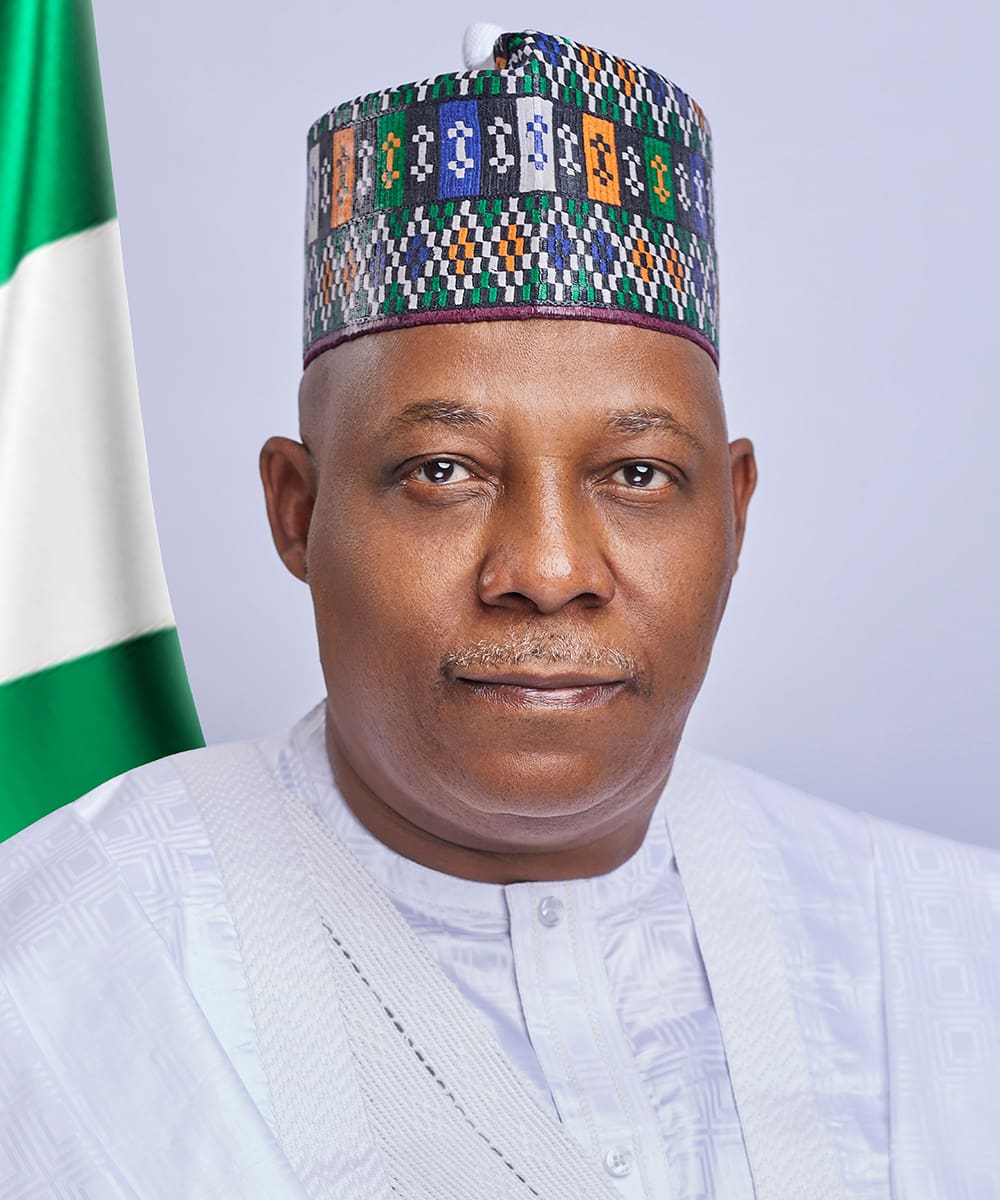
Vice President Kashim Shettima
Share

Vice President Kashim Shettima has departed Abuja for Addis Ababa, Ethiopia, to represent President Bola Ahmed Tinubu at the 2026 African Union (AU) Summit.

According to a statement issued on Thursday, February 12, 2026, by the Senior Special Assistant to the Vice President on Media and Communications, Stanley Nkwocha, the summit is themed “Assuring Sustainable Water Availability and Safe Sanitation Systems to Achieve the Goals of Agenda 2063.”

The summit will deliberate on advancing continental commitments toward sustainable water management, strengthening sanitation systems, and accelerating the broader development objectives outlined in the African Union’s Agenda 2063 framework.

Shettima is expected to join other African leaders at the 39th Ordinary Session of the Assembly of AU Heads of State and Government and the 30th Ordinary Session of the AU General Assembly, scheduled for February 14 and 15, 2026, respectively, in Addis Ababa.

In addition to plenary sessions, the Vice President will participate in high-level side events and bilateral meetings with political and business leaders. The engagements are aimed at reinforcing Nigeria’s diplomatic relations, deepening economic cooperation, and strengthening strategic partnerships across the African continent.

The Vice President is accompanied by cabinet ministers and senior government officials and is expected to return to Nigeria at the conclusion of the summit.

Continue Reading

Africa News

Gabon Coup Leader Sworn In As Interim President

Published

on

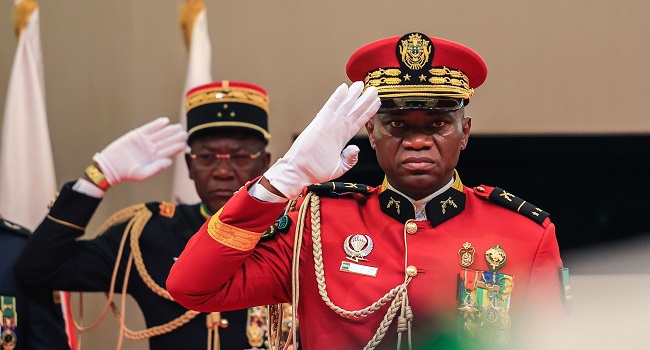
General Brice Oligui Nguema of Gabon
Share

General Brice Oligui Nguema, who led a coup last week that toppled Gabon’s 55-year-old dynasty, took the oath of office as interim president on Monday, promising to hold “free… (and) transparent elections” after an unspecified period.

Oligui, head of the elite Republican Guard, led officers in a coup on Wednesday against President Ali Bongo Ondimba, scion of a family that had ruled since 1967.

The ousting came just moments after Bongo, 64, was proclaimed victor in last month’s presidential election — a result branded a fraud by the opposition.

“I swear before God and the Gabonese people to faithfully preserve the republican regime,” said Oligui.

Dressed in the red ceremonial costume of the Republican Guard, Oligui also swore to “preserve the achievements of democracy”, at the ceremony held before judges of the Constitutional Court.

He immediately pledged in a speech to hold “free… (and) transparent elections” after a transition period which he did not specify, and to amnesty “prisoners of conscience.”

Elections Promised 

The coup leaders on Wednesday said they had dissolved the nation’s institutions, cancelled the election results and temporarily closed the borders.

Other countries have not acknowledged Oligui as Gabon’s legitimate leader and he faces pressure to spell out his plans for restoring civilian rule.

Oligui was lifted up triumphantly by his troops following the announcement of the coup, and in the days since has been seen flanked by generals and colonels.

He has also held hours of high-profile discussions with business and religious leaders, unions, political parties, NGOs, diplomats, and journalists, and has been taking notes and responding at length to questions and grievances.

On Friday, he vowed to create more democratic institutions that respect human rights, but said he would proceed “without haste”.

A fringe of the former opposition is urging Oligui to hand over power, but many people in Gabon seem happy about the overthrow of the Bongo dynasty, with celebrations in the streets of the capital Libreville and the economic hub of Port-Gentil.

Several Western countries and organisations have condemned the coup while acknowledging that it is different to others on the continent due to concerns over the credibility of the vote itself.

“Naturally, military coups are not the solution, but we must not forget that in Gabon there had been elections full of irregularities,” said the European Union’s foreign policy chief Josep Borrell.

‘Make Noise’ 

Former president Bongo had been seeking his third term in office after coming to power in 2009 following the death of his father Omar, who ruled Gabon with an iron fist for over 40 years.

The coup leaders said they had put him under house arrest and placed him “in retirement”.

But Bongo managed to distribute a video on social media where he said his son and wife Sylvia had been detained, appealing to “all friends that we have all over the world… to make noise” on his behalf.

National TV on Friday showed rolling images of the deposed president’s son Noureddin Bongo Valentin and other arrested officials in front of suitcases filled with cash allegedly seized from their homes.

The military has accused them of treason, embezzlement, corruption and falsifying the president’s signature, among other allegations.

Five other countries in Africa — Mali, Guinea, Sudan, Burkina Faso and Niger — have undergone coups in the last three years. Their new rulers have resisted demands for a short timetable for returning to barracks.


AFP


Continue Reading